








 Lookonchain
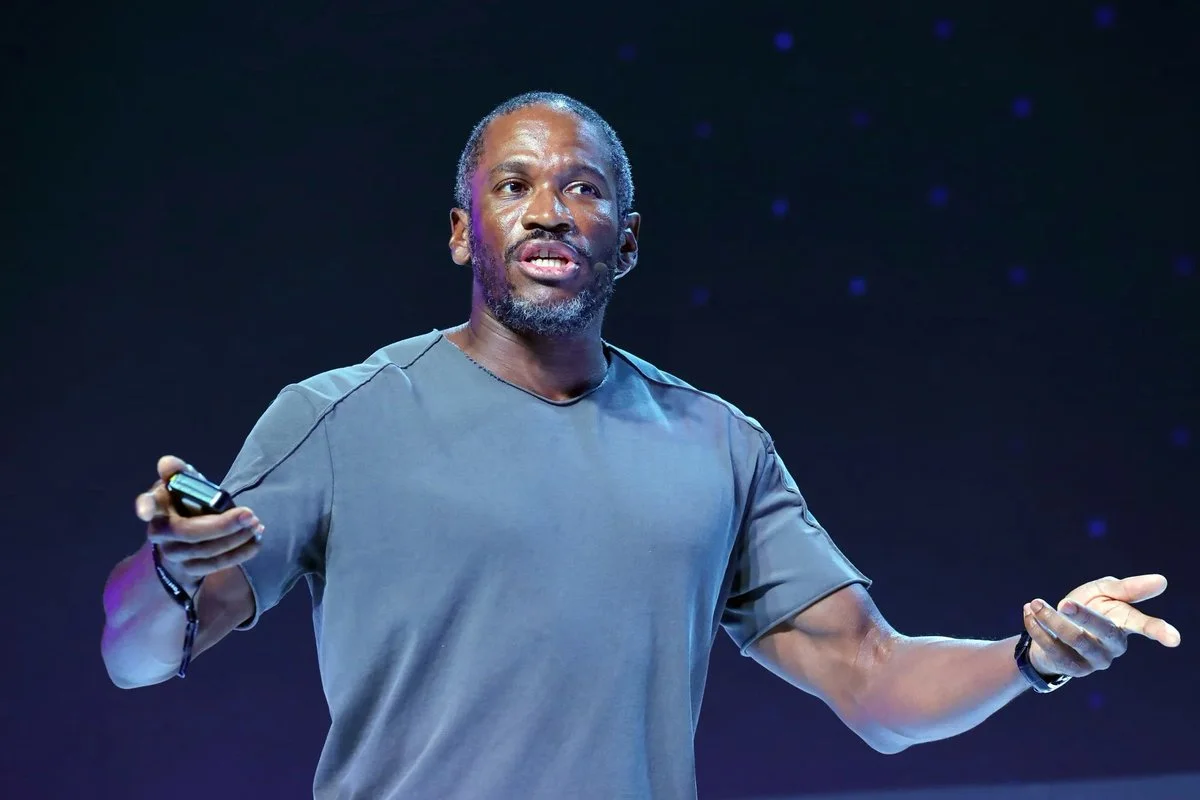
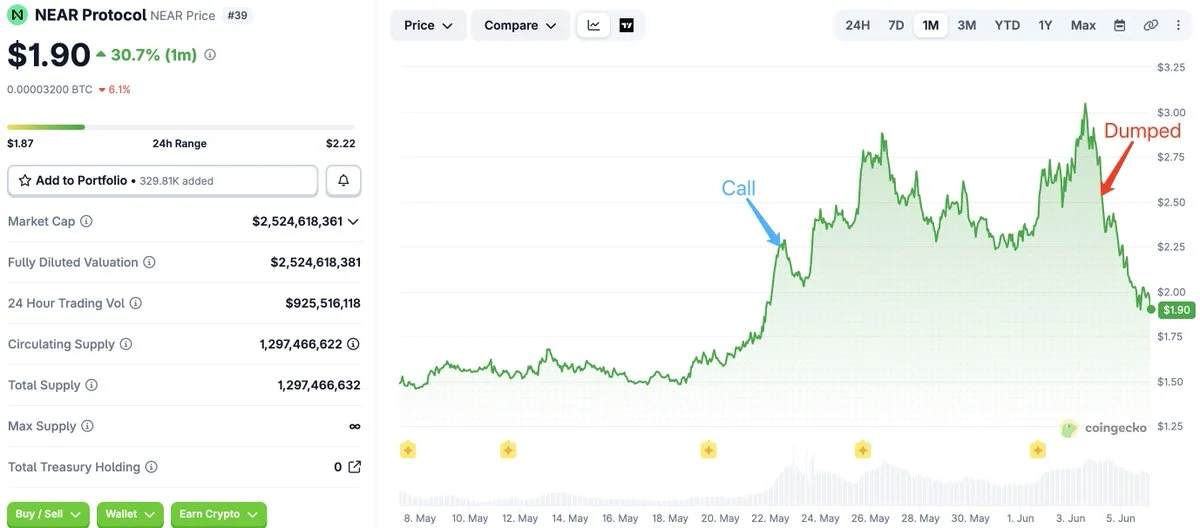
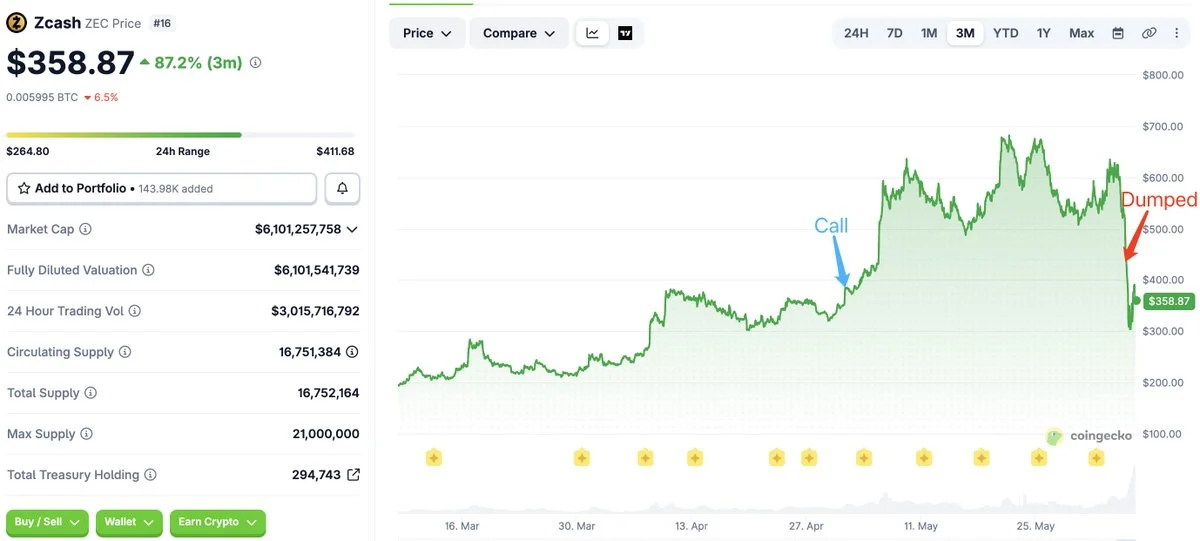
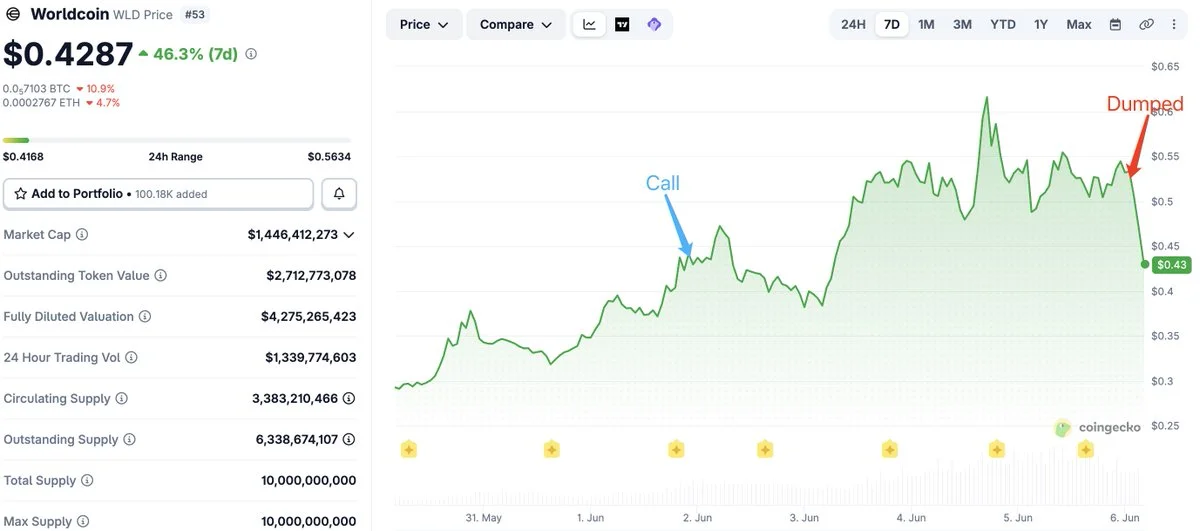
Arthur Hayes publicly called $ZEC, $NEAR, and $WLD, then sold into the rally and disclosed his exit only after the move was over. All three tokens are now back to roughly the prices they traded at before his call surfaced.
Why it matters
Hayes is one of the more-watched macro voices in crypto, so his call carries weight with a slice of the retail base that still tracks his X account. Selling near the top — and announcing the exit only after the bid faded — amplifies the bearish read: the move that was supposed to follow his call instead reversed, and the names he highlighted are the ones giving back the gains.
Market impact
$ZEC, $NEAR, and $WLD each re-traced to pre-call levels, which is the cleanest possible proof that the post-call trade was a fade rather than a follow-through. The pattern is what bearish-callers point to when they argue that Hayes has lost his timing edge on altcoin rotation — three names in a row, all mean-reverting back to baseline. The next read is whether his next call, whenever it lands, draws the same reflexive bid or gets faded on sight.



Frequently asked questions
-
What tokens did Arthur Hayes call and then sell?
Arthur Hayes publicly called $ZEC, $NEAR, and $WLD, sold into the rally, and disclosed the exit only after prices rolled over. All three tokens have since re-traced to roughly pre-call levels.
-
Why is Hayes' trade pattern considered bearish for those tokens?
Selling near the top and announcing the exit only after the move was over leaves $ZEC, $NEAR, and $WLD re-tracing to pre-call prices. The pattern reads as a post-call fade rather than sustained follow-through, which bearish-watchers cite as evidence the reflexive bid on his calls has decayed.
-
Did Arthur Hayes disclose his exit before or after selling?
Hayes sold into the rally and disclosed the exit only after the bid faded. The bearish signal isn't the trade itself but that the three names he flagged are the ones giving back the post-call gains.
-
What does this mean for Hayes' future altcoin calls?
Three consecutive names re-tracing to baseline is the kind of sample that breaks the reflexive trade. The next read is whether his next call still draws a front-running bid or gets faded on sight by the same audience that tracked these three.
-
How does Hayes' track record affect his influence in crypto markets?
Hayes remains one of the more-watched macro voices in crypto and still pulls a retail bid via his X account. The recent pattern of post-call reversals on $ZEC, $NEAR, and $WLD is the argument his critics are now using to claim his altcoin-timing edge has eroded.
 CoinDesk
 Altcoin Daily
 WuBlockchain
 CoinTelegraph
 CryptoSlate
 Crypto News
 TheBlock