








 CoinDesk
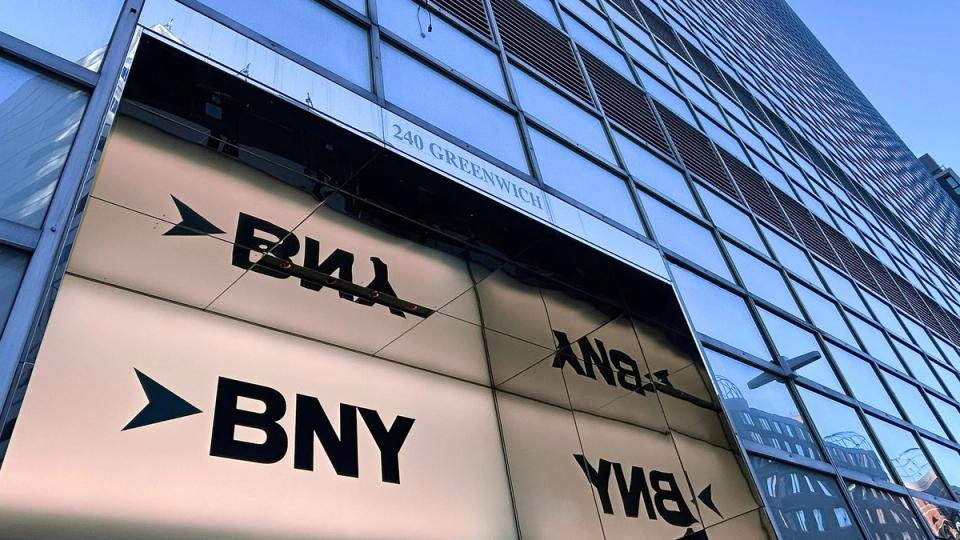


Edinburgh-based Baillie Gifford unveiled the Baillie Gifford Enhanced Yield Fund (BAGEY) on Monday, a tokenized fixed-income product built with BNY that gives eligible investors access to an actively managed, short-duration portfolio of public corporate bonds. The dollar-denominated fund, currently yielding around 7%, operates through a U.K.-regulated Open-Ended Investment Company (OEIC) and runs on both Ethereum and Solana. BNY provides tokenization and wallet infrastructure, while NatWest Trustee and Depositary Services serves as depositary. The product is available to eligible investors in the U.K., Switzerland and the Cayman Islands.
Why it matters
The headline framing inside the fund is sharper than the wrapper narrative has been. Theo Golden, head of digital assets and tokenization at Baillie Gifford, framed BAGEY as a fund issued onchain rather than a token placed on top of a fund, with the blockchain acting as the register of record and investors holding direct ownership with direct recourse. That distinction matters: it positions the product as infrastructure, not a settlement shortcut.
BNY's involvement is the legitimizing beat. Katey Neate, global head of investor solutions at BNY, said tokenization has moved from concept to real-world application, and the partnership gives the launch a custodian-tier counterparty that most prior RWA pilots lacked. For an Ethereum and Solana dual-chain issuance, the structure also signals that institutional RWA is no longer a single-chain thesis.
Market impact
BAGEY lands into an RWA market that is quietly decoupling from broader crypto volumes. May data showed combined exchange volumes fell 3.45% to $4.41 trillion, the lowest since September 2024, while RWA perpetual futures volumes rose 10.4% against that trend to a new all-time high. The flow into tokenized fixed income is doing what the broader market is not. For Ethereum, a corporate-bond register from a 118-year-old manager is a legitimacy upgrade. For Solana, it is the first major TradFi name using the chain as a primary issuance rail rather than as a secondary mirror.


Frequently asked questions
-
What is the Baillie Gifford Enhanced Yield Fund (BAGEY)?
BAGEY is a dollar-denominated, tokenized fixed-income fund issued by 118-year-old Edinburgh-based Baillie Gifford. It gives eligible investors access to an actively managed, short-duration portfolio of public corporate bonds, currently yielding around 7%, and operates through a U.K.-regulated OEIC structure.
-
Which blockchains does BAGEY run on?
The fund runs on both Ethereum and Solana, with BNY providing tokenization and wallet infrastructure and NatWest Trustee and Depositary Services acting as depositary.
-
Who can invest in BAGEY?
The fund is available to eligible investors in the U.K., Switzerland and the Cayman Islands, subject to applicable laws, regulations and distribution restrictions.
-
How is BAGEY different from a typical tokenized fund wrapper?
Baillie Gifford framed BAGEY as a fund issued onchain rather than a token placed on top of a fund, with the blockchain serving as the register of record and investors holding direct ownership with direct recourse.
-
Why does the RWA launch matter for Ethereum and Solana?
For Ethereum, a corporate-bond register from a 118-year-old TradFi manager is a legitimacy upgrade. For Solana, it is the first major traditional manager using the chain as a primary issuance rail rather than as a secondary mirror.
 CoinTelegraph
 WuBlockchain
 Crypto News
 CryptoSlate
 TheBlock