








 CoinDesk

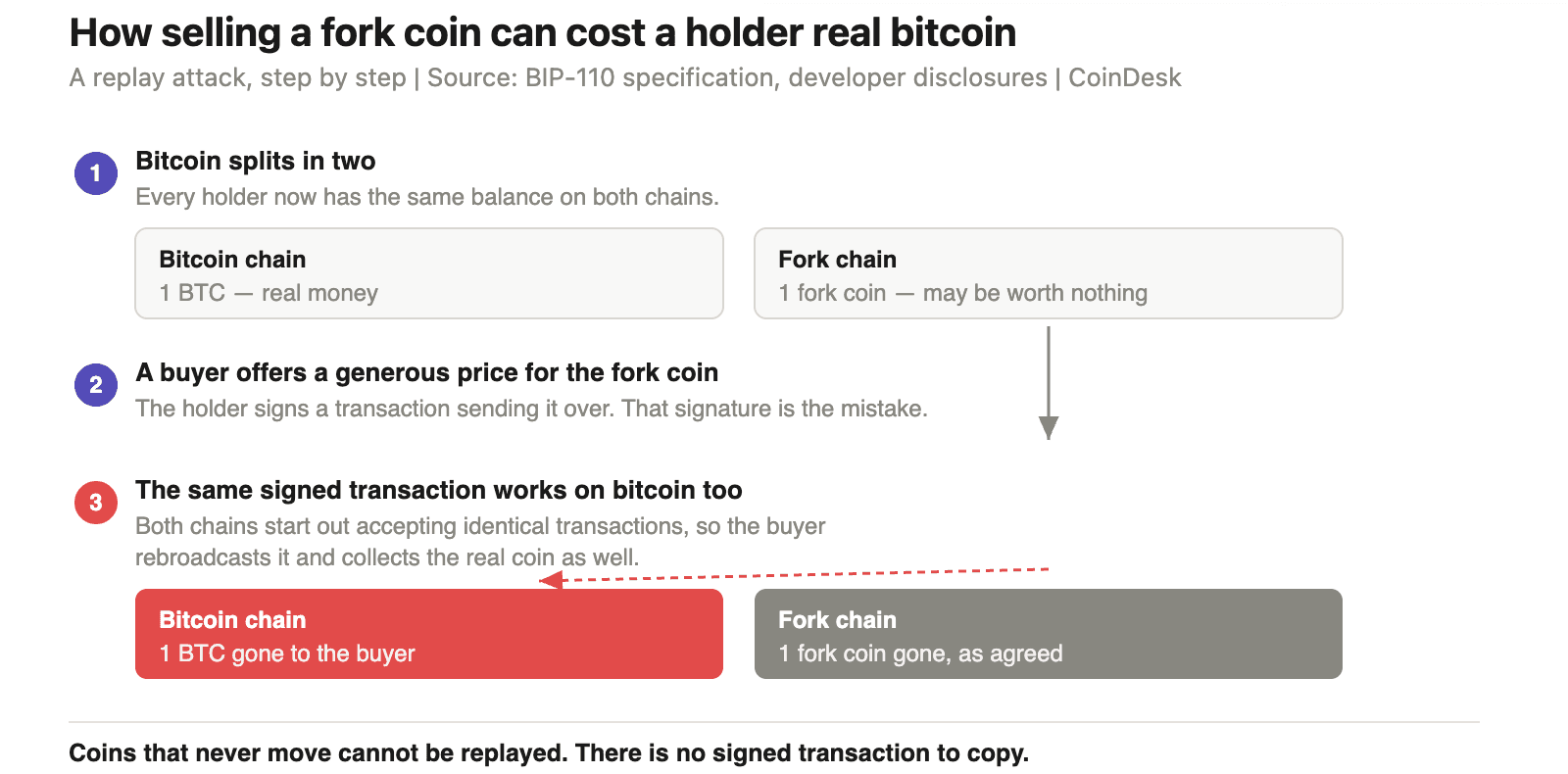


BIP-110, a proposal to strip non-payment data from Bitcoin transactions for a year, hits its mandatory signalling block (961,632) this weekend and could split the chain. Without automatic replay protection until block 965,664 in early September, any signed transaction to sell the forked coins can also be broadcast on main-chain Bitcoin and drain real BTC to the buyer's address. Developer Kevin Loaec (@KLoaec) flagged the risk on X on August 6, warning that large holders will be targeted first because their size makes the trades attractive to replay.
Why it matters
BIP-110's path through ordinary miner agreement is effectively closed. The proposal needs 1,109 of 2,016 blocks marked in a difficulty window, or 55%, and miner signalling sits near 2.6% as of Friday. The proposal carries a second route: from block 961,632, BIP-110 software rejects any unmarked block, including the chain nearly all mining power is extending. If even a handful of miners keep producing BIP-110-compatible blocks while the rest continue on bitcoin, two parallel histories can coexist.
The dangerous window is the gap between chain separation and BIP-110's actual transaction-data restrictions at block 965,664, expected around the start of September. Until then, holders need to deliberately create coins that exist on only one chain before spending safely, and the timing depends on how fast blocks are found, so the mandatory-signalling window could begin a day earlier or later than current estimates.
Market impact
Holders who do nothing cannot be replayed, because no signed transaction exists to copy. Anyone selling fork coins at what looks like a free-money price is the actual exposure surface, and large holders will likely be the obvious targets. Kevin Loaec's August 6 message was blunt: treat the upcoming split like an unsafe airdrop and avoid moving coins until the chains can be separated.
The split is not certain. With miner signalling at 2.6%, the BIP-110 branch may stall on its own if nobody keeps extending it.

Frequently asked questions
-
What is BIP-110 and why is it forking Bitcoin?
BIP-110 is a proposed upgrade that would keep non-payment data like images and text out of bitcoin transactions for one year. Its mandatory signalling block is 961,632, expected this weekend, and BIP-110 software will then reject any block that is not marked.
-
What is a replay attack on a Bitcoin fork?
A replay attack happens when both chains accept the same signed transaction, so a payment intended for the fork coin can also be broadcast on main-chain Bitcoin and move real BTC. BIP-110 does not switch on built-in replay protection until block 965,664, expected in early September.
-
Why is BIP-110 likely to stall rather than split Bitcoin?
BIP-110 needs 1,109 of 2,016 blocks marked in a difficulty window, or 55%, to pass through ordinary miner agreement. Miner signalling sits near 2.6% as of Friday, far below that threshold, so the BIP-110 branch may stop advancing on its own.
-
Who flagged the BIP-110 replay-attack risk?
Bitcoin developer Kevin Loaec (@KLoaec) warned on X on August 6 that selling the forked coins could drain real BTC from holders and that large holders would likely be targeted first.
-
What should Bitcoin holders do before the BIP-110 fork?
Do nothing. Coins that stay put cannot be replayed because no signed transaction exists to copy. Holders who want to transact safely need to deliberately create coins that exist on only one chain, a process that requires technical know-how.
 WatcherGuru
 Crypto News
 CryptoSlate
 CoinTelegraph
 WuBlockchain
 TheBlock