








 CoinDesk
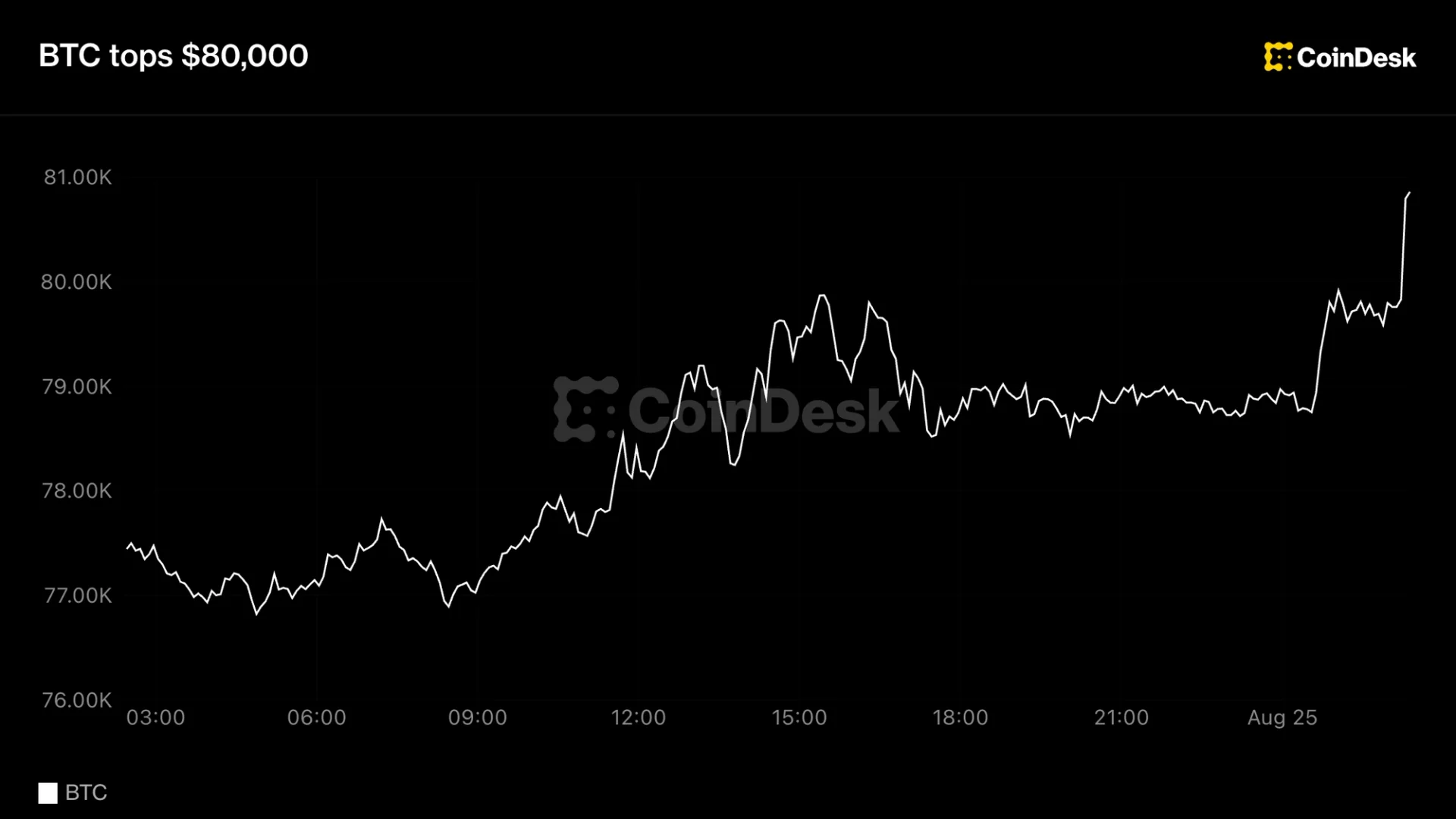


Bitcoin climbed above $80,000 for the first time since May 15, extending a rebound that has lifted BTC roughly 38% from its late-June and early-July lows, when it briefly fell below $58,000. U.S.-listed spot bitcoin ETFs drew about $1.9 billion last week, their strongest weekly inflow since October 2025.
Why it matters
The recovery is drawing support from both institutional demand and a friendlier rates backdrop. ETF inflows show traditional investors are returning through regulated spot exposure, while lower long-term yields improve the setting for risk assets. The Treasury also doubled planned buybacks of long-dated government bonds through early November, financing them with more short-term debt issuance. Its suggestion that it could use its nearly $1 trillion General Account to fund the buybacks put government liquidity and long-term rates at the center of the move.
That support remains tied to the inflation path. Thadeu Dos Santos, regional director at Infinox, said core PCE will be closely watched for signs that underlying price pressures are moderating. A firmer reading could support Treasury yields and the dollar, while softer inflation could reduce expectations of further monetary tightening.
Market impact
For BTC, $80,000 is a recovery milestone after the summer selloff, and the $1.9 billion ETF week gives the move a stronger institutional footing. The next test is whether ETF demand persists as markets absorb the Treasury's financing plans and the new inflation data.
A hotter PCE reading could lift yields and the dollar, weakening the rates backdrop that has helped the rally. A softer reading could reduce expectations of further monetary tightening and preserve the recent relief.

Frequently asked questions
-
How far has Bitcoin recovered from its late-June and early-July lows?
Bitcoin is up roughly 38% from those lows, when it briefly fell below $58,000.
-
What made last week's U.S. spot bitcoin ETF inflows notable?
U.S.-listed spot bitcoin ETFs attracted about $1.9 billion last week, their strongest weekly inflow since October 2025.
-
How did Treasury's bond-buyback plans affect the market backdrop?
The Treasury doubled planned buybacks of long-dated government bonds through early November and financed them with more short-term debt, while falling yields eased financial conditions.
-
Why did the nearly $1T General Account enter the Bitcoin rally narrative?
Treasury suggested it could use its nearly $1 trillion General Account to fund the buybacks, putting government liquidity and long-term rates at the center of the move.
-
What could the upcoming core PCE reading mean for BTC?
A firmer core PCE reading could lift Treasury yields and the dollar, while softer inflation could reduce expectations of further monetary tightening.
 Lookonchain
 Crypto News
 Benjamin Cowen
 Crypto Capital Venture
 WatcherGuru
 Whale Alert
 CoinTelegraph