








 CoinDesk
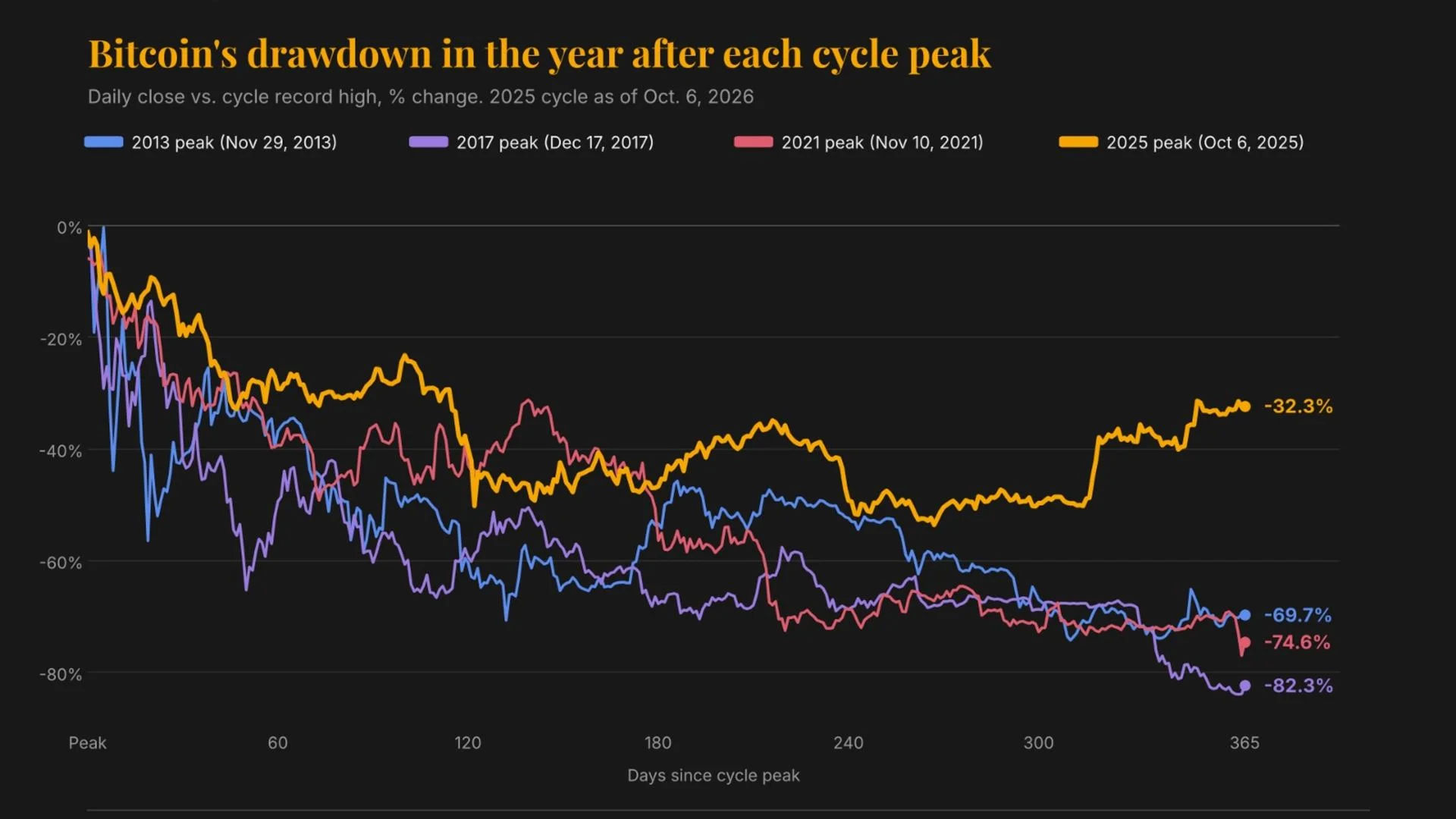



Bitcoin is down 32% one year after reaching a record high above $126,000 on Oct. 6, 2025, a much shallower decline than the 69.7% to 82.3% drops seen one year after earlier cycle peaks. Its latest bear-market low was just below $59,000 on June 30, a drawdown of more than 53% that arrived about nine months after the peak.
Why it matters
The cycle’s market structure has changed. The 2023–25 rally drew more institutional demand through regulated vehicles such as ETFs, while reduced leverage limited the forced selling that deepened earlier crypto downturns. ETF allocations can also rebalance toward target weights, buying weakness rather than amplifying a sell-off.
Bitcoin’s volatility has eased alongside that shift. One researcher put annualized volatility near 40%, compared with historical levels above 80%; an options-market gauge of expected volatility has hovered around 35 points. That can mean shallower declines, but also less explosive rallies. One market participant described the likely pattern as a gradual climb interrupted by sharp drops and recoveries.
Market impact
The milder drawdown does not rule out renewed downside. Options positioning remains neutral to bearish, and one market participant warned that protection against a drop may be relatively cheap while traders are focused on the shallow-correction narrative.
The macro backdrop remains a key risk. The U.S. 30-year Treasury yield recently reached 5.7%, a level last seen in April 2002, and has risen more than 80 basis points this year. Higher yields raise the opportunity cost of holding non-yielding assets such as Bitcoin. The cycle’s resilience may depend on whether institutional demand can absorb that pressure without leverage-driven liquidations returning.

Frequently asked questions
-
How does Bitcoin’s one-year drawdown compare with previous cycle peaks?
Bitcoin is down 32% a year after its record above $126,000. One year after earlier peaks, declines ranged from 69.7% to 82.3%.
-
When did Bitcoin reach its latest bear-market low, and how deep was the drop?
Bitcoin’s latest bear-market low was just below $59,000 on June 30, about nine months after the peak. The decline exceeded 53%.
-
How have ETFs and leverage affected Bitcoin’s downturn?
Institutional ETF allocations can rebalance toward target weights, while reduced leverage limits forced selling and cascading liquidations.
-
What does lower Bitcoin volatility mean for rallies and drawdowns?
Lower volatility can contribute to shallower drawdowns, but it may also mean less explosive rallies. Annualized volatility was put near 40%, versus historical levels above 80%.
-
Why could rising Treasury yields pressure Bitcoin?
Higher yields raise the opportunity cost of holding non-yielding assets such as Bitcoin. The 30-year U.S. Treasury yield recently reached 5.7% and rose more than 80 basis points this year.
 Crypto News
 CoinTelegraph
 WuBlockchain
 Altcoin Daily
 TheBlock
 Crypto Capital Venture