








 CoinDesk
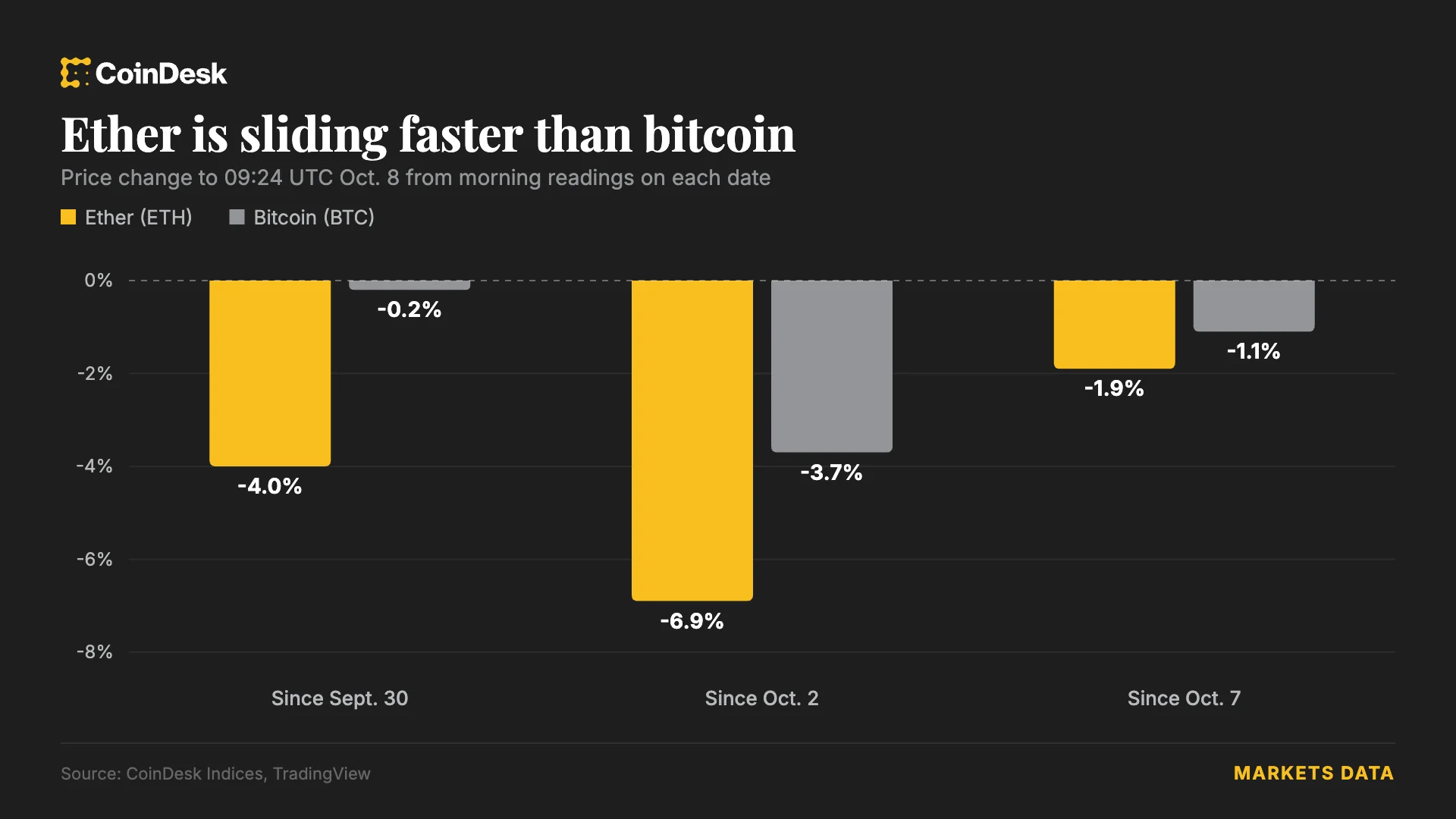



Bitcoin dipped to about $82,300 before recovering to around $82,800, roughly 4% below Tuesday’s high near $86,600. The 30-year Treasury yield climbed to 5.71% ahead of a $22 billion bond auction, while Federal Reserve minutes showed most officials saw another rate increase by year-end as likely appropriate.
Why it matters
Markets are weighing both macro pressure and a longer-term security debate. Ethereum Foundation researcher Justin Drake urged the industry to prepare for “bunker mode,” a gradual migration to addresses whose public keys have never been exposed, warning that AI-driven advances in mathematics could threaten elliptic-curve signatures in “months not years.” He cited 722 mathematical results released by OpenAI.
Vitalik Buterin said the risk should be taken seriously but cautioned holders against scrambling to move funds. Jan3 CEO Samson Mow also dismissed the call for urgency. The disagreement leaves a practical question for Bitcoin and Ethereum holders: how to plan for cryptographic risks without triggering unnecessary or unsafe transfers.
Market impact
Derivatives data pointed to continued selling, but less forced deleveraging. Shorts held a 52% share of taker activity, open interest fell 1% to $150 billion, and liquidations declined to $400 million from $548 million. Falling open interest across BTC, ETH and other majors suggested positions were being reduced rather than fresh bearish bets being added.
Options pricing turned more defensive, with Bitcoin’s one-week put-call skew rising to 10%. NEAR gained 4% as its open interest climbed 11% to $1.70 billion, while SOL fell 2% as its open interest rose 1.5%. Treasury yields, the upcoming inflation reading and the Fed’s next decision remain key macro points for markets.





Frequently asked questions
-
Why did Justin Drake urge the crypto industry to prepare for “bunker mode”?
Drake warned that AI-driven advances in mathematics could threaten the elliptic-curve signatures used to secure Bitcoin and Ether wallets. He advocated gradually moving funds to addresses with unexposed public keys.
-
What did Vitalik Buterin advise holders to do about the wallet-cryptography risk?
Buterin said the risk should be taken seriously, but advised holders against scrambling to move their funds.
-
What did derivatives data suggest about the crypto selloff?
Sellers retained an edge, but open interest declined and liquidations eased. The drop in open interest across major assets pointed more to position reductions than to a broad build-up of new bearish bets.
-
What does Bitcoin’s 10% one-week put-call skew indicate?
The positive skew indicates a stronger bias toward puts, or downside protection, than in the prior day’s largely neutral readings.
-
How did NEAR and SOL open interest move as their prices diverged?
NEAR rose 4% as its open interest climbed 11% to $1.70 billion. SOL fell 2% while its open interest increased 1.5%, a pattern that can point to new short positions.
 Crypto Rank News
 WatcherGuru
 CryptoSlate
 Crypto Capital Venture