








 CoinDesk
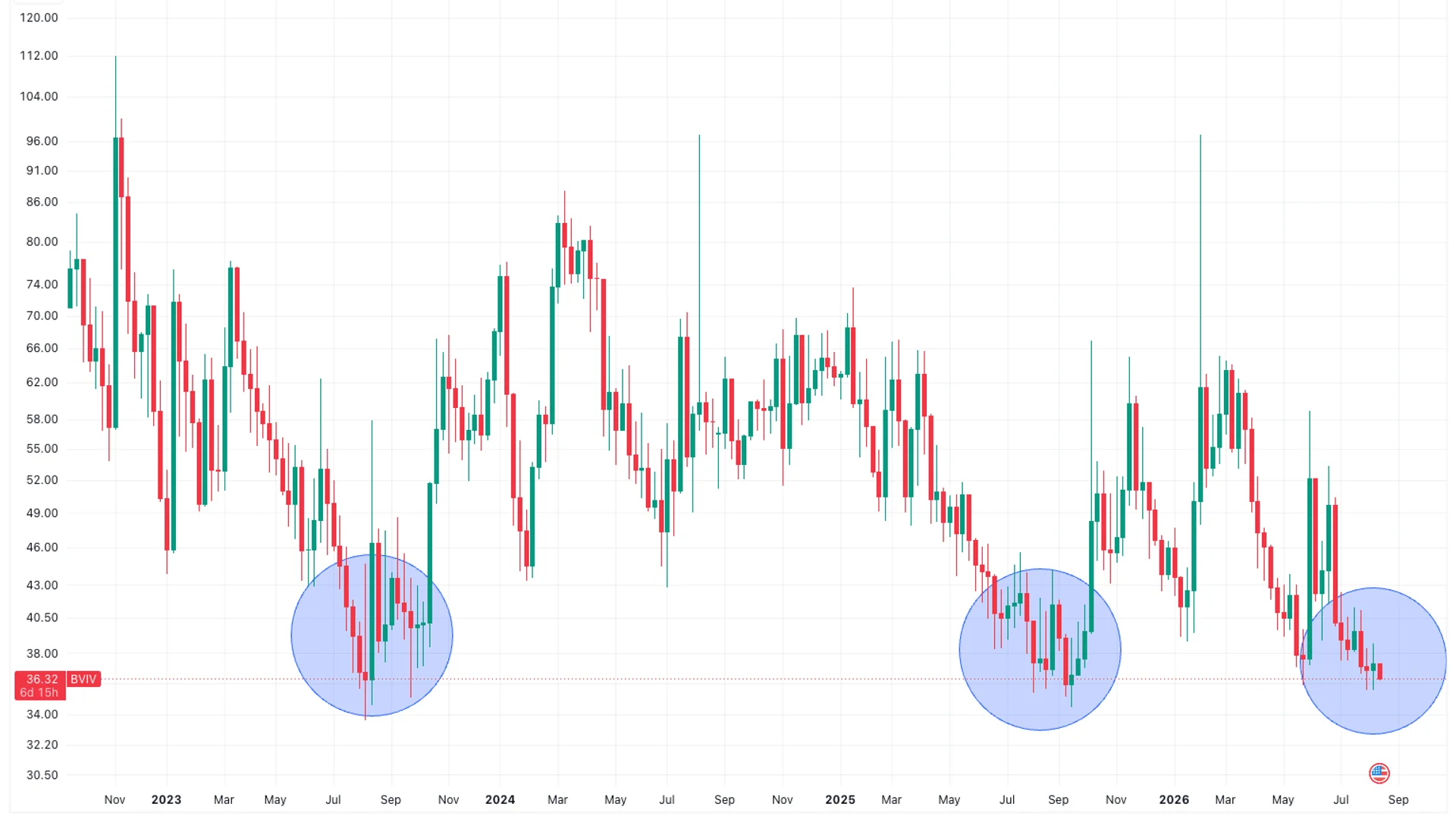
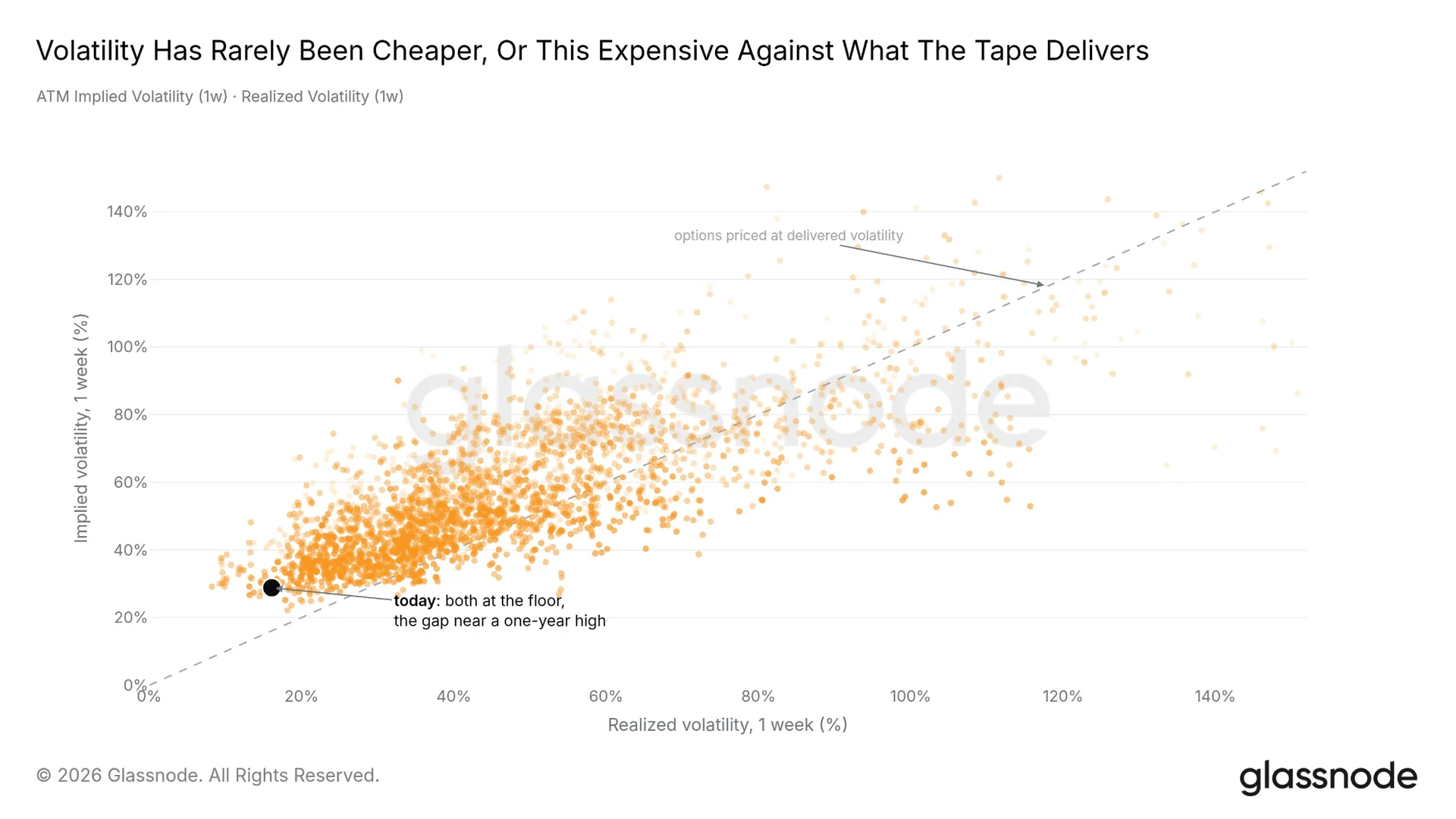


Bitcoin's 30-day implied volatility is sitting at 36.35% against a realized volatility of just 21.80%, a gap of roughly two-thirds that has held even as spot trading stays rangebound. Glassnode data shows the one-week at-the-money implied-versus-realized spread near 29% versus roughly 16%, the widest gap in about a year. The disconnect means options markets are pricing substantially more movement than the spot market is delivering.
Why it matters
The gap exists because options contracts are priced forward-looking, based on what the market expects in the coming days and weeks, rather than on what just happened in the tape. Realized volatility measures past movement; implied volatility prices expected movement, and it tends to mean-revert sharply after extended stretches of low realized vol. The 21.80% reading on realized vol matches the October 2025 floor, a level historically followed by sharper price swings.
Market impact
For options sellers, the setup is favorable: they collect premium sized for a 36% annualized move while spot is delivering closer to 22%. Buyers face a harder math. Calls or puts purchased today need bitcoin to move enough to clear the elevated premium before turning a profit, and the larger the premium, the larger the move required to break even. Traders considering hedges or directional bets should size positions knowing insurance against the next volatility burst is anything but cheap.

Frequently asked questions
-
Why are Bitcoin options pricing more volatility than spot is delivering?
Options contracts are priced forward-looking based on expected movement over the coming days and weeks, not on the quiet trading of the past month. Realized volatility measures what already happened, while implied volatility prices what traders expect next, and the two diverge when spot goes rangebound.
-
What is the current Bitcoin implied-versus-realized volatility gap?
Bitcoin's 30-day implied volatility sits at 36.35% against realized volatility of 21.80%, a gap of about two-thirds. On the one-week measure, at-the-money implied vol near 29% versus realized vol of roughly 16% puts the spread close to a one-year high.
-
Who benefits from elevated implied volatility when spot is rangebound?
Options sellers collect premium sized for a 36% annualized move while spot is delivering closer to 22% annualized movement. The structural edge sits with sellers until realized volatility catches up to the implied pricing.
-
What does elevated implied volatility mean for options buyers?
Buyers face a higher break-even threshold. Calls or puts purchased today need bitcoin to move enough to cover the elevated premium before any profit, and a pricier option means a bigger move is required to clear the cost of the contract.
-
Could Bitcoin volatility spike from these compressed levels?
Realized volatility is mean-reverting and tends to spike after extended stretches of low realized movement. The current 21.80% reading matches the October 2025 floor, a level historically followed by sharper price swings.
 Crypto Rank News
 CoinTelegraph
 TheBlock
 Whale Alert
 Crypto News