








 CryptoSlate
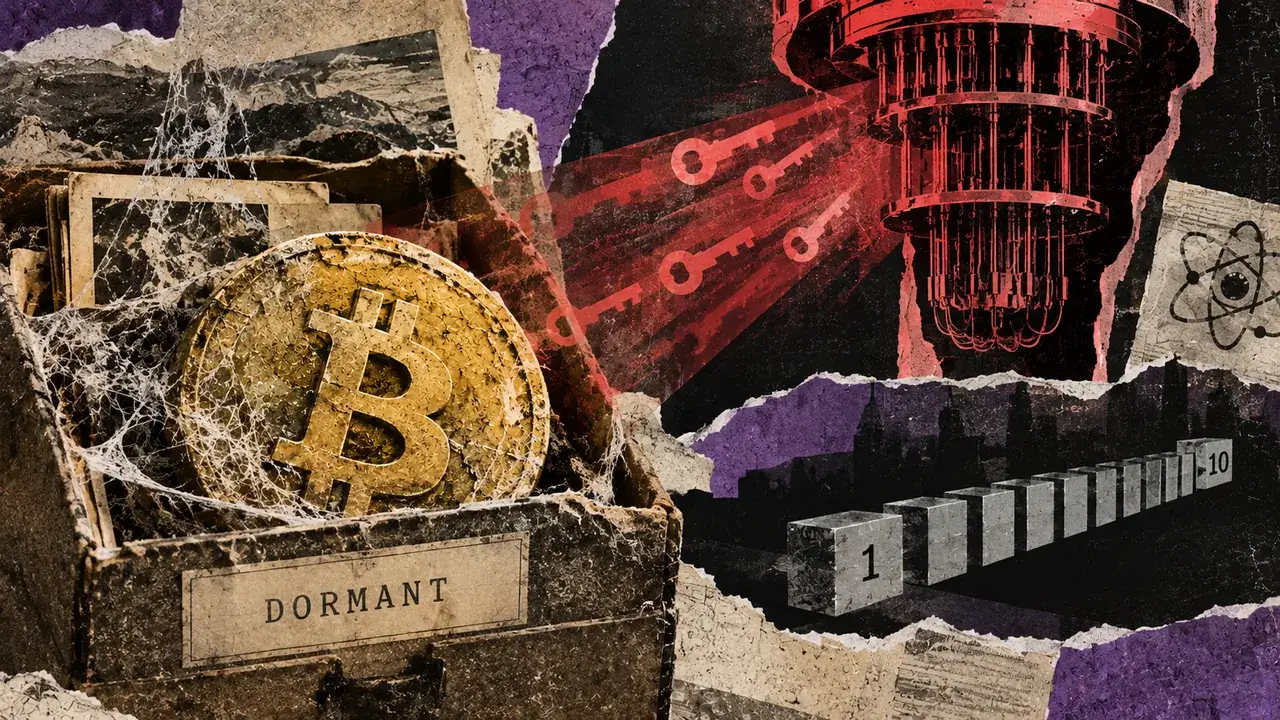



A modeled sweep of 50,000 early Bitcoin outputs, holding 2.5 million BTC, could fit within the combined weight budget of 10 blocks, assuming an attacker had already recovered the keys and miners included the transactions. The scenario is hypothetical: quantum key recovery against Bitcoin remains undemonstrated. Glassnode estimated that 6.04 million BTC, or 30.2% of then-issued supply, had exposed public keys.
Why it matters
The exposure figure does not mean all those coins are lost or dormant. It includes active holdings whose keys became visible through earlier spending or address reuse, as well as outputs with structurally exposed keys. Permanent key loss, holder inactivity and ownership are separate questions. Jameson Lopp estimated that about 2.6 million exposed BTC might be unable to migrate, using inactivity and known-entity labels as proxies.
Bitcoin Improvement Proposal 361 outlines a possible sunset of vulnerable spending: restrict new vulnerable destinations after activation, then tighten legacy-signature spending through rescue conditions. Draft BIP-360 proposes a new output type intended to avoid Taproot's exposed key spending path. Other concepts include advance ownership proofs and spending throttles. These are proposals, not adopted Bitcoin rules, and recovery options may depend on what evidence holders prepared in advance.
Market impact
A quantum sweep would transfer control of existing BTC, not create new supply. A visible transfer could unsettle holders, but any subsequent market disruption would depend on selling, exchange responses and liquidity. The modeled 10-block capacity is not a forecast: fees, competing traffic and miner decisions affect confirmation, and 10 blocks average roughly 100 minutes with substantial variation.
The central governance trade-off is between preserving valid-key spending and restricting signatures that a future attacker might also produce. Bitcoin's participants would have to decide which ownership claims to recognize when an ordinary signature can no longer distinguish a holder from a quantum attacker.

Frequently asked questions
-
How could 50,000 Bitcoin outputs fit into 10 blocks?
The modeled set totals 2.5 million BTC and fits beneath the combined weight ceiling of 10 blocks when divided into transactions. The estimate assumes miner inclusion and does not account for every possible output or spending requirement.
-
What does Glassnode's 6.04 million BTC exposure estimate mean?
Glassnode estimated that 6.04 million BTC, or 30.2% of then-issued supply, had exposed public keys. The measure includes active holdings and does not establish that those coins are dormant or permanently lost.
-
What is BIP-360 intended to change?
Draft BIP-360 proposes Pay-to-Merkle-Root, a new output type intended to avoid Taproot's exposed key spending path when public keys stay hidden.
-
How would BIP-361 address vulnerable Bitcoin spending?
BIP-361 proposes phases that would restrict new vulnerable destinations after activation and later tighten legacy-signature spending through rescue conditions. It remains a proposal.
-
Would a quantum sweep increase Bitcoin's supply?
No. It would transfer control of existing coins rather than create additional issuance. Any subsequent market disruption would depend on selling, exchange responses and liquidity.
 TheBlock
 WatcherGuru
 Glassnode
 WuBlockchain
 CoinTelegraph
 CoinDesk
 Crypto News