


 CryptoSlate


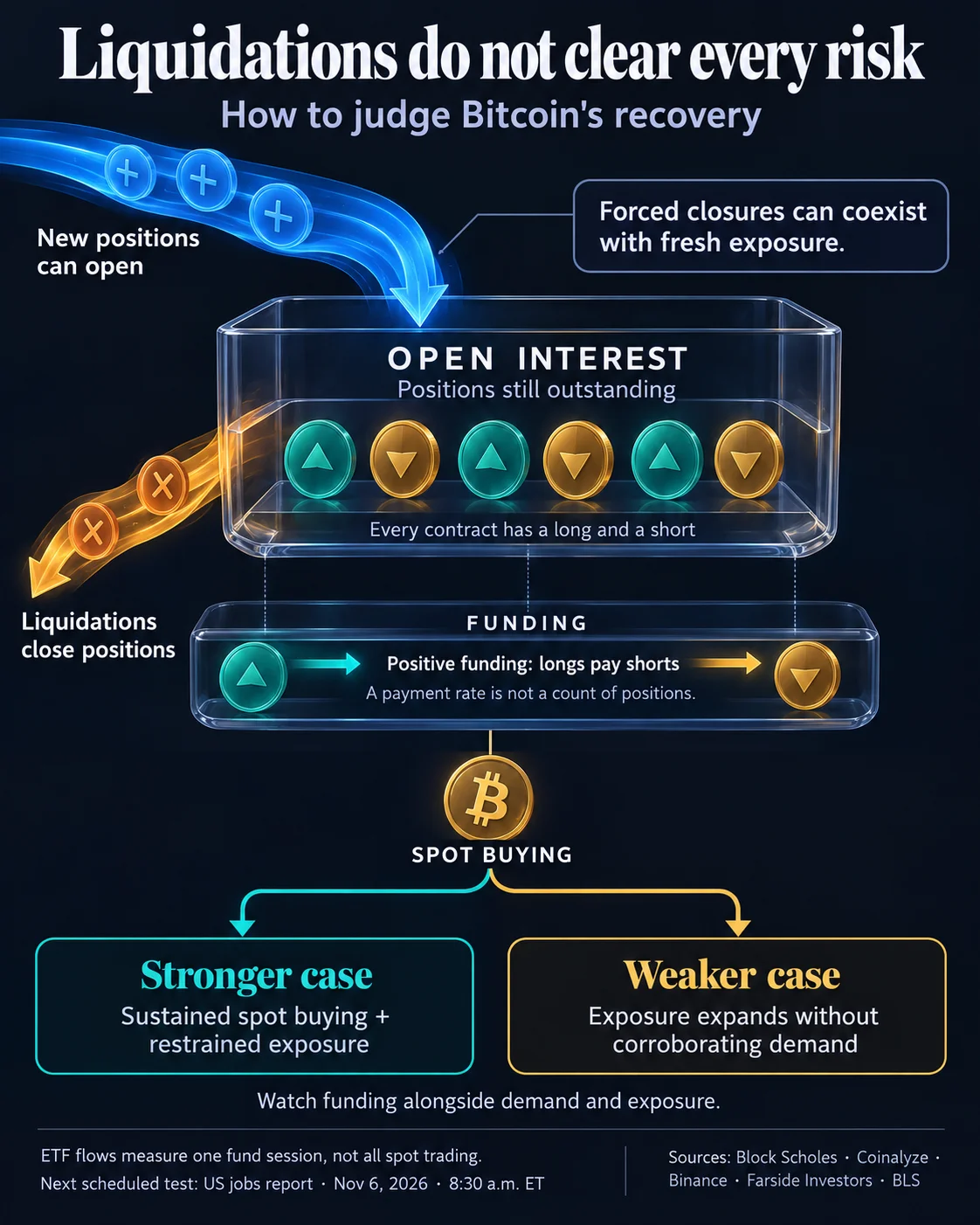

Bitcoin traded near $77,000 on October 31 as two signals complicated its recovery: selected derivatives markets showed higher dollar open interest, while US spot Bitcoin ETFs recorded $643 million in net outflows in the completed October 30 session. Coinalyze displayed $28 billion in aggregate Bitcoin open interest, up 3% over its 24-hour comparison. That is dollar-notional exposure, not a measure of collateral or leverage.
Why it matters
Open interest tracks positions still outstanding, while liquidations count positions forced shut. Block Scholes reported $1.53 billion in crypto-wide liquidations over 24 hours in its October 30 note, 84% of them longs. Separately, it reported Binance BTC-USDT perpetual open interest rose 4.5% between 23:00 UTC on October 29 and 04:00 UTC on October 30. The readings cover different markets and windows, so they do not establish a single market-wide leverage trend.
Funding adds context but does not resolve the exposure question. Block Scholes said Bitcoin funding on Binance fell toward zero but stayed positive during the shock. A later Coinalyze capture displayed rates of +0.01% for Binance’s USDT contract and +0.0065% for Bybit’s, normalized to eight hours. Positive funding alone does not show that a liquidation wave is imminent.
Market impact
The ETF outflow figure covers one completed US fund session, not continuous weekend demand. A return of ETF inflows, alongside sustained spot buying beyond funds, would strengthen the demand case. A recovery that instead relies on expanding positions and increasingly costly funding for longs would leave leverage risk unresolved.
The November 6 jobs report is a scheduled catalyst for expectations around interest rates and financial conditions. Tighter financing expectations could make a position-led recovery more vulnerable; easier conditions could support risk appetite, but would not answer who is buying. Durability depends on spot demand returning while exposure remains restrained.

Frequently asked questions
-
What did the $28 billion Bitcoin open-interest reading measure?
Coinalyze displayed $28 billion in aggregate Bitcoin open interest, up 3% over its 24-hour comparison. It is dollar-notional exposure, not collateral or a direct measure of leverage.
-
How did the reported liquidations differ from the open-interest readings?
Block Scholes reported $1.53 billion in crypto-wide liquidations over 24 hours, 84% in longs. Open interest measures positions still outstanding, and the figures cover different markets and windows.
-
What did Bitcoin funding rates indicate during the shock?
Block Scholes said Binance Bitcoin funding fell toward zero but remained positive. A later Coinalyze capture displayed positive rates for Binance and Bybit, which do not by themselves signal an imminent liquidation wave.
-
Why are the $643 million ETF outflows not a complete measure of demand?
The figure covers the completed October 30 US fund session. It does not measure continuous weekend demand or spot buying beyond the funds.
-
How could the November 6 jobs report affect Bitcoin's recovery?
The report could shift expectations for interest rates and financial conditions. Tighter financing expectations could make a position-led recovery more vulnerable, while easier conditions could support risk appetite.
 WuBlockchain
 Glassnode
 CoinTelegraph
 Lookonchain
 CoinDesk
 WatcherGuru