








 CoinDesk
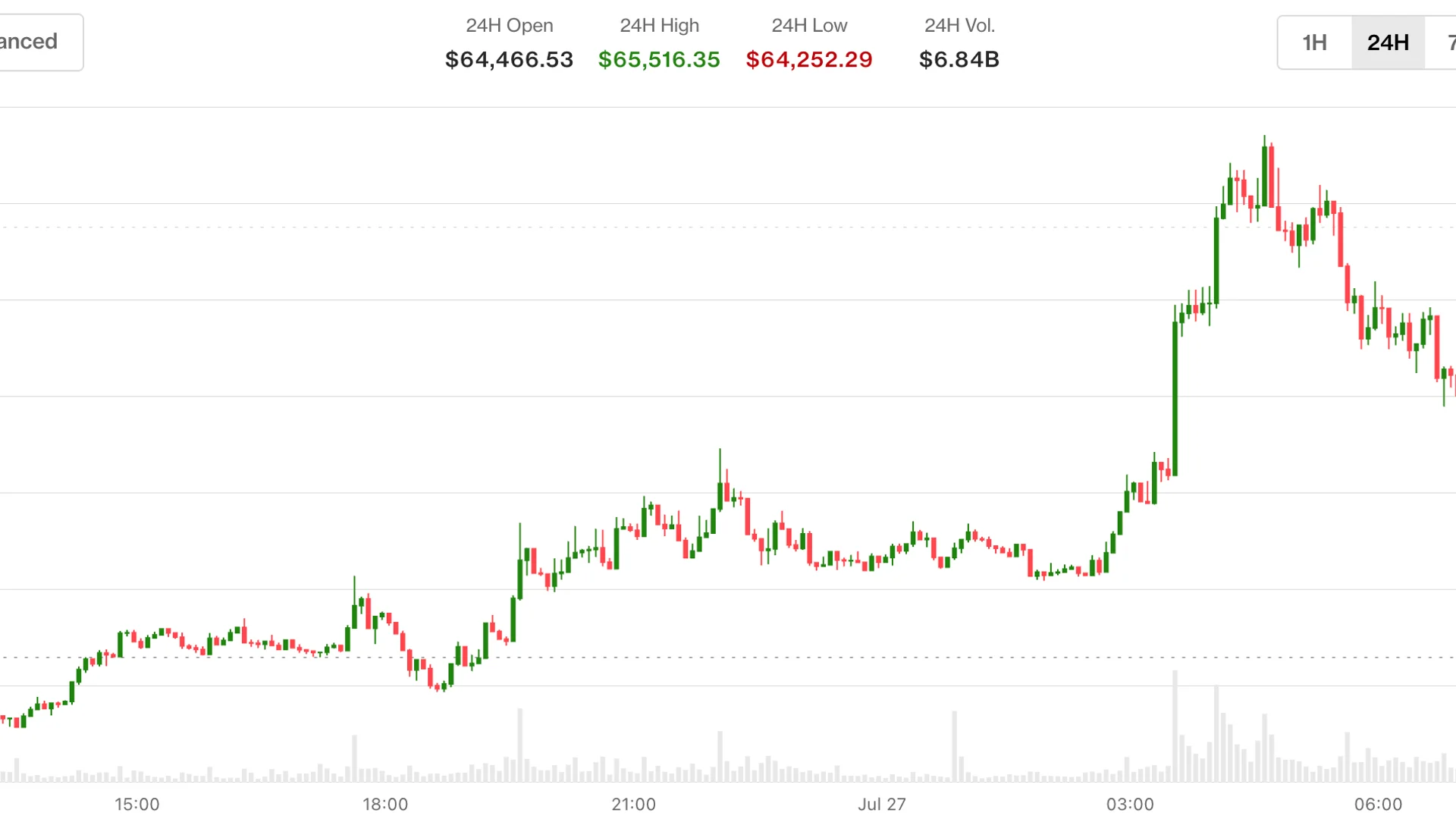



Bitcoin climbed back above $65,000 on Monday as the United States and Iran held fire against each other for a second consecutive day, opening room for a diplomatic breakthrough in a war that first unraveled in late February. The truce triggered a broad risk-on rotation: WTI crude futures gapped lower, trading roughly 5% down at $85, while Brent fell 4.7% to $92.19. Nasdaq and S&P 500 futures edged up about half a percent, and the Aussie dollar and euro both gained against the US dollar as currency markets unwound their oil-driven hedges.
Why it matters
Iran has reportedly said it will continue to halt airstrikes as long as the US does the same, marking a fragile start to what looks like another peace process. Lower oil pulls the headline inflation print down with it, lightening the pressure on the Federal Reserve ahead of its July 28-29 meeting. Markets are pricing just a 36.3% probability of a 25-basis-point rate hike at that meeting, leaving the rate path the dominant variable for crypto over the next two weeks. Geopolitics has flipped from a tail risk on Sunday to a tailwind today, and the speed of that flip is the signal traders are positioning around.
Market impact
ETH outperformed BTC on the day, posting gains above 3% as capital rotated into the majors while Bitcoin's dominance held at 58.6%. That ratio is the closest read on whether this becomes a broad-based altcoin rally: Subburaj, CEO of India-based FIU-registered Giottus exchange, called the move a partial rotation rather than a full regime shift. On the cycle side, Joao Wedson of analytics firm Alphractal noted that the gap between each Bitcoin halving and the following bear-market bottom has averaged roughly 900 days, and the current cycle is already at day 827, putting a potential final bottom somewhere in the next two months if the historical pattern holds. Until the Fed prints and the ceasefire either firms up or breaks, $65K is the line to watch on the upside and oil is the line to watch on the downside.


Frequently asked questions
-
Why did Bitcoin rise above $65,000 on Monday?
Bitcoin climbed back above $65,000 as the United States and Iran held fire against each other for a second consecutive day, triggering a broader risk-on rotation across markets that pulled WTI crude down 5% to $85 and lifted equities and major altcoins like ETH.
-
How much did oil drop and what does it mean for inflation?
WTI crude futures gapped roughly 5% lower to $85 while Brent fell 4.7% to $92.19, easing headline inflation pressure ahead of the Federal Reserve's July 28-29 meeting where markets price just a 36.3% probability of a 25-basis-point rate hike.
-
Did Ethereum outperform Bitcoin in this move?
ETH gained more than 3% on the day versus Bitcoin's move back above $65,000, a sign of capital rotating into majors. Subburaj of Giottus exchange said it is a partial rotation rather than a broad altcoin regime shift, with BTC dominance still at 58.6%.
-
What did analysts say about the Bitcoin four-year cycle bottom?
Joao Wedson of analytics firm Alphractal noted that the gap between each Bitcoin halving and the following bear-market bottom has averaged roughly 900 days, and the current cycle is already at day 827, suggesting a potential final bottom could form within the next two months if the pattern holds.
-
What is the next major risk event for crypto markets?
The Federal Reserve's July 28-29 meeting is the immediate risk window, with traders focused on whether the central bank signals a 25-basis-point rate hike or holds, while the US-Iran ceasefire either firms up or breaks as a secondary tail variable.
 CoinTelegraph
 WuBlockchain
 Crypto News
 CryptoSlate