








 CoinDesk

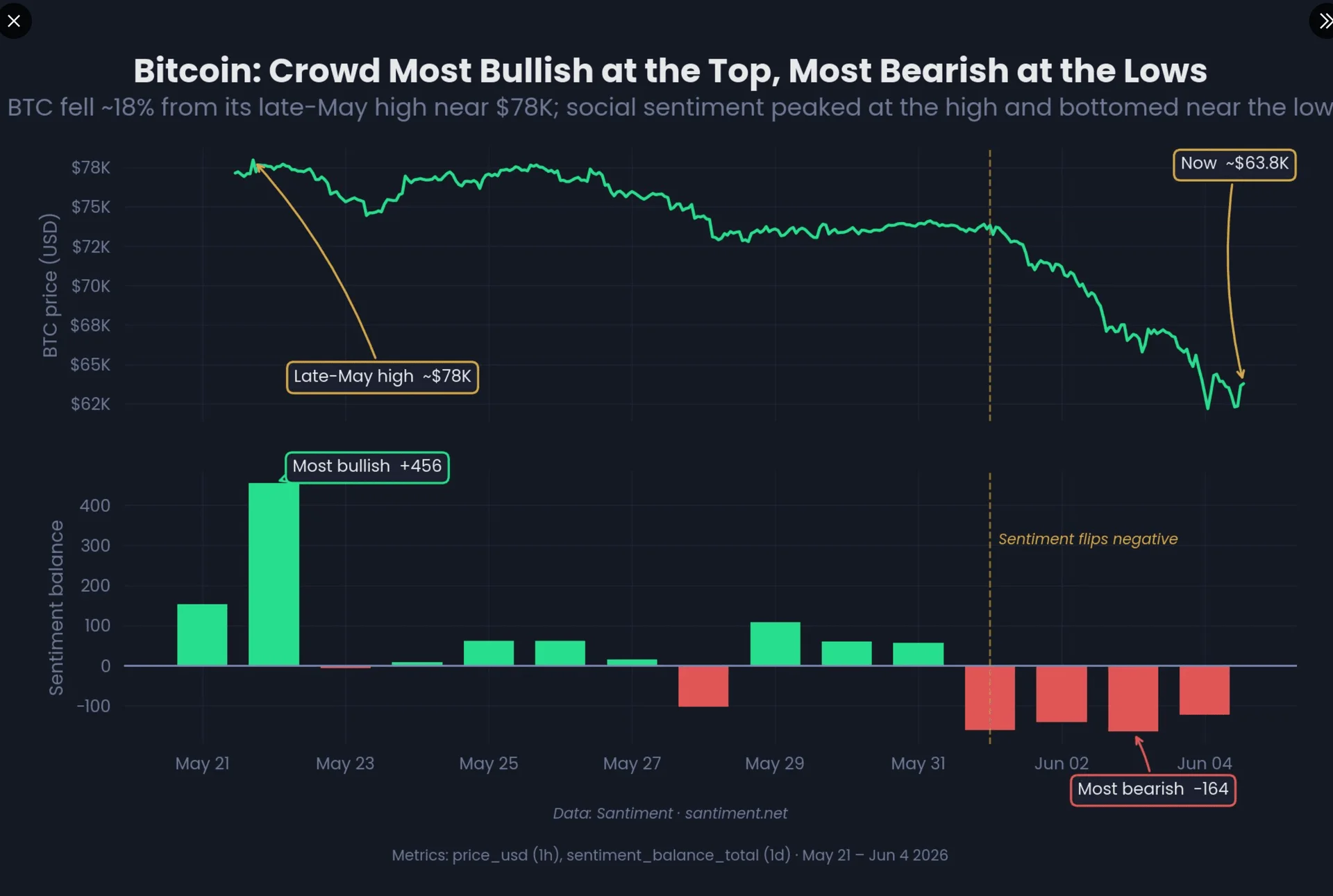
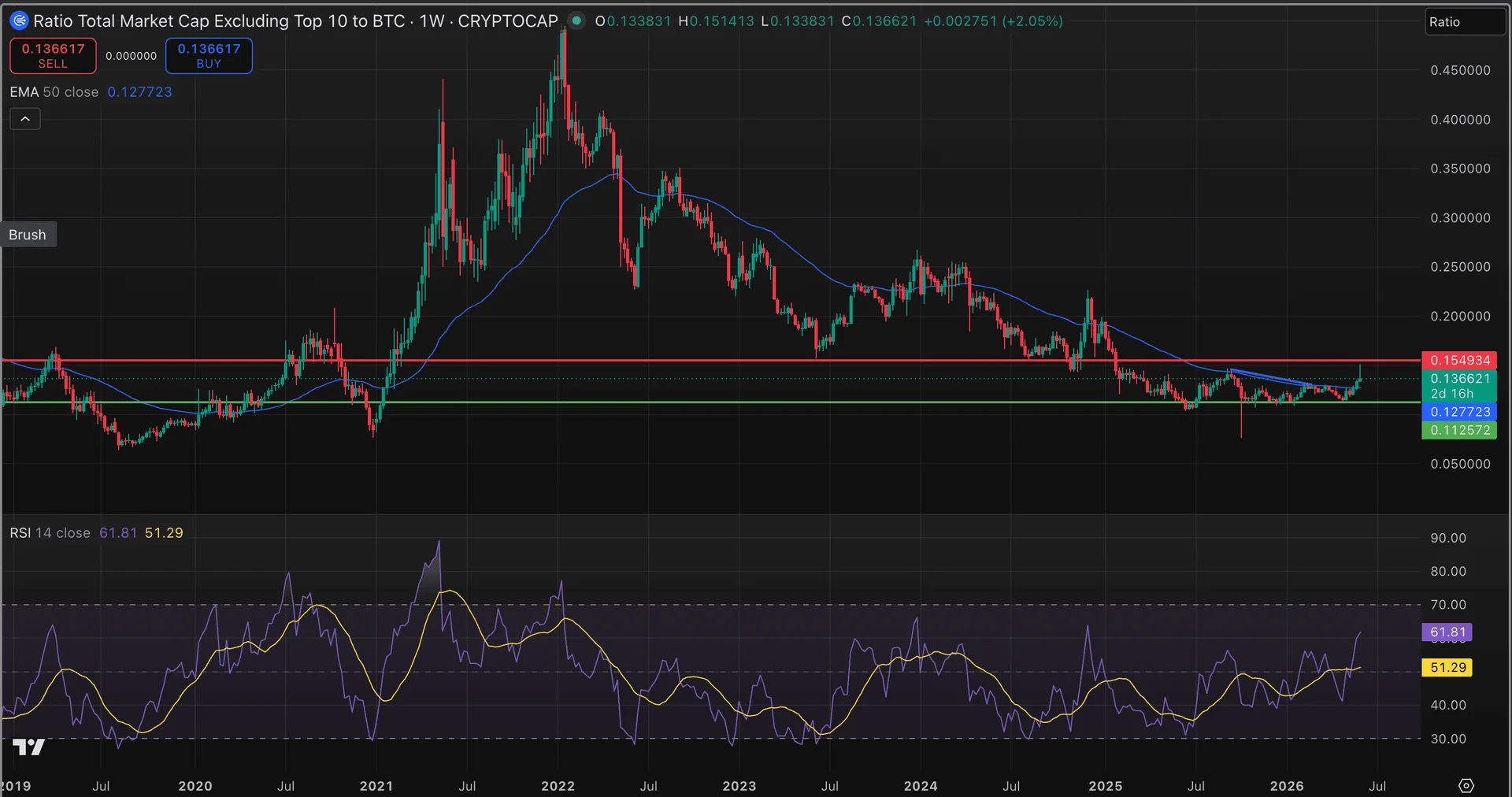

Bitcoin's sentiment gauge is flashing peak bearishness right at the local lows and peak bullishness right at the local highs, the inverse of where contrarian positioning typically pays off. The most pessimistic reading came June 3 with bitcoin pressing toward the low end of its recent range, while the most optimistic reading landed on May 22 near the period high of $78,000. Bitcoin was last trading around $62,400, down roughly 20% from the late-May peak.
Why it matters
The contrarian read is the headline, but the macro tape is doing the actual damage. The AI-led equity rally that pulled global indices to record highs this year has stalled after Broadcom's chip forecast undershot expectations. South Korea's KOSPI slid 4.7%, and the Korean won plus Indonesia's rupiah are at multi-year lows as capital flees emerging Asia — a classic risk-off pattern that drags crypto with it.
The ETF flow picture is also cracked. U.S. spot bitcoin ETFs just ended a 13-day, $4.4 billion outflow streak with a token $3.05 million inflow. Spot ether ETFs broke a parallel 17-session outflow run with $19.30 million, all of it into BlackRock's ETHA. Both prints are too small relative to the streaks they ended to qualify as a regime change.
Market impact
Friday's U.S. nonfarm payrolls report at 8:30 a.m. ET is the binary catalyst. A soft print revives Federal Reserve interest-rate-cut expectations under new Chair Kevin Warsh and likely pulls risk assets back up; a hot print risks extending the unwind. The other level to watch is the $60,000 round number on bitcoin if it gets tested before the data drops — a clean hold there would reinforce the contrarian setup, a clean break would invalidate it.


Frequently asked questions
-
What did the latest Bitcoin sentiment data show?
The gauge printed peak bearishness on June 3 near the local lows and peak bullishness on May 22 near the period high of $78,000. That is the inverse of where the contrarian trade usually pays.
-
Why is Bitcoin under pressure right now?
The AI-led equity rally stalled after Broadcom's chip forecast undershot, dragging global risk assets. South Korea's KOSPI fell 4.7%, and emerging-Asia currencies hit multi-year lows as capital fled the region.
-
Did spot bitcoin ETF flows actually turn around?
U.S. spot bitcoin ETFs ended a 13-day, $4.4 billion outflow streak with a $3.05 million net inflow. The figure is too small relative to the streak to call a regime change.
-
What is the next major catalyst for BTC?
Friday's U.S. nonfarm payrolls report at 8:30 a.m. ET. A soft print would revive Fed rate-cut expectations under new Chair Kevin Warsh and likely lift risk assets; a hot print risks extending the unwind.
-
What level should traders watch on Bitcoin?
The $60,000 round number if it gets tested before the payrolls data. A clean hold there would reinforce the contrarian setup; a clean break would invalidate it.
 WatcherGuru
 Lookonchain
 Glassnode
 Crypto Rank News
 Crypto News