








 CoinDesk
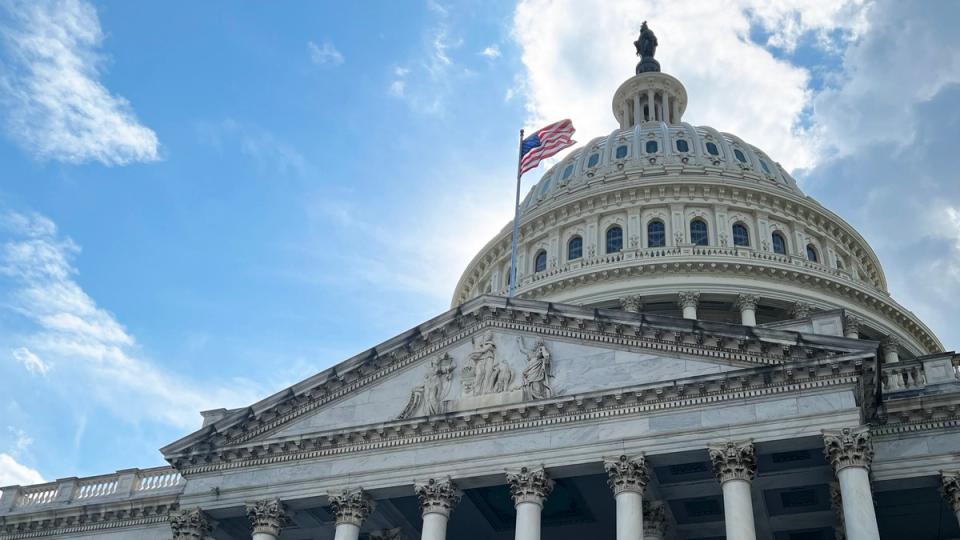



The Digital Asset Market Clarity Act, the most consequential crypto bill Congress has moved in years, cleared the Senate Banking Committee on May 14 and is heading toward a floor vote. Almost everyone agrees the framework is overdue — but the version now advancing contains five gaps that its authors say could undermine the very structure the legislation was written to deliver.
The first is DeFi: a platform that moves, exchanges or conceals value should not be able to escape anti-money-laundering and sanctions controls simply by branding itself decentralized. Treasury has tied Tornado Cash to more than $455 million stolen by the Lazarus Group, and U.N. experts have documented another $147.5 million laundered through the same mixer — a pattern Congress needs to close.
The second is the "Tornado Cash" loophole: when AML obligations attach to a person but vanish the moment software performs the same task, the rule is a workaround, not a safeguard. This May, FinCEN warned U.S. banks that Iran's Islamic Revolutionary Guard Corps has been running a multi-jurisdictional shadow-banking network using digital asset infrastructure to launder oil revenue and finance weapons procurement.
The third is stablecoins. The GENIUS Act drew the perimeter around issuers, but sanctioned Russian entities have already moved money through platforms that impose no identity checks. The Clarity Act should require ecosystem-wide monitoring, or stablecoins risk becoming the preferred rail for sanctions evasion, ransomware and corruption-related laundering.
The fourth is jurisdictional arbitrage: a platform serving U.S. customers or routing through U.S. rails should not be able to shed AML obligations by reincorporating offshore. The Justice Department recently charged a Venezuelan national with laundering roughly $1 billion through a network that ran bank accounts, exchange accounts, private wallets and shell companies in and out of the United States. If a venue facilitates illicit finance, the bill should cut it off from the legitimate system.
The fifth is ethics.


Frequently asked questions
-
What is the Digital Asset Market Clarity Act?
It is the U.S. Senate's flagship crypto market-structure bill, which cleared the Senate Banking Committee on May 14 and is heading toward a floor vote. It is intended to define which digital assets are securities versus commodities and assign regulator jurisdiction over each category of market participant.
-
What are the five gaps critics say the Clarity Act leaves open?
Critics identify a DeFi gap that lets platforms escape AML rules by branding themselves decentralized; a "Tornado Cash" loophole that lets software perform tasks that would trigger controls when done by a person; a stablecoin gap that lets illicit actors route around GENIUS Act issuer rules; a jurisdictional gap that…
-
How much crypto did North Korea launder through Tornado Cash?
Treasury has tied Tornado Cash to more than $455 million stolen by the Lazarus Group, and U.N. experts have reported that North Korea later laundered another $147.5 million through the same platform — a combined figure above $600 million.
-
What is the World Liberty Financial conflict-of-interest allegation?
According to the column and The Wall Street Journal, a member of President Trump's immediate family reportedly signed a deal four days before the 2025 inauguration to sell a 49% stake in World Liberty Financial to an Abu Dhabi-backed entity for $500 million, and the administration later approved giving the UAE access…
-
What amendments would close the Clarity Act's gaps?
The five operative fixes named in the analysis are: a DeFi definitional amendment covering platforms that perform financial functions regardless of self-description, explicit OFAC authority over anonymizing tools, an ecosystem-wide stablecoin monitoring requirement, a cross-border reach clause cutting offshore…
 TheBlock
 CoinTelegraph