


 CryptoSlate
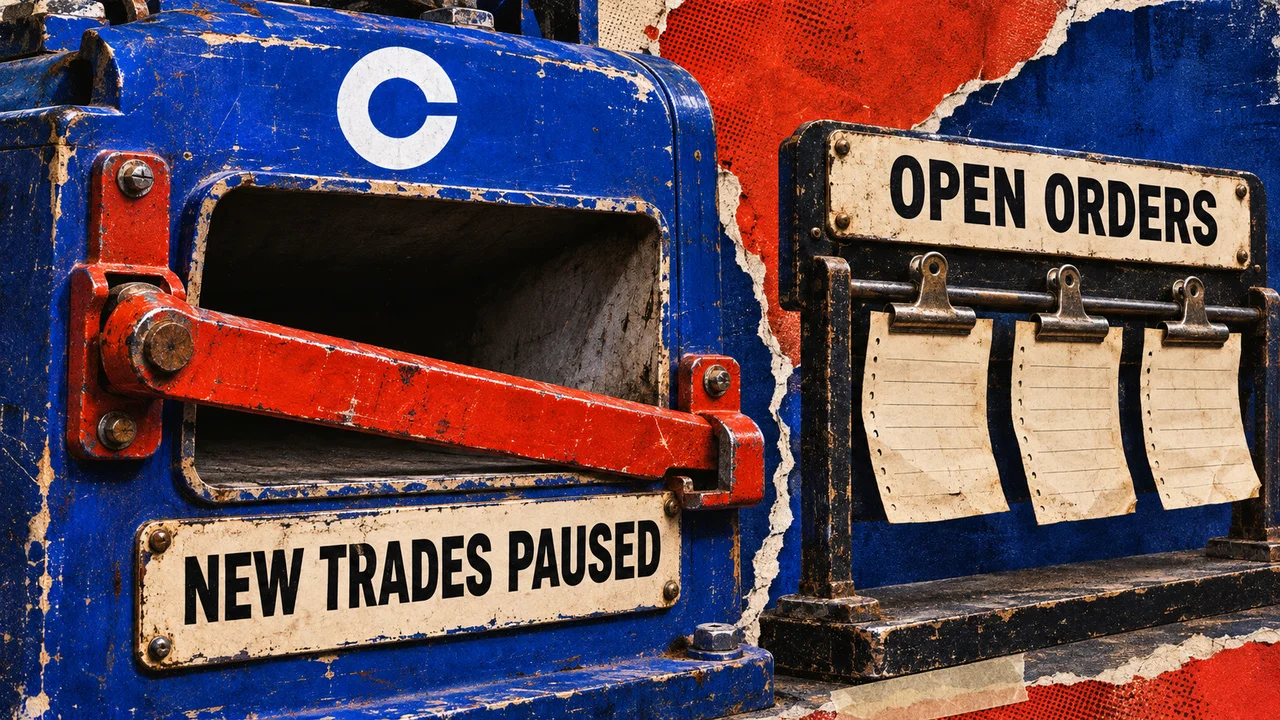

Coinbase is rolling out Agent Controls for Agents, the service that connects users' AI tools to their trading accounts, and the headline feature is enforced on Coinbase's servers rather than left to the agent itself. The Nov. 11 announcement adds a maximum dollar amount per trade, a cap on total trading over 24 hours, and a portfolio percentage-loss trigger that halts new agent trades until the user turns trading back on in the app. Because enforcement runs server-side, the agent cannot bypass or alter the limits, which separates the rules governing execution from instructions given to an AI model.
Why it matters
The gap in the design is as instructive as the controls themselves. Coinbase's announcement does not say auto-stop cancels outstanding orders or closes existing positions, gives no loss-calculation baseline or valuation frequency, and leaves the 24-hour volume window undefined. A pause, a successful cancellation, and a closed position answer different questions, and the published auto-stop description supports only the first. Users cannot treat an agent's stopped status as confirmation that exposure has ended.
CEO Brian Armstrong promoted the controls on Nov. 13 as a way to make AI use in financial accounts safe, and the framing lands in a market where AI agents are moving from experimentation into live trading. Portfolio isolation supports spot crypto only: US futures, including derivatives, require the default portfolio, so the dedicated spot-portfolio boundary does not carry across every supported asset class.
Market impact
For the sector, server-enforced guardrails from the largest US crypto exchange set a template other venues are likely to follow as agentic trading grows. The design keeps users responsible for every trade their agents make, and Coinbase explicitly warns that AI agents can fail and trading can lose the entire investment. Product-category permissions covering crypto, equities, and derivatives are labeled as coming soon, and availability depends on region and account eligibility, so the practical scope of agent trading remains in flux.
Frequently asked questions
-
Does Coinbase's auto-stop cancel an AI agent's open orders?
No. The published auto-stop description only pauses new agent trades. It does not promise cancellation of outstanding orders or closure of existing positions, so users cannot treat a stopped status as confirmation that exposure has ended.
-
How are Coinbase's AI agent trading limits enforced?
The per-trade dollar cap, 24-hour volume limit, and portfolio-loss trigger run on Coinbase's servers. The agent cannot bypass or change the limits itself, and users manage settings through their authenticated Coinbase account.
-
Can AI agents trade futures on Coinbase?
Not from an isolated portfolio. Isolated agent portfolios support spot crypto only, while US derivatives including futures require the default portfolio, so the dedicated spot-portfolio boundary does not apply to futures.
-
What happens when an agent hits the portfolio-loss trigger?
The agent stops placing new trades until the user turns trading back on in the Coinbase app. Coinbase has not published a loss-calculation baseline or valuation frequency for the trigger.
-
Who is responsible for trades made by a Coinbase AI agent?
The user is. Coinbase warns that AI agents can fail and trading can lose the entire investment, and users assume responsibility for agent transactions and third-party data use.
 WatcherGuru
 WuBlockchain
 CoinDesk
 TheBlock