








 CryptoSlate



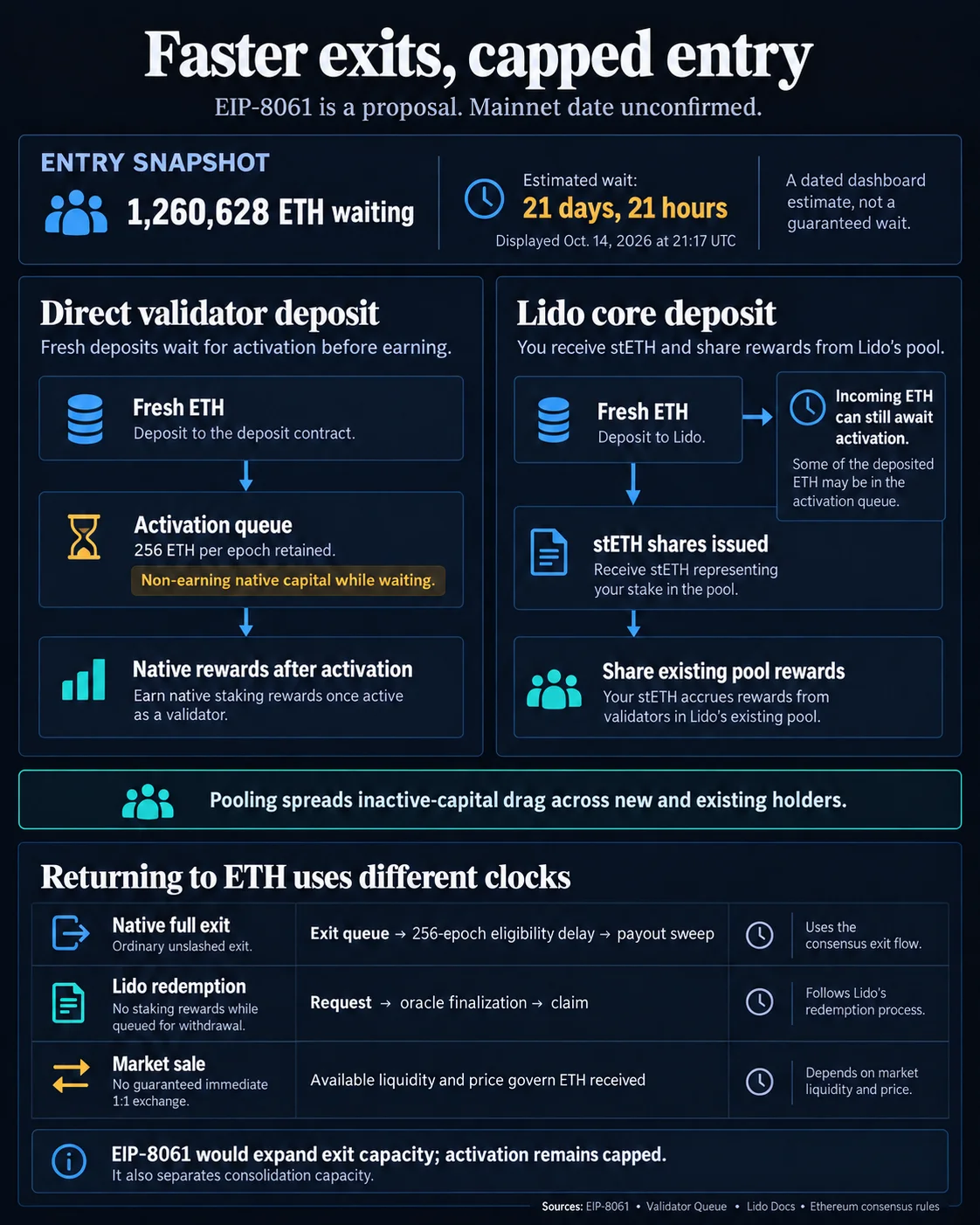
EIP-8061 would expand Ethereum validator exit capacity while keeping the activation cap at 256 ETH per epoch, equivalent to 57,600 ETH a day when fully used. Validator Queue showed 1,282,776 ETH awaiting entry and an estimated wait of 22 days, 6 hours on October 15. The proposal has no confirmed mainnet activation date.
Why it matters
For a direct depositor, ETH earns no native validator rewards while it waits to activate. EIP-8061 targets the exit side of staking, removing the fixed exit cap in favor of capacity that scales with active stake, while giving validator consolidations their own capacity. Exits would still be rate-limited. At 36 million ETH staked, the proposal’s worked example gives roughly four times current capped exit capacity and twice the consolidation capacity.
Liquid staking changes how that entry delay is shared. In Lido’s core pool, a depositor receives stETH shares that can participate in reward distributions before the incoming ETH activates. If that capital remains unproductive while existing validators earn the same rewards, earnings are spread across more capital. That reduces rewards per unit for incoming and incumbent holders; it is not an immediate haircut to principal.
Market impact
The proposal remained in Last Call as of October 15, with a November 1 deadline. Ethereum’s Glamsterdam roadmap listed EIP-8061 for inclusion and expected mainnet in the fourth quarter, but no date was confirmed and the consensus configuration had no activation epoch set for Gloas.
The distinction matters for staking liquidity: faster exit processing would not make new deposits earn sooner. Nor would it remove the later 256-epoch withdrawability delay, about 27.3 hours, or the subsequent withdrawal sweep. Lido withdrawals follow a separate queue, while selling stETH on the secondary market depends on liquidity and market price. The activation cap therefore remains the key constraint on when new direct stake becomes productive.


Frequently asked questions
-
What does EIP-8061 change for Ethereum validator exits?
It would remove the fixed exit cap and make exit capacity scale with active stake. Exits would remain rate-limited, and consolidations would receive separate capacity.
-
Would EIP-8061 let new validator deposits earn rewards sooner?
No. The proposal retains the 256 ETH-per-epoch activation cap, so direct deposits would still earn no native validator rewards while waiting to activate.
-
How long was Ethereum’s validator entry queue on October 15?
Validator Queue displayed 1,282,776 ETH awaiting entry and estimated a wait of 22 days, 6 hours.
-
How can Lido’s core pool distribute rewards before incoming ETH activates?
New stETH shares can participate in subsequent reward distributions before their incoming ETH becomes productive. If that ETH remains idle, earnings are spread across more capital.
-
Does faster validator exit processing remove the later withdrawal delay?
No. Ordinary unslashed exits still face a separate 256-epoch withdrawability delay, about 27.3 hours, followed by a withdrawal sweep.
 Glassnode
 WatcherGuru
 WuBlockchain
 CoinDesk
 Crypto News