


 CryptoSlate



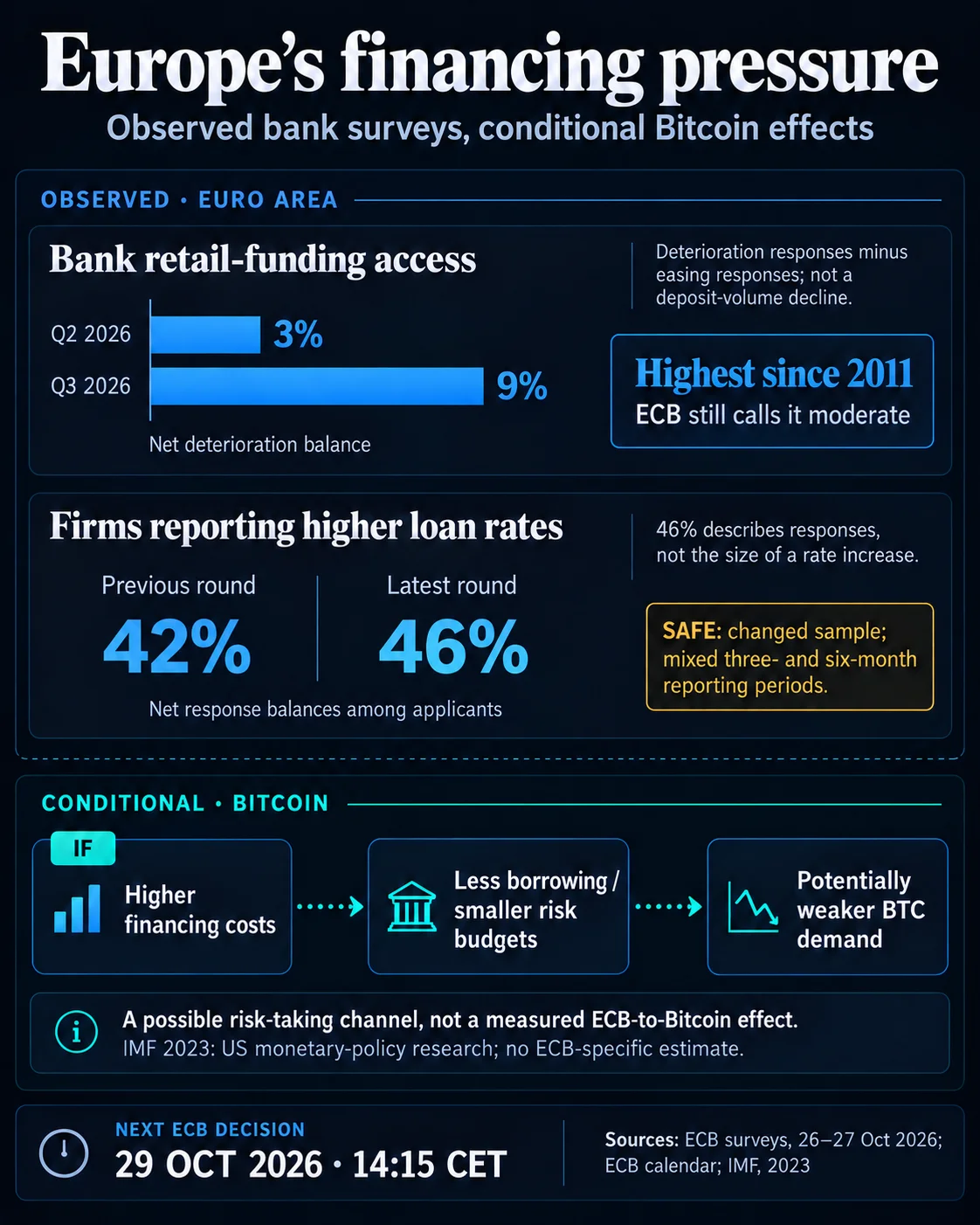
Euro-area banks reported a net 9% deterioration in access to retail funding in the third quarter, the strongest reading since the survey began in 2011, up from 3% in the second quarter. The ECB described the deterioration as moderate. The findings arrived ahead of the central bank’s Oct. 29 policy decision.
Why it matters
Banks cited higher lending rates as the main reason corporate loan terms tightened, with funding costs and balance-sheet constraints also contributing. Risk perceptions and lower risk tolerance, rather than funding constraints, drove tighter loan-approval standards.
A separate ECB survey found a net 46% of firms reporting higher bank-loan interest rates, up from 42% previously. Comparisons need caution: first-time respondents formed a majority of the borrower sample, and firms reported over different periods, from July through September or April through September.
Market impact
The lending data point to more expensive or harder-to-access credit, but not a contraction in outstanding lending. ECB figures showed September annual growth of 3.5% in broad money, 4.2% in adjusted corporate loans and 3.1% in adjusted household loans, all unchanged from August.
For Bitcoin, the potential channel is investor risk-taking: if higher financing costs lead investors to borrow less or reduce risk exposure, demand could weaken. A 2023 IMF working paper found that Federal Reserve tightening reduced a common crypto-price factor through investors’ risk-taking; applying that finding to European financing costs is an inference. Wider funding spreads, tighter dollar financing and actual deleveraging would strengthen the case that regional strain is reaching crypto investors. Stable dollar funding and sustained Bitcoin demand would weaken it. The next policy checkpoint is the ECB decision scheduled for Oct. 29 at 14:15 CET.

Frequently asked questions
-
How did euro-area banks rate the deterioration in retail-funding access?
The net balance reporting worse access was 9% in Q3, up from 3% in Q2 and the strongest reading since the survey began in 2011. The ECB described it as moderate.
-
What did banks say was driving tighter corporate loan terms?
Banks cited higher lending rates as the main reason, with funding costs and balance-sheet constraints also contributing.
-
Why should the borrower interest-rate survey be compared cautiously?
A majority of respondents were first-time participants, and firms reported over different periods. Those sample and reporting-window differences complicate comparisons.
-
Did euro-area money and loan growth turn negative in September?
No. Annual growth was 3.5% for broad money, 4.2% for adjusted corporate loans and 3.1% for adjusted household loans, all unchanged from August.
-
What evidence would indicate that European credit strain is affecting Bitcoin investors?
Wider funding spreads, tighter dollar financing and actual deleveraging would strengthen that case. Stable dollar funding and sustained Bitcoin demand would weaken it.
 CoinTelegraph
 CoinDesk
 TheBlock
 WuBlockchain
 Crypto Capital Venture