








 CryptoSlate
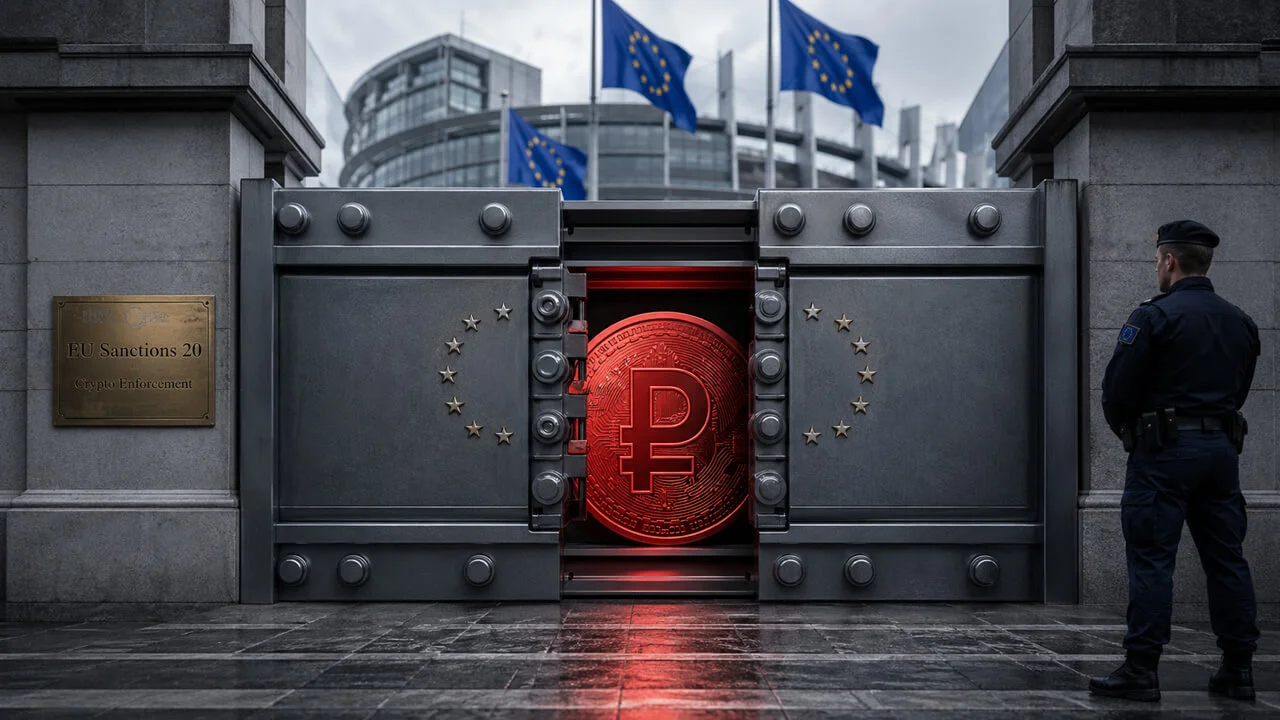
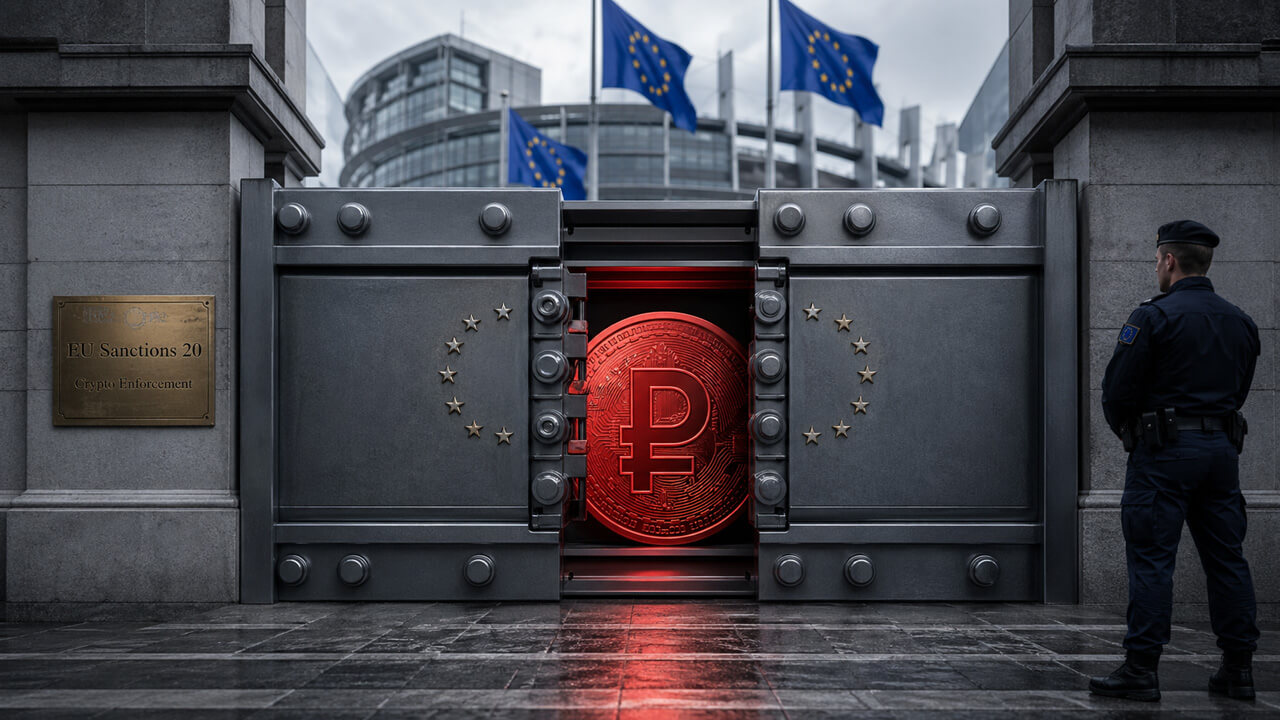


The European Union adopted its 20th Russia sanctions package on April 23, expanding the perimeter well beyond individual exchanges and wallets for the first time. The package adds 120 new listings and explicitly bans EU persons from doing business with any Russian crypto asset service provider, plus any decentralized platform being used to circumvent sanctions. It also prohibits the use of and support for RUBx, the ruble-pegged token Rostec had been building on Tron alongside the RT-Pay payment platform, and bars support for the digital rouble — the central bank digital currency the Bank of Russia has been developing. Earlier rounds mostly named specific venues; this one targets the layer above them.
Why it matters
The shift is from entity-based screening to route-based compliance. TRM Labs frames the package as a response to platform succession risk after Garantex was disrupted, with A7A5 acting as the financial bridge that let activity migrate to Grinex. Chainalysis reads it the same way from a compliance angle: the measure is aimed at categories of evasion infrastructure, not single named entities. A7A5, identified by Chainalysis as trading in significant volume on a Kyrgyz venue operating as Meer.kg (TengriCoin), turns from background context into a named enforcement path. Netting transactions with Russian payment agents are also banned — netting can mask the underlying counterparties of Russia-linked flows even when individual wallets look clean.
Market impact
For stablecoin issuers, custodians, exchanges, payment processors, and infrastructure providers, the operational test is whether they can screen the whole route rather than a wallet or a brand name. TRM notes the package forces a move from name-matching to establishment and operating-nexus checks — a brand-new Russian service that hasn't been individually designated can still trigger exposure if it's based in Russia or routes through one. The likely near-term effect is friction: Russia-linked settlement is set to get pricier and less reliable as redemption, platform access, custody, and payment-agent relationships all face new controls. The secondary risk is migration, as successor platforms, nested services, and third-country brokers push activity into less transparent venues — which is exactly the architecture Brussels is now designing its next round against.


Frequently asked questions
-
What does the EU's 20th Russia sanctions package actually ban in crypto?
Adopted April 23, the package bans EU persons from dealing with any Russian crypto asset service provider, any decentralized platform used to circumvent sanctions, the RUBx ruble-pegged token, support for the digital rouble CBDC, and netting transactions with Russian payment agents.
-
Why is A7A5 central to this sanctions round?
Chainalysis identifies significant A7A5 volume trading on a Kyrgyz venue operating as Meer.kg, and TRM Labs says the token served as the financial bridge between Garantex and Grinex after Garantex was disrupted — turning A7A5 from background context into a named enforcement path.
-
What is RUBx and why is the EU targeting it?
RUBx is a ruble-pegged token Rostec planned to issue on Tron alongside the RT-Pay payment platform. The Commission says the package prohibits use of and support for RUBx, treating it as part of a sanctions-relevant payment architecture rather than a standalone token.
-
How does this change crypto compliance for EU firms?
Screening now has to look at the whole settlement route — where a counterparty is established, which token settles the trade, which payment agent moves the money, and whether a state-backed digital currency is involved — rather than just matching wallet addresses or exchange names against a list.
-
Could this package just push Russian crypto activity offshore?
Chainalysis and TRM both flag migration risk, as successor platforms, nested services, and third-country brokers can reroute activity into less transparent venues. The EU is pairing crypto restrictions with measures against third-country financial institutions and anti-circumvention channels to pressure that…
 WatcherGuru
 Altcoin Daily
 TheBlock
 CoinDesk
 WuBlockchain
 CoinTelegraph
 Crypto News
 Crypto Rank News
 Benjamin Cowen