








 CoinDesk



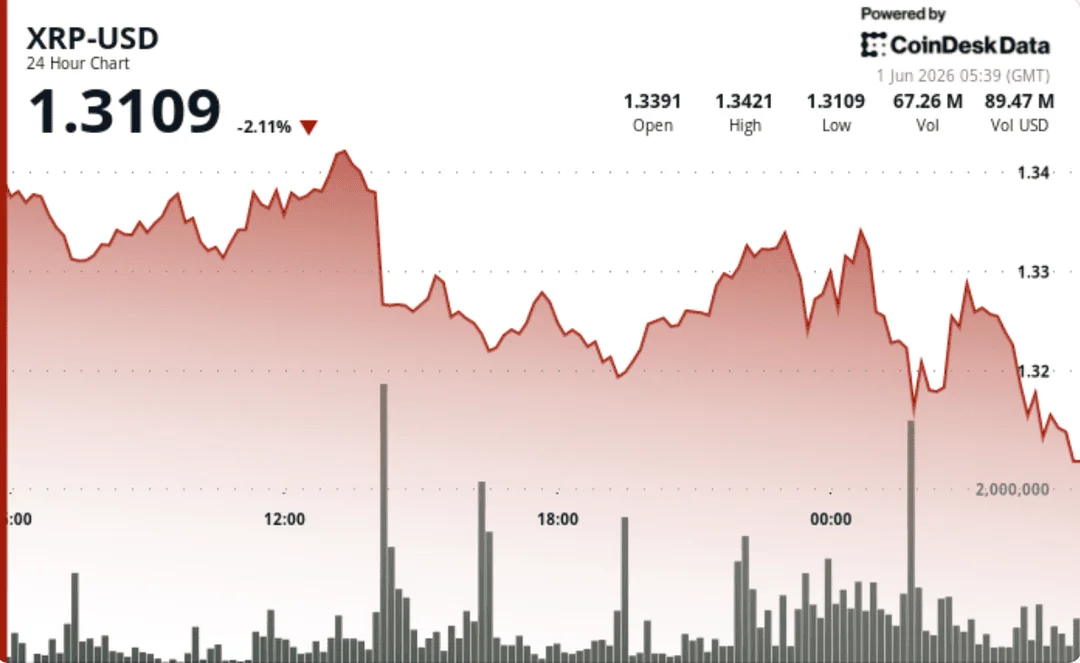
The first week of June turns crypto's 2025 legislative wins into hard operating deadlines. Comment periods on the GENIUS Act's stablecoin framework close on June 2 for the Treasury, FDIC and FinCEN/OFA — the moment a federal rule stops being statute and becomes the spec issuers have to build to. What gets settled in those windows decides who can issue, what reserves they hold and whether yield-bearing stablecoins survive intact, with banks still pushing to slow the rollout in a fight that has already stalled the Clarity Act for months. The Senate floor reopens June 3 to consolidate Clarity and the GENIUS updates into a single vehicle, targeting an August signing.
Why it matters
Stablecoins in circulation hit a record $322 billion in late May — a level BlackRock's Samara Cohen called the bridge between traditional finance and digital liquidity — and the ECB is now warning the instruments could cement dollar dominance. Citi separately projects stablecoins alone will drive demand for up to $1 trillion in onchain U.S. T-bills and $2.6 trillion in tokenized stocks, framing tokenized real-world assets as a $2.7T-$8.2T market by 2030.
Market impact
The macro tape is dense: U.S. ISM Manufacturing (est. 52.6), JOLTS (6.8M), ADP (110K), ISM Services (53.6) and Friday's May nonfarm payrolls (est. 96K, unemployment 4.3%) all print into a Fed that's already pricing the next move. On the chain side, Ethereum's Q3 'Glamsterdam' upgrade — parallel execution, ePBS MEV reforms, a 200M gas limit target and lower L1 fees — and Sei's June 2 Mastercard partnership unveiling both sit inside the same window. Watch the GENIUS comment-letter language on reserves and yield: that text is what every issuer will price against.




Frequently asked questions
-
What closes on June 2 in the GENIUS Act timeline?
Comment periods on the GENIUS Act's stablecoin framework close June 2 for the Treasury, FDIC and FinCEN/OFA — the point at which federal guidance becomes the operating spec issuers must build to.
-
Why are banks fighting the GENIUS Act rollout?
Banks have spent months pushing to slow the rollout, primarily over yield-bearing stablecoins. That fight has already stalled the Clarity Act for months and now threatens the GENIUS framework's reserve and yield rules.
-
How large is the stablecoin market right now?
Stablecoins in circulation hit a record $322 billion in late May. BlackRock's Samara Cohen called stablecoins the bridge between traditional finance and digital liquidity, and the ECB has warned the instruments could cement dollar dominance.
-
What does Citi project for stablecoin-driven tokenization?
Citi projects stablecoins alone could drive demand for up to $1 trillion in onchain U.S. Treasury bills and $2.6 trillion in tokenized stocks, framing tokenized real-world assets as a $2.7T-$8.2T market by 2030.
-
Which Ethereum upgrade lands this quarter?
Ethereum's Q3 'Glamsterdam' upgrade adds parallel execution, ePBS MEV reforms, a 200M gas limit target and lower L1 transaction fees — all sitting inside the same June policy window as the GENIUS deadlines.
 WatcherGuru
 CoinTelegraph
 WuBlockchain
 CryptoSlate
 Benjamin Cowen
 TheBlock