








 CoinDesk
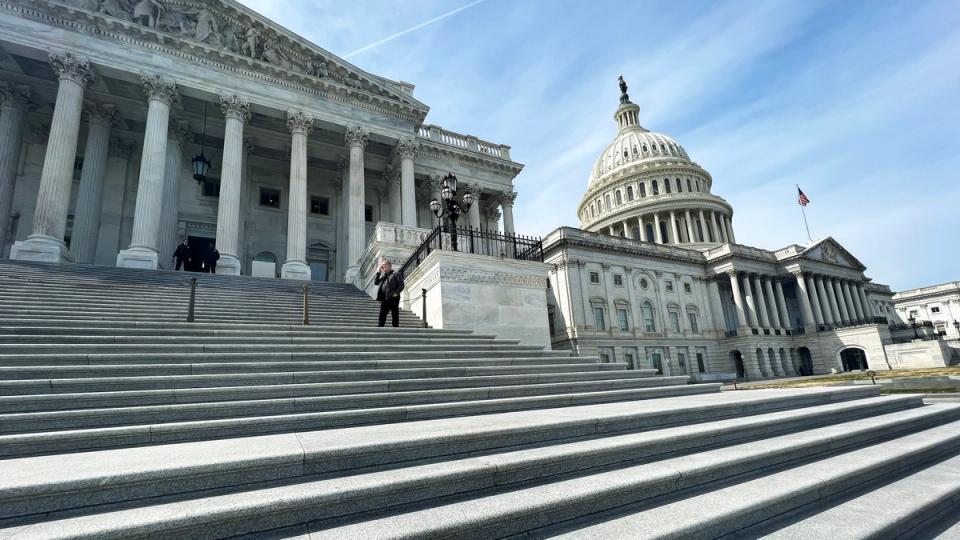



The House Ways and Means Committee circulated seven draft bills late Thursday aimed at rewriting the tax treatment of digital assets, setting the stage for a full-committee hearing on June 9 to discuss crypto tax policy. The package touches staking and mining rewards, a de minimis exemption for routine network transaction fees, securities-lending and mark-to-market parity for widely traded digital assets, charitable deduction treatment, and what industry groups call sensible tax treatment for GENIUS-Act-compliant stablecoins.
Alison Mangiero, head of industry affairs and U.S. policy at the Crypto Council for Innovation, framed the release as the third leg of a metaphorical three-legged stool of crypto legislation — alongside the stablecoin-focused GENIUS Act and the market-structure-focused Clarity Act, the latter of which is still working through Congress. Her statement called the format significant on procedural grounds: members working through specific legislation with expert witnesses before any markup is a deliberative structure the committee has not used in years.
Why it matters
Crypto tax legislation has been an open question since the 2017-era guidance stopped scaling with the industry, and the committee reaching the hearing-before-markup stage is a meaningful procedural step. Whether the bills become law in the 2026 calendar year is unclear — the House and Senate have more advanced priorities competing for floor time — but the existence of structured draft text signals that tax treatment of digital assets is now on a legislative track rather than a press-release track. The de minimis exemption and the parity provisions for lending, mark-to-market, and charitable deductions would, if enacted, materially change how retail users, miners, and institutions interact with US tax code on routine digital-asset activity.
Market impact
For US-based miners and stakers, clearer reward-taxation rules reduce the compliance overhang that has shaped capital allocation since 2022. Stablecoin issuers operating under the GENIUS Act framework get a cleaner payments-instrument classification, which matters for transaction-volume economics.


Frequently asked questions
-
What did the House Ways and Means Committee just release on crypto?
Seven draft bills on crypto tax policy, circulated late Thursday ahead of a June 9 full-committee hearing. They address staking and mining rewards, a de minimis exemption for routine network transaction fees, securities-lending and mark-to-market parity, charitable deduction treatment, and stablecoin payments…
-
Why is this procedural posture meaningful for crypto legislation?
The committee is moving from press-release signaling to structured draft text and a formal hearing before any markup. Crypto Council for Innovation's Alison Mangiero noted that the format — members working through specific bills with expert witnesses — is one the committee has not used in years.
-
Will these crypto tax bills become law in 2026?
It is unclear. The House and Senate have more advanced legislative priorities competing for floor time, including the market-structure-focused Clarity Act. But the existence of draft text puts crypto taxation on a legislative track rather than a messaging track.
-
How would the de minimis exemption change crypto tax treatment?
The proposal would exempt routine small network transaction fees from taxable events, a relief industry groups have long advocated for. It would also broaden as the legislative process continues, according to the Crypto Council for Innovation.
-
What is the FASB Investor Advisory Committee doing on stablecoins?
The committee met late last month to discuss whether stablecoins qualify as cash equivalents, leaning toward a high threshold. It is weighing disclosure on reserve structure, issuer identity, custody, currency risk, and interim reporting — and will reconvene in November.
 TheBlock
 WatcherGuru
 WuBlockchain