








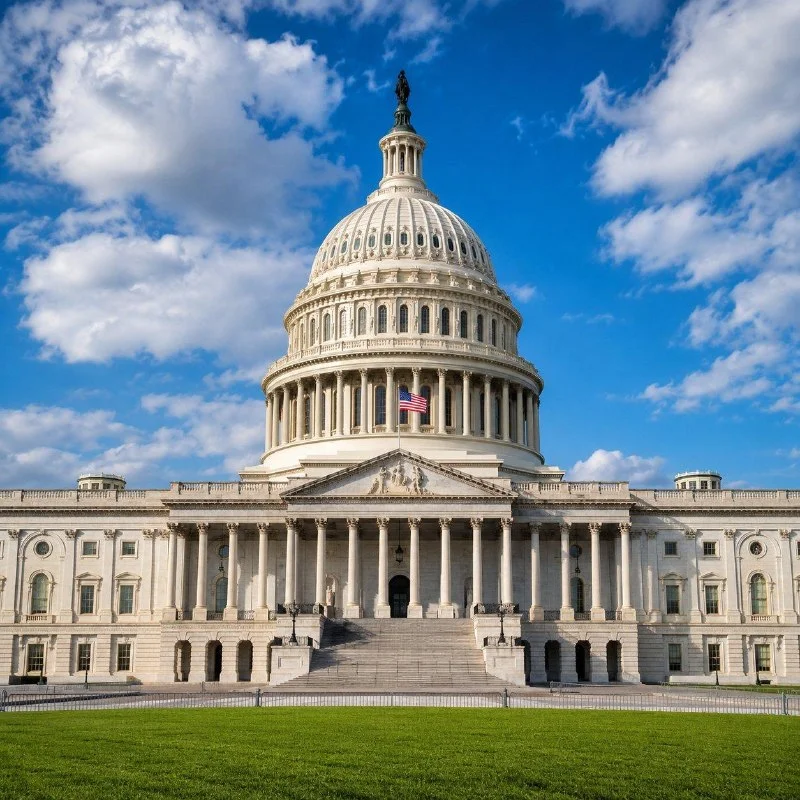

The US House Ways and Means Committee circulated seven draft bills on digital asset taxation ahead of a Tuesday hearing, according to a draft circulating on Capitol Hill. The package includes tax relief provisions for mining and staking, plus a de minimis exemption for small crypto transactions.
Why it matters
Mining and staking have lived in a gray zone for years: the IRS treats block rewards as ordinary income at receipt, but there has been no carve-out for the cost of electricity, hardware depreciation, or the lock-up period that separates a validator's reward from a saleable token. Explicit statutory language on both fronts would let miners and stakers plan capex and treasury policy with actual tax certainty rather than guidance-by-letter.
A de minimis exemption — long lobbied for by exchanges and payment-rail builders — would mirror the existing rule for foreign currency transactions, letting small everyday payments settle without triggering a reportable gain or loss event. That single change has been one of the most-requested items from US-based crypto builders, who argue it is a precondition for any consumer-facing on-chain payment product to clear the regulatory bar.
Market impact
Tax code clarity tends to beget US-based capex: miners, validators, and crypto payroll operators have repeatedly told lawmakers that ambiguous treatment is the binding constraint on domestic build-out. Seven bills in one hearing is an unusually broad signaling move from a committee that has historically been cautious on digital assets — and it sets the agenda for whatever larger market-structure legislation comes next.
Frequently asked questions
-
What is the de minimis exemption the bills are proposing?
It would let small everyday crypto transactions settle without triggering a reportable gain or loss event, mirroring the existing rule for foreign-currency transactions. The exemption has been a top ask from US-based crypto builders and payment-rail operators.
-
How would the bills change tax treatment of mining?
The draft bills would create explicit statutory treatment for mining, addressing the current gray zone around block rewards — currently taxed as ordinary income at receipt — and the associated costs of electricity and hardware depreciation.
-
What about staking rewards under the proposals?
The package includes tax relief for staking, potentially clarifying how validators handle the lock-up period between earning a reward and being able to sell the token. Current guidance treats rewards as ordinary income at receipt with no statutory carve-out.
-
Why does this matter for US-based crypto businesses?
Tax code clarity is repeatedly cited by miners, validators, and crypto payroll operators as the binding constraint on domestic build-out. Statutory language lets them plan capex and treasury policy with certainty instead of relying on IRS guidance letters.
-
Is this connected to broader market-structure legislation?
Seven bills in a single hearing is an unusually broad move from a committee historically cautious on digital assets, and signals the agenda for whatever larger market-structure framework Congress considers next.

 TheBlock
 WatcherGuru
 CoinDesk
 WuBlockchain
 CZ Binance