








 Lookonchain
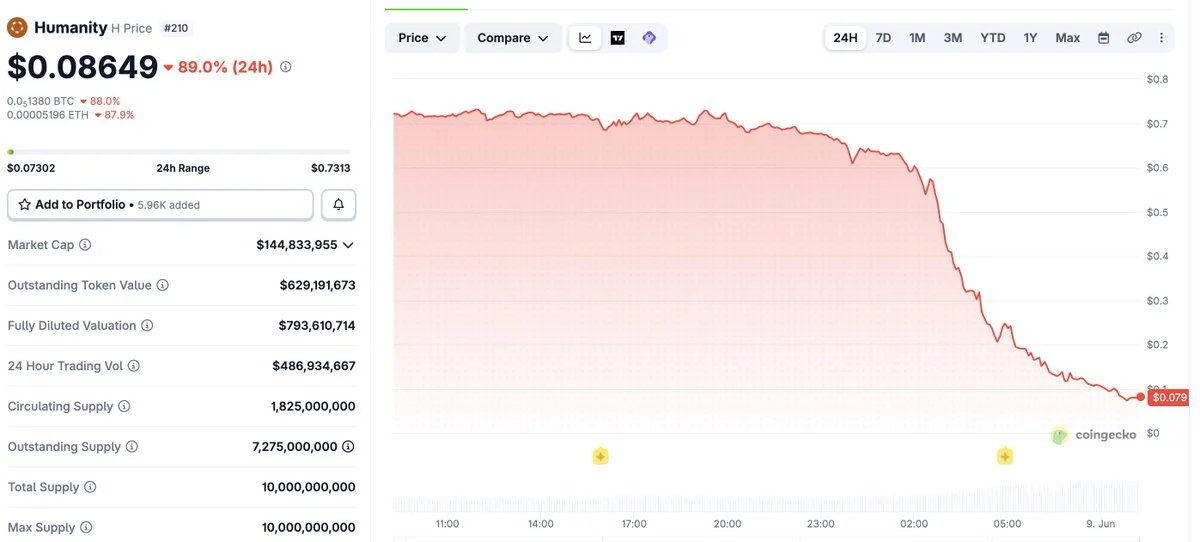
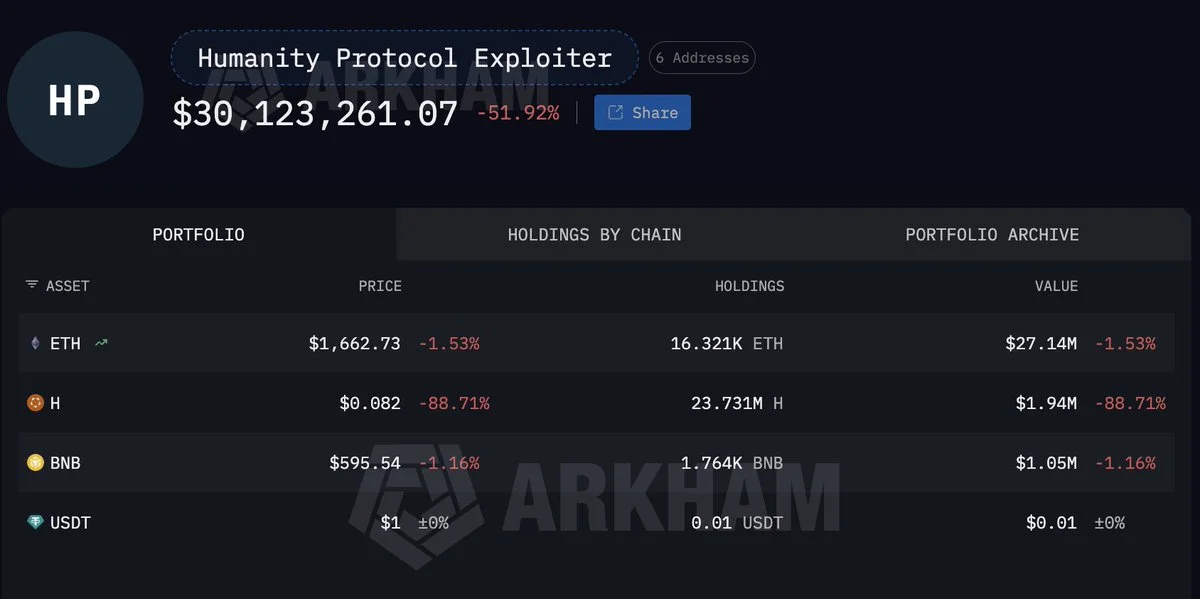
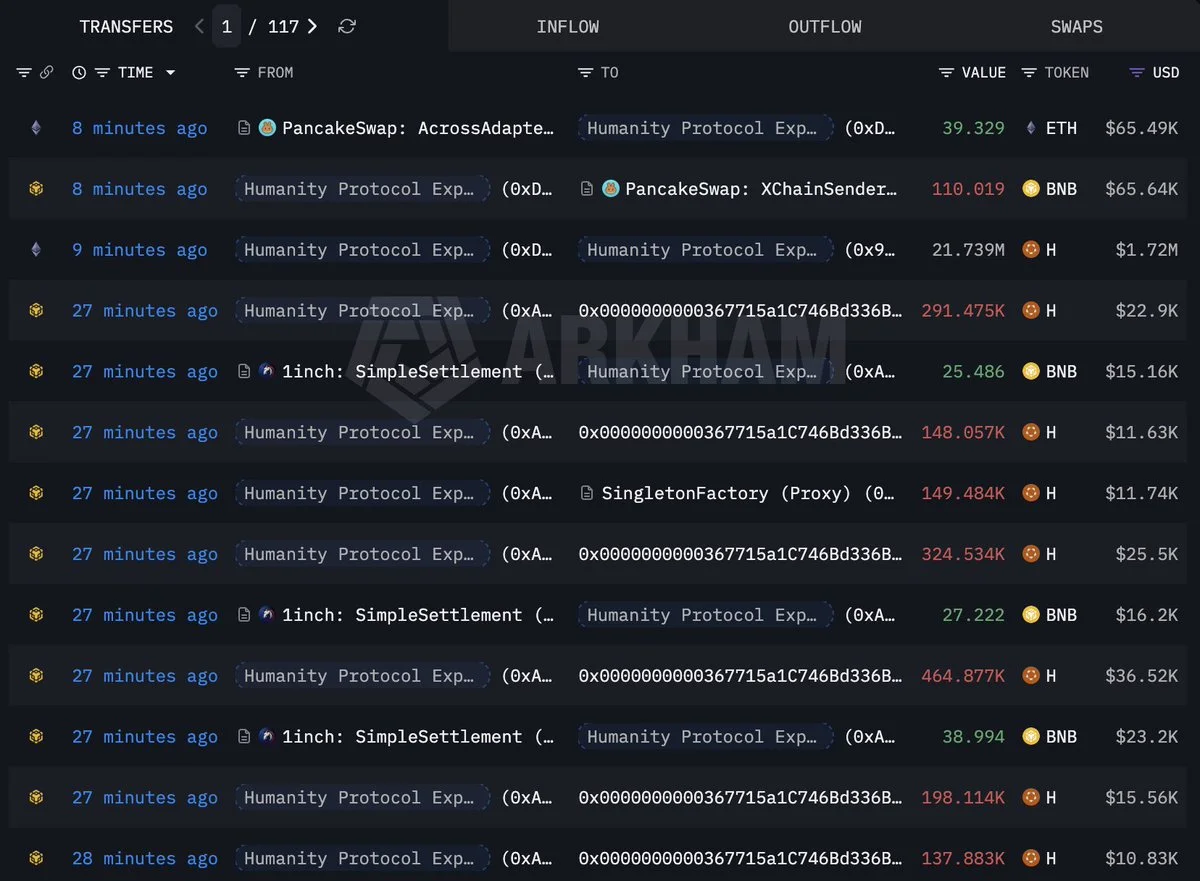
Humanity (H) suffered an exploit on Tuesday with losses exceeding $30 million, according to on-chain monitoring. The attacker is actively dumping the stolen $H and swapping the proceeds into $ETH, a pattern that hit the token's market instantly — $H is down roughly 90% on the session.
Why it matters
The exploit hits a protocol in the identity / proof-of-personhood category — a sector that has attracted heavy venture capital on the thesis that one-human-one-account primitives become core infrastructure for the next wave of consumer apps. A $30M hole at this stage of the cycle is more than a balance-sheet event; it compresses the addressable trust surface for the entire category and forces allocators to revisit which teams have actually shipped audited contracts versus which were running on narrative.
Market impact
The dump-into-ETH pattern is the operative story for traders. Every wallet that bridged in over the last cycle is now competing with the attacker to exit, and the $H/$ETH pool is the only meaningful liquidity path on the way down. Watch the attacker's $ETH accumulation address — the size and timing of subsequent moves into $ETH or a mixer will set the read on whether this is a financially motivated drain or a state-linked incident. Until that wallet is identified and the swaps stop, $H price discovery is meaningless.

Frequently asked questions
-
How much was lost in the Humanity protocol exploit?
Losses exceeded $30 million, according to on-chain monitoring. The attacker is actively dumping the stolen $H and swapping the proceeds into $ETH.
-
How much has the $H token crashed since the exploit?
$H is down roughly 90% on the session as the attacker sells into thin liquidity and competing holders race to exit through the same $H/$ETH pools.
-
What is the attacker doing with the stolen funds?
The attacker is dumping $H and swapping it directly into $ETH on-chain, a textbook exit-liquidity pattern that converts the exploit into a sellable asset in real time.
-
What sector does Humanity operate in and why does the hack matter beyond the protocol?
Humanity sits in the identity / proof-of-personhood category, which has attracted heavy VC capital on the thesis that one-human-one-account primitives become core consumer-app infrastructure. A $30M loss at this stage compresses trust across the whole sector.
-
What should traders watch next in this exploit?
The attacker's $ETH accumulation address is the key tracker — its size, timing, and any subsequent swaps into mixers or other assets will determine whether this reads as a financially motivated drain or a more structured incident.
 CoinTelegraph
 CoinDesk
 CryptoSlate
 WuBlockchain
 TheBlock