








 CoinDesk
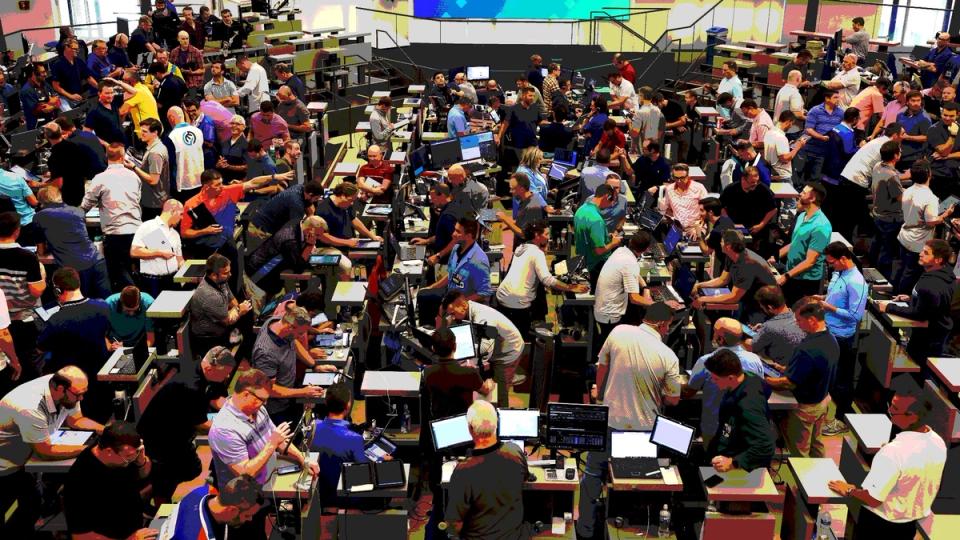


David Mercer, CEO of London-based institutional trading venue operator LMAX Group, is making the case that digital assets' next growth phase will be won by adopting centralized market structures rather than rejecting them.
"Centralization solves the coordination problem," Mercer told CoinDesk. "Buyers and sellers get the best prices by participating in a single central market." His argument: the industry has spent a decade optimizing for decentralization in theory, but when volatility hits, market participants gravitate toward trusted venues and settlement mechanisms regardless of the underlying architecture.
The data point Mercer leans on hardest is the gap in credit and clearing infrastructure. LMAX's core FX business just posted its strongest first quarter on record at roughly $50 billion in average daily volume — a number that exists because that market sits atop deep credit, prime brokerage and clearing relationships. Eight years after launching LMAX Digital, he says the same machinery is still missing in crypto, and its absence is the largest single constraint on institutional capital scaling in.
Why it matters
The bottleneck Mercer names is collateral mobility. Institutions today operate inside walled gardens — traditional assets, digital assets and stablecoins trapped in separate regulatory and operational environments. Q1 macro volatility exposed the cost: investors rotating between equities, gold and bitcoin could not redeploy fiat collateral at centralized exchanges into opportunities elsewhere in real time.
"Digital money, whether it's stablecoins or tokenized assets, will ultimately enable much more efficient collateral management," Mercer said. The implication is that atomic settlement and delivery-versus-payment rails are necessary but not sufficient — global capital markets run on leverage and credit, and digital assets will not compete at scale until that layer is rebuilt natively.
Market impact
Mercer's own conversations with asset managers sketch the demand curve. Roughly 20% expect to begin trading digital assets directly soon, but more than 40% are actively studying onchain payments, settlement and collateral management.

Frequently asked questions
-
Who is David Mercer and why does his view on crypto centralization matter?
Mercer is CEO of LMAX Group, a London-based operator of institutional trading venues for FX and digital assets. His view matters because LMAX serves many of the world's largest banks, asset managers and trading firms, giving him direct line of sight into the infrastructure gaps institutional capital faces when moving…
-
What is the main argument Mercer makes about centralization in crypto?
Mercer argues that centralization solves the coordination problem — buyers and sellers get the best prices by participating in a single central market. He believes the industry has over-rotated on decentralization theory while missing the credit, clearing and collateral infrastructure that lets traditional markets…
-
What is the "collateral problem" Mercer identifies in digital assets?
Institutions today operate inside walled gardens, with traditional assets, digital assets and stablecoins trapped in separate regulatory and operational environments. Collateral cannot move freely between them, reducing capital efficiency and limiting participation — especially during volatility when rapid…
-
What data did Mercer cite about institutional demand for digital assets?
In his conversations with asset managers, roughly 20% expected to trade digital assets directly soon, 40%+ were studying onchain payments and collateral management, 60% expected to offer digital asset services, 91% were already engaging with stablecoins, and 75% still ranked custody as a prerequisite for deploying…
-
What did Mercer say would be the real inflection point for digital assets?
Mercer said the real inflection point for digital assets will not be bitcoin's price — it will be the emergence of a highly efficient, interoperable collateral layer bridging traditional finance and onchain markets, with tokenized money and institutional-grade credit infrastructure operating across both worlds.
 WatcherGuru
 Crypto Rank News
 CryptoSlate
 TheBlock
 CoinTelegraph
 WuBlockchain