


 CryptoSlate
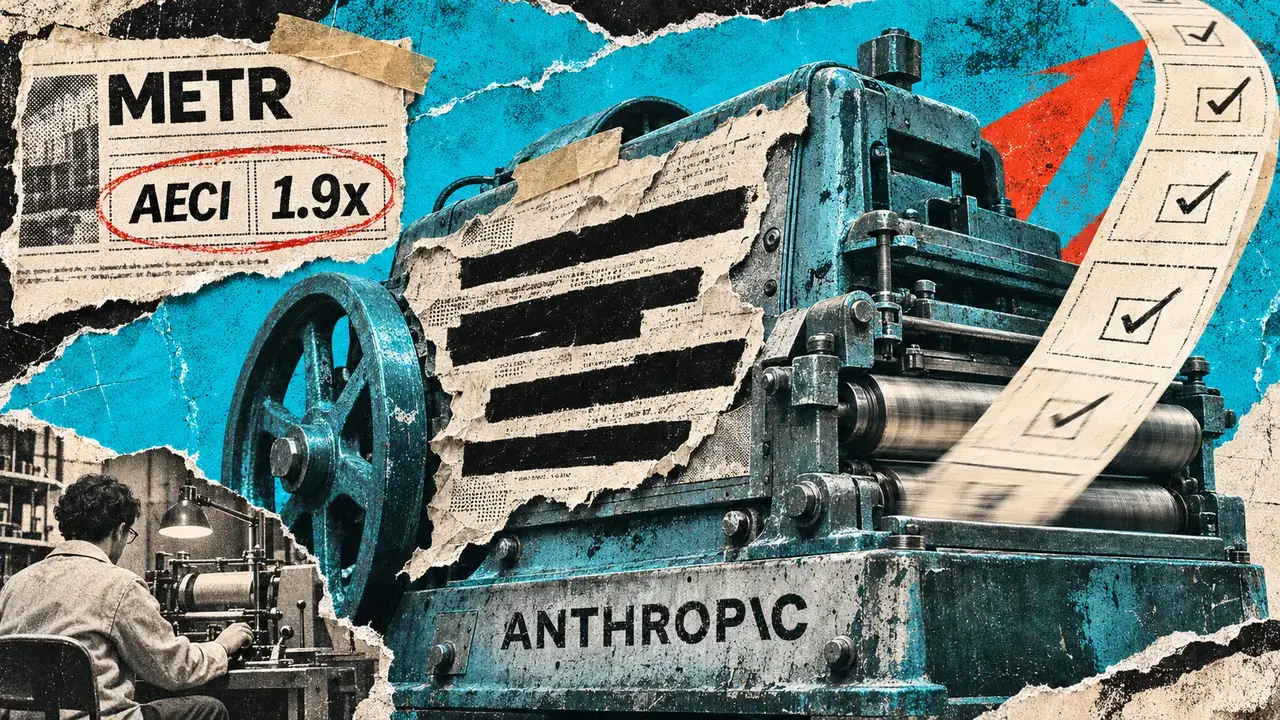
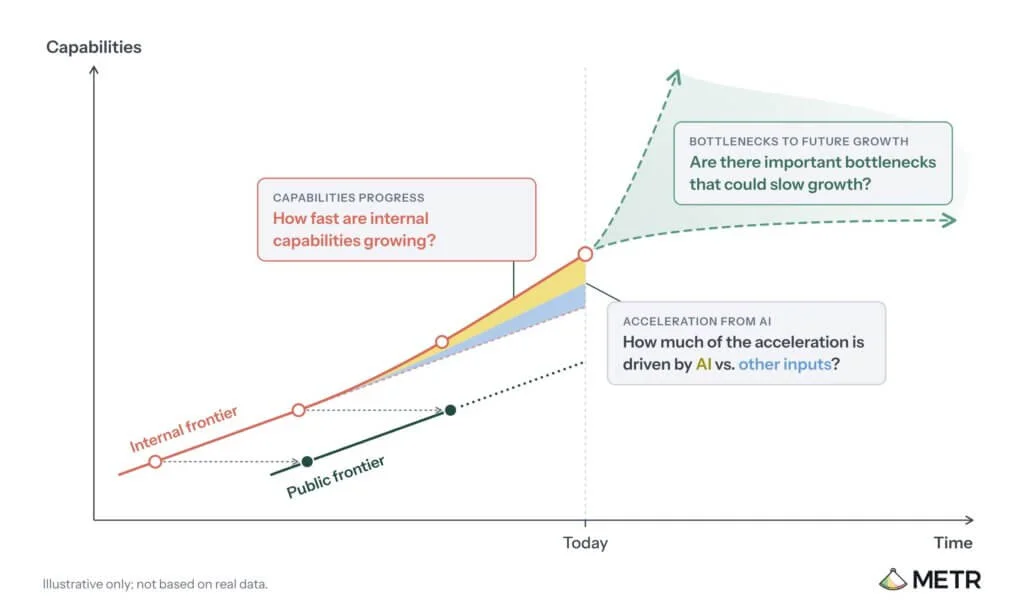


METR, an independent model-evaluation group, estimates that Anthropic's models were improving on tasks with clear success criteria by October 2026 at roughly twice the pace recorded from March 2024 to October 2025. Its fitted AECI growth rate after October 2025 was 1.9 times the earlier rate, with a 95% confidence interval of 1.5 to 2.8 times, and the fit included unreleased models. At that pace, six months could deliver roughly a year of benchmark progress, but METR cautioned that clean-task gains may not transfer evenly to open-ended work.
Why it matters
METR judges AI assistance accounts for most of the acceleration, while non-AI factors likely played a significant role in late 2025. The group ruled out faster training-compute growth as the explanation, although supporting evidence was withheld. AI was not yet making highly significant, fully autonomous contributions to the most advanced training work; researchers using AI tools drove the reported speedup.
Anthropic redacted detailed acceleration estimates, stage-by-stage AI contribution, capability measurements, algorithmic-progress estimates, R&D inputs, bottleneck analyses and forecasts. Co-founder Sam McCandlish defended the withholding on commercial and safety grounds and acknowledged it made METR's work harder to verify.
Market impact
For public markets and technology investors, the immediate signal is an acceleration in AI research productivity, with Anthropic positioned at the center of the fastest measured progress trend. The positive read is that teams using AI to design experiments, identify promising results and build better successors could compress development cycles materially. The risk is that the same benchmark gains may stall outside tasks with clean grading criteria.
METR's companion review of Anthropic's August Risk Report questioned confidence that the early-warning threshold had remained uncrossed for models available July 15. METR considered a crossing plausible, though both groups leaned toward it remaining uncrossed and assessed direct catastrophic risk from those models as low. Six-month superintelligence is therefore a scenario, not a confirmed timeline.
Frequently asked questions
-
What does METR's 1.9x AECI fit actually measure?
It estimates Anthropic's post-October 2025 growth on AECI, Anthropic's version of the Epoch Capabilities Index, at 1.9 times the earlier rate. The 95% confidence interval runs from 1.5 to 2.8 times, and the fit includes unreleased models.
-
Why does METR's six-month superintelligence scenario remain conditional?
The scenario requires gains on clearly gradable tasks to transfer to open-ended research, where models must choose useful experiments and help build stronger successors. METR said the supporting causal evidence remains incomplete and confidential.
-
How much of the acceleration does METR attribute to AI assistance?
METR judges AI assistance accounts for most of the recent acceleration, while non-AI factors likely played a significant role in late 2025. AI was not yet making highly significant, fully autonomous contributions to advanced training work.
-
Why did Anthropic withhold key evidence from METR's review?
Anthropic redacted detailed acceleration estimates, stage-by-stage AI contribution measures, intermediate capability data, algorithmic estimates, R&D inputs, bottleneck analyses and forecasts. Co-founder Sam McCandlish defended the withholding on commercial and safety grounds.
-
What did METR conclude about catastrophic risk and its warning threshold?
METR questioned confidence that the early-warning threshold had remained uncrossed for models available July 15 and considered a crossing plausible. Both groups leaned toward it remaining uncrossed, while METR assessed direct catastrophic risk from those models as low.
 WatcherGuru
 Altcoin Daily
 Lookonchain
 TheBlock
 CoinTelegraph
 WuBlockchain