


 CryptoSlate
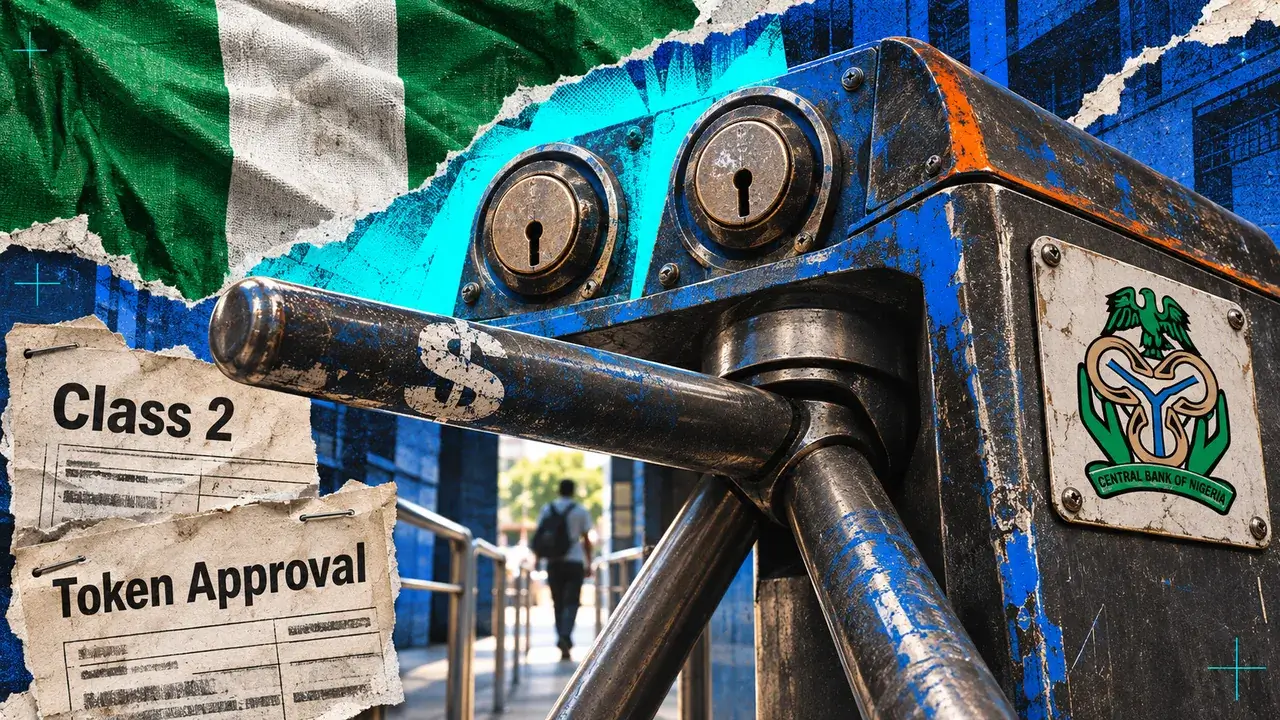
Nigeria's central bank now requires dollar-pegged stablecoins sold to retail customers to be issued by Nigerian-incorporated, locally licensed entities and to receive token approval. The rules took effect Nov 5, 2026, and existing operators have 180 calendar days to submit complete applications. Continued Class 2 access during review requires express CBN permission, while registration with a bank is due within 30 days and supervisory reporting within 60 days.
Why it matters
The framework extends beyond companies with offices in Nigeria. Regulated activities directed at people in the country fall within scope even when the provider has no local physical presence. A foreign license, regulatory status or agreement with a Nigerian intermediary cannot replace local issuer licensing and token approval.
Issuers and service providers also face separate approval requirements. A non-issuance license does not authorize an entity to issue stablecoins. Issuer applicants must establish a staffed Nigerian office, effective local management and a resident chief compliance officer before final licensing. Existing principal licenses do not remove the requirement for express CBN approval of non-security virtual asset services.
Market impact
The immediate effect is a compliance test for every operator serving Nigerian retail users. Existing operators may continue only at their current scale, subject to interim conditions and express permission from the CBN. Submitting an application does not by itself authorize continued market access, and operators that miss the 180-day deadline must cease operating until the required approvals are obtained.
The framework provides a narrow exception for approved wholesale cross-border settlement using foreign-issued stablecoins, but it does not extend to Nigerian retail offerings. Class 2 Token Approval also does not authorize settling, pricing or discharging naira-denominated domestic obligations unless applicable foreign-exchange or other law expressly permits it. AML, counter-terrorist financing and counter-proliferation financing requirements apply from commencement.
Frequently asked questions
-
Can foreign-issued stablecoins serve Nigerian retail customers?
No. Retail offerings require a Nigerian-incorporated licensed issuer and token approval. A narrow exception covers expressly approved wholesale cross-border settlement only.
-
How long do existing operators have to apply under Nigeria's rules?
Existing operators have 180 calendar days from commencement to submit a complete application. Continued Class 2 access during assessment requires express CBN permission.
-
Does submitting an application automatically preserve market access?
No. Operators may continue only at their existing scale, subject to interim conditions and explicit permission from the CBN.
-
What deadlines and compliance duties apply during the transition?
Existing operators must register with a bank within 30 days and submit supervisory reports within 60 days, unless an earlier period is prescribed. AML and related financing controls apply from commencement.
-
Can a foreign license or Nigerian intermediary satisfy the retail requirements?
No. Issuer applicants must obtain the relevant Nigerian license and token approval, establish a staffed Nigerian office and maintain effective local management, including a resident chief compliance officer.
 TheBlock
 Crypto News
 WuBlockchain
 WatcherGuru
 CoinTelegraph
 CoinDesk