








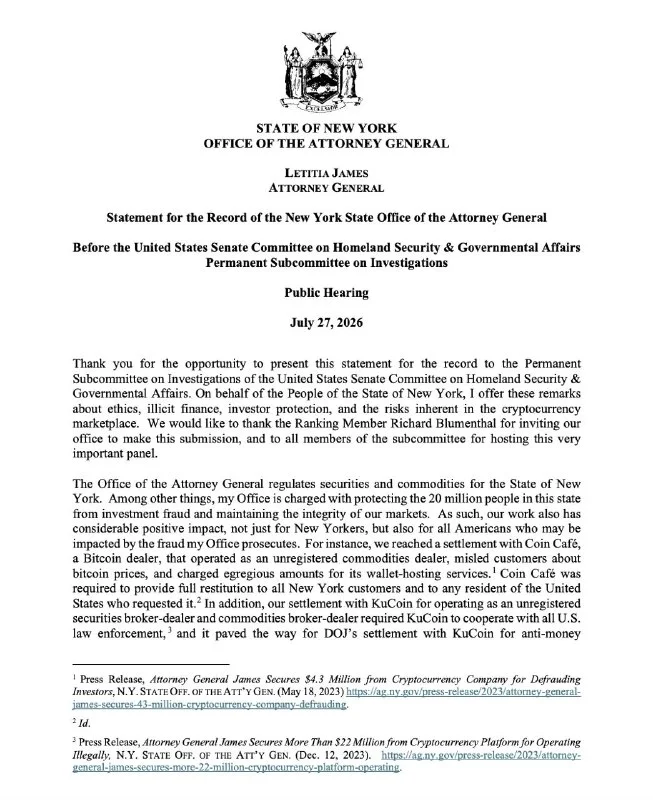
New York Attorney General Letitia James is pressing Congress to revise the CLARITY Act, warning that the bill as currently drafted would strip states of their authority to police crypto markets and leave consumers with weaker protections than they have today.
James argues the federal framework, by routing oversight primarily to the SEC and CFTC, would preempt state regimes such as New York's BitLicense, a framework the AG's office has used to pursue enforcement against unregistered crypto businesses operating in the state. In her letter to lawmakers, James urged Congress to layer in stronger consumer-protection provisions rather than concentrate authority in federal agencies alone.
The push is a familiar friction point in US crypto policy. State regulators, particularly in New York and California, have built enforcement muscle over the past decade and have historically pushed back against federal preemption that they argue would lower the bar on consumer safeguards. The CLARITY Act's draft text is still working through committee, and James's intervention adds another variable to the legislative calculus ahead of any floor vote.
Frequently asked questions
-
What is the CLARITY Act?
The CLARITY Act is draft federal legislation working through Congress that would assign primary crypto market oversight to the SEC and CFTC, a framework critics argue would preempt existing state enforcement regimes.
-
Why is New York's AG opposing it?
Letitia James argues the bill would strip states of authority to police crypto markets, specifically preempting New York's BitLicense framework, and leave consumers with weaker protections than current state law provides.
-
What is BitLicense?
BitLicense is New York's virtual currency regulatory regime administered by the Department of Financial Services. It requires firms engaged in crypto activity in the state to obtain a license and meet specific compliance, capital, and consumer-protection standards.
-
What is James asking Congress to do?
James is urging lawmakers to layer in stronger consumer-protection provisions in the CLARITY Act rather than concentrate oversight authority solely in federal agencies like the SEC and CFTC.
-
Where does the CLARITY Act stand in Congress?
The draft text is still working through committee. James's intervention adds another variable to the legislative calculus ahead of any potential floor vote.

 WatcherGuru
 CryptoSlate
 Crypto News
 WuBlockchain
 Crypto Capital Venture