








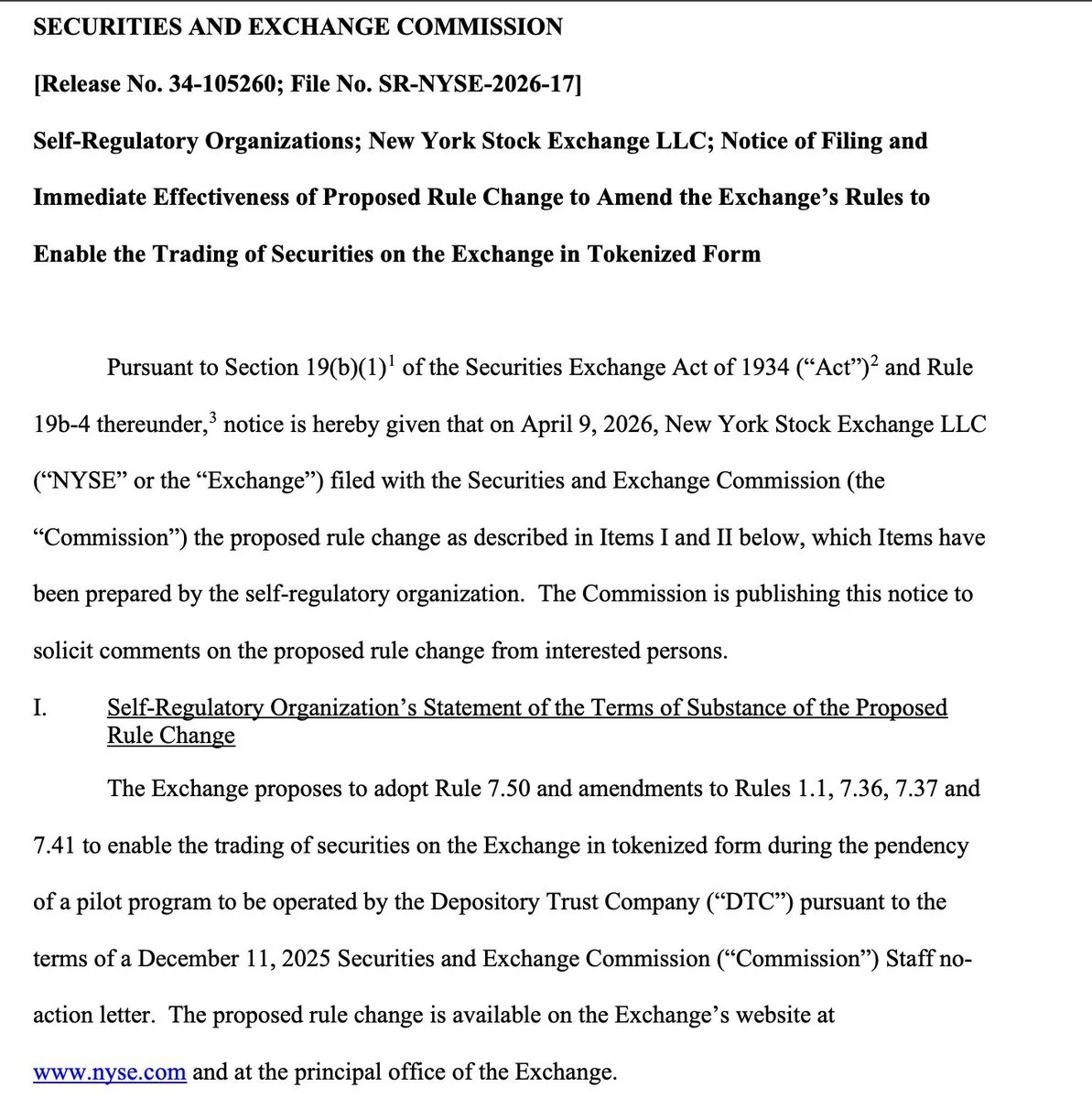
The New York Stock Exchange filed a proposed rule change with the SEC to let tokenized versions of eligible equities and ETFs trade on its platform under Depository Trust Company's three-year tokenization pilot program. Eligible tokenized securities would carry the same CUSIP, ticker, rights, and privileges as their traditional counterparts — and would sit on the same order book with identical execution priority. Clearing and settlement would still run through DTC on a T+1 basis.
Why it matters
The structure is the story. Same CUSIP, same ticker, same order book, same execution priority — tokenized shares would not be a parallel market but a parallel representation of the same security. That collapses the typical tokenization gap (different venues, fragmented liquidity, regulatory ambiguity) and puts the NYSE's existing liquidity behind on-chain rails without forking the book. It also routes through DTC, the incumbent US settlement utility, rather than a new crypto-native clearing layer.
Market impact
The filing lands as Wall Street incumbents push further into on-chain settlement infrastructure. Bringing the NYSE's central limit order book into scope materially shifts the institutional conversation: tokenization moves from issuer-led pilots on alternative venues toward a regulated exchange-tier use case. Watch the SEC's review window and which custodians and transfer agents step in to mint and redeem the tokenized leg.
Frequently asked questions
-
What did the NYSE actually file?
A proposed rule change with the SEC to let tokenized versions of eligible equities and ETFs trade on the exchange under DTC's three-year tokenization pilot program.
-
Would tokenized shares be a separate market?
No. Eligible tokenized securities would share the same CUSIP, ticker, rights, and privileges as their traditional counterparts and would trade on the same NYSE order book with identical execution priority.
-
How would tokenized trades clear and settle?
Clearing and settlement would still run through the Depository Trust Company (DTC) on a standard T+1 basis — the same incumbent US settlement utility used by traditional equity trades.
-
Why is this filing considered significant?
It puts the NYSE's central limit order book — Wall Street's deepest pool of equity liquidity — into scope for on-chain tokenization, rather than confining it to issuer-led pilots on alternative venues.
-
What happens next with the NYSE tokenization filing?
The SEC will review the proposed rule change during its standard notice-and-comment window; the market will also be watching which custodians and transfer agents step up to mint and redeem the tokenized leg.

 Crypto News
 CoinTelegraph
 CryptoSlate
 TheBlock
 CoinDesk
 WatcherGuru