








 CoinDesk
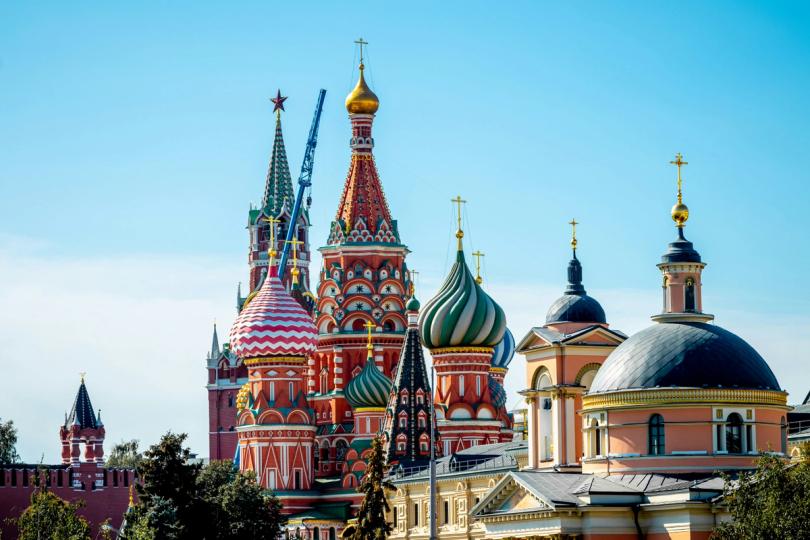
Russia sanctioned 17-year-old British researcher Alexander Browder for authoring a Henry Jackson Society report alleging that the ruble-pegged stablecoin A7A5 has been used to fund the war effort against Ukraine. The Russian Foreign Ministry called the report "defamatory speculations and false information."
Browder, son of Kremlin critic Bill Browder, was sanctioned alongside three other UK nationals and Washington Post reporter Catherine Belton. Browder brushed off the designation as "a badge of honour" in an X post on Wednesday. A7A5 was designed to circumvent sanctions imposed on Russia after its 2022 invasion of Ukraine.
Why it matters
The designation is the first known instance of Russia sanctioning a researcher over a specific stablecoin allegation, and it puts A7A5 — a low-liquidity, ruble-pegged token — directly on the radar of Western compliance teams. For the Kremlin, the move reframes a niche token report as a hostile act, signaling that any public attribution of sanctions evasion to a named stablecoin will be treated as state-level criticism. For Western observers, it confirms that A7A5 has registered at a level high enough to provoke a formal response rather than a routine denial.
Market impact
A7A5 itself is too thinly traded for the move to register in on-chain flow data, but the secondary signal matters: stablecoin issuers and exchanges with ruble or CIS-corridor exposure now face a more explicit link between token design and sanctions exposure. The development lands in the same week JPMorgan flagged the Clarity Act's stablecoin yield fight as the chief obstacle to US legislation this year, sharpening the contrast between a US framework debate over yield mechanics and a parallel extraterritorial debate over whether a state-linked stablecoin can itself be a sanctions-evasion instrument.

Frequently asked questions
-
Why did Russia sanction a British teenager?
Moscow sanctioned 17-year-old Alexander Browder for authoring a Henry Jackson Society report alleging the ruble-pegged stablecoin A7A5 has been used to fund the war effort against Ukraine. The Russian Foreign Ministry called the report "defamatory speculations and false information."
-
Who else was sanctioned alongside Browder?
Browder, the son of Kremlin critic Bill Browder, was sanctioned alongside three other UK nationals and Washington Post reporter Catherine Belton.
-
What is the A7A5 stablecoin?
A7A5 is a ruble-pegged stablecoin designed to bypass sanctions imposed on Russia following its 2022 invasion of Ukraine. It is a low-liquidity, niche token.
-
Is this the first time Russia sanctioned someone over a stablecoin allegation?
It is the first known instance of Russia sanctioning a researcher over a specific stablecoin allegation, putting A7A5 directly on Western compliance radars.
-
Does A7A5 have any on-chain market impact?
A7A5 is too thinly traded for the sanctions move to register in on-chain flow data, but the secondary signal matters: stablecoin issuers and exchanges with ruble or CIS-corridor exposure now face a more explicit link between token design and sanctions exposure.
 WuBlockchain
 Lookonchain
 Crypto News
 CryptoSlate
 TheBlock
 CoinTelegraph