








 WuBlockchain

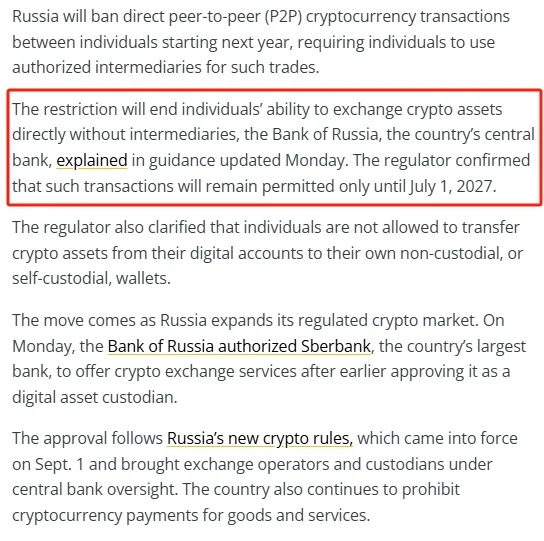
The Bank of Russia says direct peer-to-peer cryptocurrency transactions between individuals will be banned from July 1, 2027, under updated guidance. Users would have to transact through authorized intermediaries, and individuals would be barred from moving crypto from regulated digital accounts to personal self-custody wallets.
Why it matters
The proposed restrictions reach beyond the trading venue: they would also limit how users move assets out of regulated accounts. That puts both direct P2P activity and personal wallet transfers within the scope of the central bank's stated rules.
Market impact
The measures could narrow the routes available to Russian individuals seeking to trade or hold crypto outside authorized intermediaries. The guidance sets July 1, 2027, as the start date; its practical effect will depend on how the requirements are applied.
Source: [Russia to ban direct peer-to-peer crypto trades starting July 2027 — Cointelegraph](https://cointelegraph.com/news/russia-ban-p2p-crypto-trades-july-2027)
Frequently asked questions
-
When would Russia's ban on direct P2P crypto trades begin?
The Bank of Russia's updated guidance sets July 1, 2027, as the start date.
-
How would individuals have to conduct crypto transactions under the guidance?
They would have to transact through authorized intermediaries rather than directly with one another.
-
What does the guidance say about personal self-custody wallets?
Individuals would be barred from transferring crypto from regulated digital accounts to personal self-custody wallets.
-
Does the guidance cover only where crypto trades take place?
No. It addresses direct P2P transactions and transfers from regulated digital accounts to personal wallets.
-
What will determine the rules' practical effect for Russian crypto users?
The practical effect will depend on how the requirements are applied.
 WatcherGuru
 CryptoSlate
 CoinDesk
 Crypto News
 CoinTelegraph
 TheBlock