


 CryptoSlate

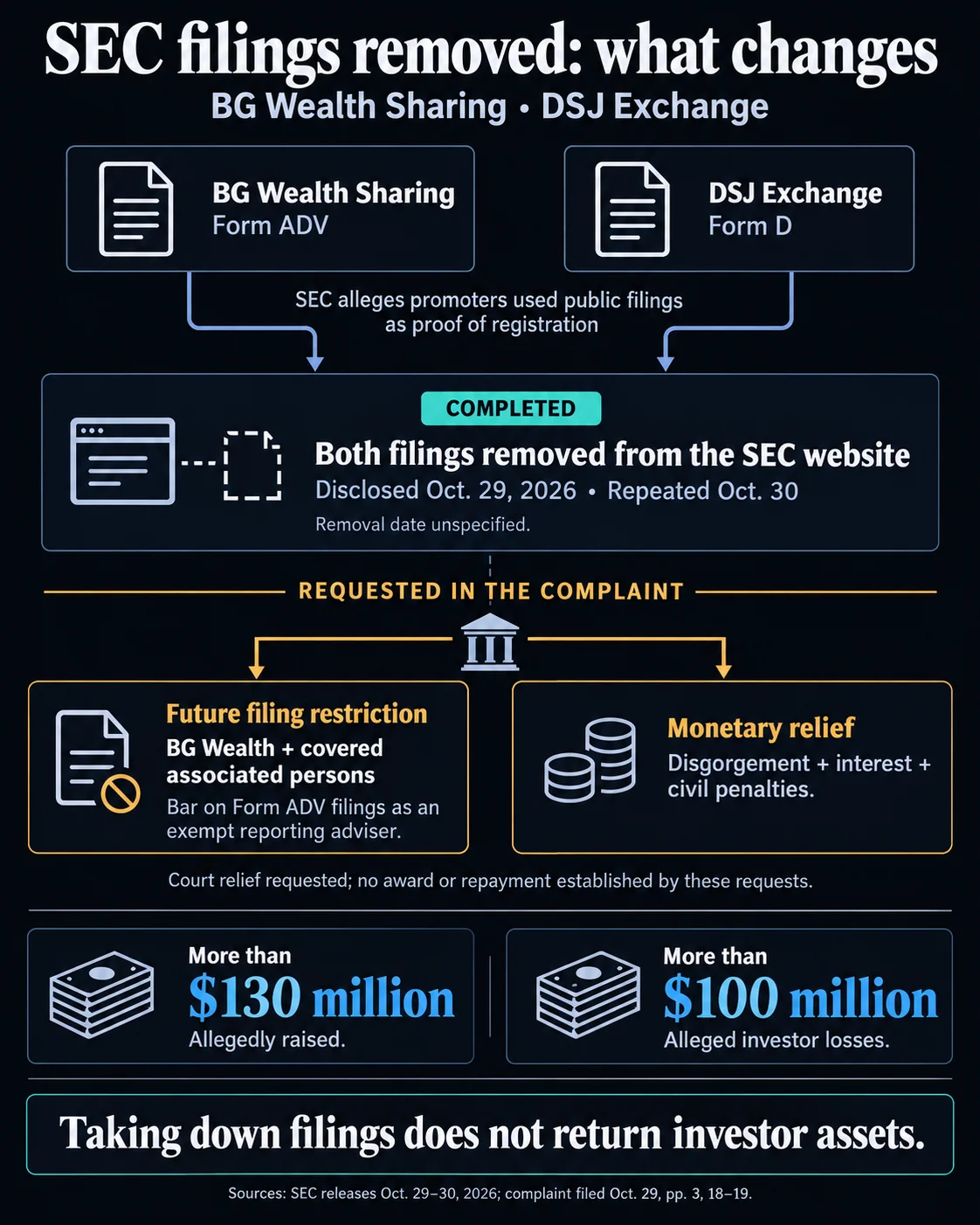

The SEC sued BG Wealth Sharing and DSJ Exchange over an alleged $130 million crypto investment fraud that promised returns of at least 60% a month. More than 223,000 blockchain addresses sent funds to the operation between March and early June 2026, according to the regulator, and losses allegedly exceeded $100 million.
Why it matters
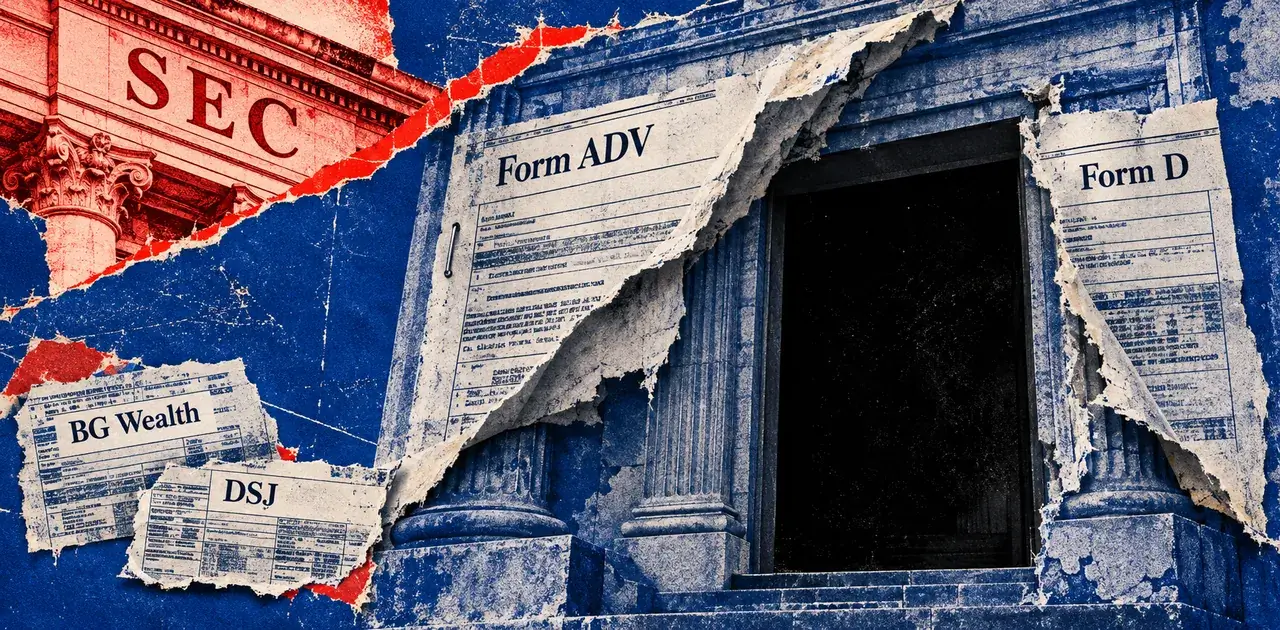
The firms allegedly used the SEC’s own disclosure systems to make their claims appear legitimate. BG Wealth filed a Form ADV, while DSJ submitted a Form D describing a purported $100 million securities offering. Both records became publicly accessible, and promoters allegedly presented them as proof of SEC authorization. Filing either form does not mean the SEC has approved or licensed a business.
The SEC says neither firm was registered or licensed by the agency. The complaint alleges that the trading activity and profits were fabricated, most deposits were diverted, and no more than $25 million was returned to addresses likely belonging to investors through Ponzi-like payments. Investors who sought withdrawals allegedly faced fees, delays and blocked access.
Market impact
The SEC removed the filings and is seeking permanent injunctions, financial penalties and repayment of allegedly unlawful gains with interest. It also asked the court to bar BG Wealth from submitting future Form ADV filings as an exempt reporting adviser.
The case leaves recovery of the more than $100 million in alleged losses unresolved. It also underscores the distinction between a public regulatory filing and an endorsement: investors were allegedly directed to government-hosted records as part of the scheme’s pitch.
Frequently asked questions
-
How did BG Wealth and DSJ Exchange allegedly use SEC filings?
BG Wealth filed a Form ADV and DSJ submitted a Form D. The SEC says the firms pointed investors to the public records as supposed proof of government authorization, though neither filing constituted approval.
-
How much money did the alleged scheme raise and how many addresses sent funds?
The SEC says the firms received more than $130 million from over 223,000 blockchain addresses between March and early June 2026.
-
What returns did the firms allegedly promise investors?
The program allegedly promised monthly returns of at least 60% and claimed investors could double their money within 40 days without risk.
-
How much of the money was allegedly returned to investors?
The SEC alleges that no more than $25 million was returned to addresses likely belonging to investors through Ponzi-like payments, while most deposits were diverted.
-
What action has the SEC taken, and is investor recovery resolved?
The SEC removed the filings and sued, seeking injunctions, penalties and repayment of allegedly unlawful gains. Recovery of more than $100 million in alleged losses remains unresolved.
 WuBlockchain
 TheBlock
 CoinDesk
 Lookonchain