








 Lookonchain
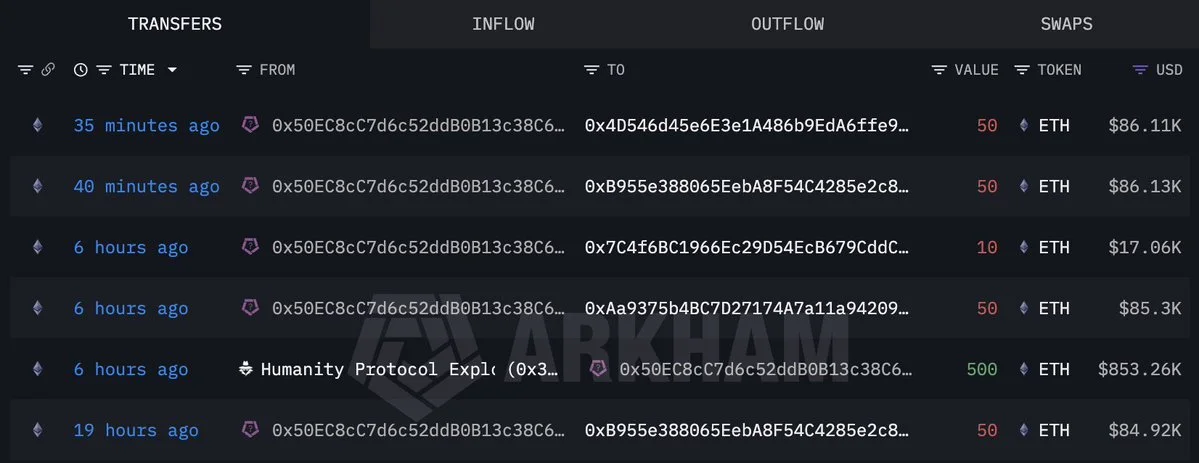
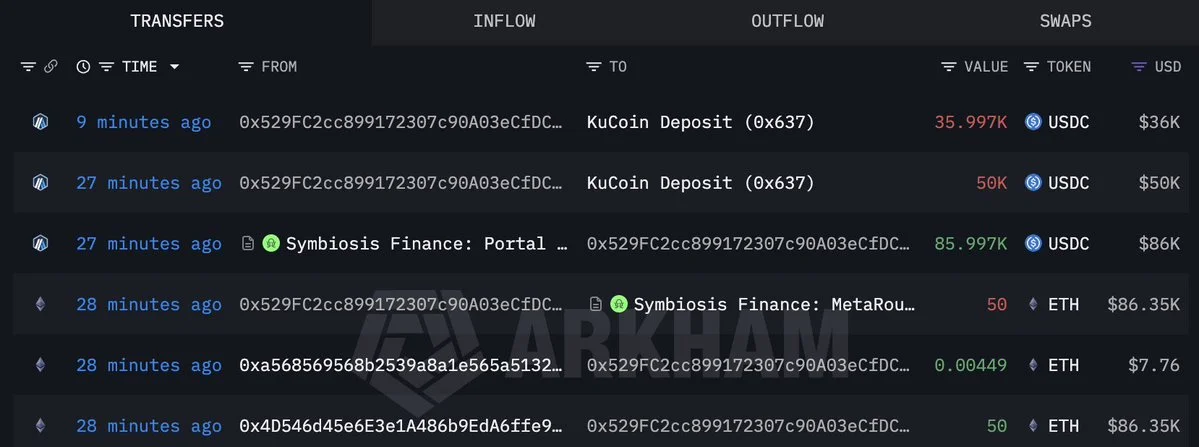
The on-chain actor who drained Humanity Protocol has begun moving the proceeds: a portion of the stolen funds was swapped into $USDC and bridged to KuCoin, per on-chain data.
The pattern is recognizable. Token-native exploit loot is rarely usable at scale until it has been converted into a dollar-pegged, centrally-listed stablecoin and then off-ramped through a venue that runs KYC on the fiat side. USDC, given Circle's freeze authority at the contract level, is paradoxically the asset of choice for moving stolen capital — the issuer can blacklist the receiving address retroactively, which is exactly what the on-chain sleuths watching this case will be asking Circle to do.
Why it matters
For the rest of the market, the read is short. Centralized exchange deposit addresses are observable; once the funds land at KuCoin, the exchange's compliance team has the address graph in front of it and the choice of whether to freeze, return, or cooperate with investigators is theirs. The exploiter has traded anonymity for liquidity, and that trade rarely goes well when the deposit is a few million dollars in freshly minted USDC.
For other protocols, the more durable lesson is the time gap: from exploit to stablecoin swap to exchange deposit, the actor's window for clean off-ramping is shorter than it used to be, and the public-address-graph tooling that tracks the funds is faster than it used to be.

Frequently asked questions
-
What did the Humanity Protocol exploiter do with the stolen funds?
A portion of the stolen funds was swapped into $USDC and deposited to KuCoin, per on-chain data, a classic laundering pivot that trades anonymity for liquidity.
-
Why swap stolen crypto into USDC?
Token-native exploit loot is hard to spend at scale. Swapping into a dollar-pegged stablecoin like $USDC is the step that turns it into something an exchange will accept, even though the issuer can blacklist the receiving address.
-
Can Circle freeze the USDC the exploiter used?
Circle retains the ability to blacklist addresses at the USDC contract level, and on-chain analysts typically flag the receiving address quickly after a swap from a known exploit wallet.
-
What happens to the funds once they land at KuCoin?
KuCoin's compliance team has the deposit address and the on-chain graph in front of it. The exchange can freeze the funds, cooperate with investigators, or return the assets to the affected protocol, depending on its review.
-
Does this mean the exploiter is caught?
Not necessarily, but the swap into USDC and deposit to a centralized venue sharply narrows the laundering options. Centralized exchanges have been increasingly unwilling to be the last hop on a public address trail.
 CryptoSlate
 CoinDesk
 TheBlock
 WuBlockchain