








 CryptoSlate



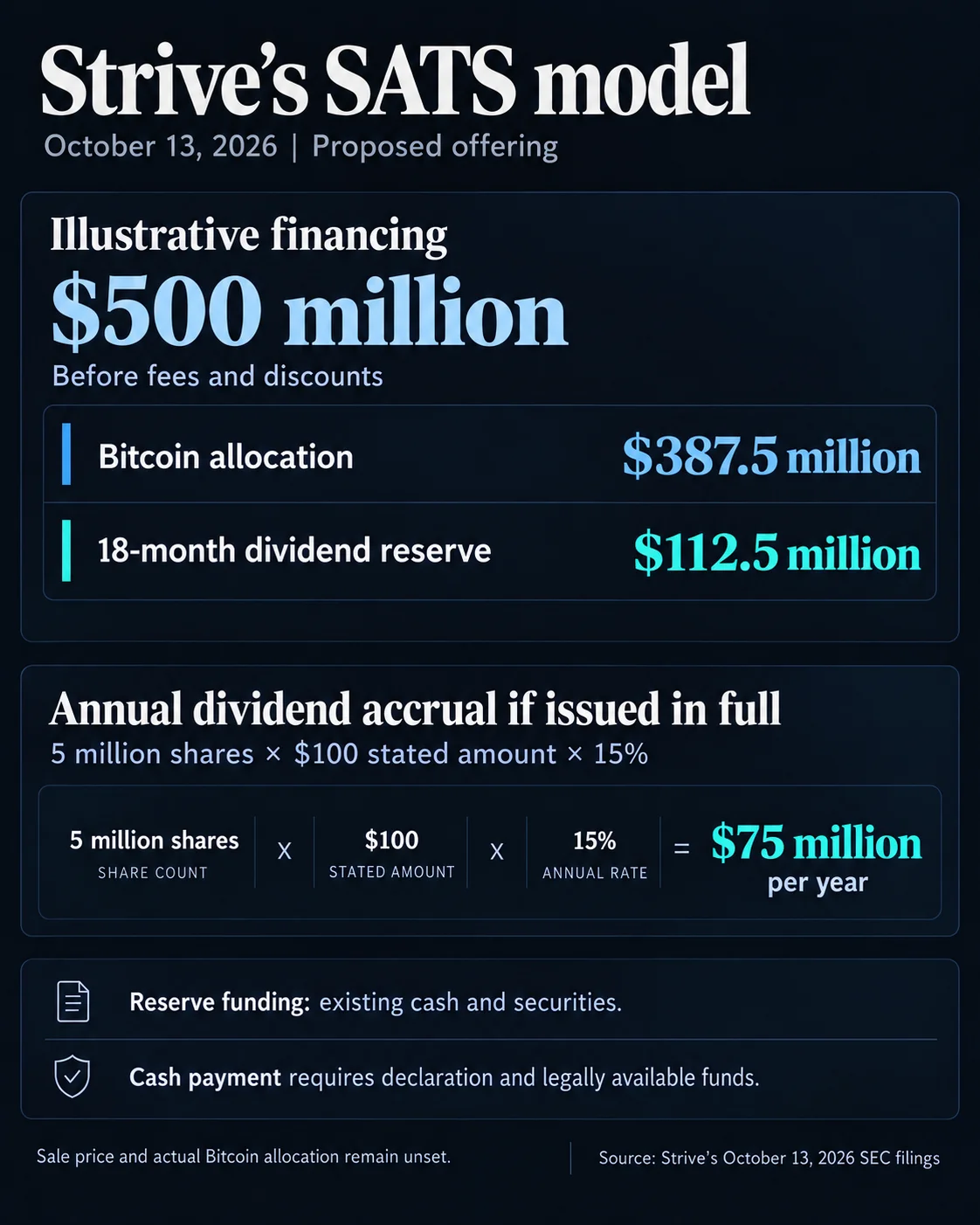
Strive plans to raise $500 million through SATS, a new perpetual preferred stock paying a fixed 15% annual dividend, to accelerate Bitcoin purchases. The company’s model allocates $387.5 million to Bitcoin and $112.5 million to an 18-month dividend reserve. At an assumed price of $82,500, the purchases would add about 4,697 BTC and lift Strive’s holdings to roughly 40,000 BTC.
Why it matters
SATS gives Strive another route to raise capital as restrictions on issuing its existing SATA preferred stock limit financing. SATA’s stated amount has grown from $200 million at its November 2025 debut to about $1.4 billion. Unlike SATA, SATS has no comparable mechanism intended to keep its trading price near $100, and it ranks below SATA but ahead of common equity.
The added financing increases the company’s Bitcoin exposure, but also its recurring obligations. A five-million-share SATS offering would add $75 million in annual dividends. With SATA payments, Strive’s modeled annual bill reaches approximately $257.4 million, assuming SATA retains its 13% variable rate. Bitcoin produces no recurring income, so after the planned reserve is used, dividends would rely primarily on new capital, asset sales or other available funds.
Market impact
Strive says it plans to hold about $386 million in cash and marketable securities after the offering, enough for roughly 18 months of combined dividend payments. Its model puts assets at about $3.56 billion against $1.9 billion in preferred stated amounts, with combined asset coverage of 1.87 times. The company’s stress tests put the point where modeled assets equal preferred claims at a Bitcoin price of about $38,200.
The strategy depends on Bitcoin appreciating faster than the cost of preferred capital. Strive’s internal model assumes 50% annual Bitcoin compounding through 2030, against SATS’s fixed 15% dividend. If Bitcoin falls for an extended period, weaker demand for Strive securities could make refinancing harder while dividend obligations continue to accumulate. Missed preferred dividends would not automatically trigger a debt default, but would accumulate and restrict distributions to junior shareholders.

Frequently asked questions
-
What is Strive’s SATS preferred stock designed to fund?
Strive plans to use proceeds from SATS to accelerate Bitcoin purchases. Its $500 million financing model allocates $387.5 million to Bitcoin and $112.5 million to an 18-month dividend reserve.
-
How much Bitcoin could Strive buy through the modeled offering?
At an assumed Bitcoin price of $82,500, the model estimates purchases of about 4,697 BTC, bringing Strive’s holdings to roughly 40,000 BTC.
-
How could the SATS offering change Strive’s annual dividend obligations?
A five-million-share SATS issuance would add $75 million in annual dividends. Combined with SATA payments, the modeled total is approximately $257.4 million a year, assuming SATA’s variable rate remains 13%.
-
How long could Strive’s planned dividend reserve cover payments?
Strive plans to retain about $386 million in cash and marketable securities after the offering, which it says would cover roughly 18 months of combined preferred dividends.
-
What risk does Strive identify if Bitcoin declines for an extended period?
A sustained decline could weaken demand for Strive’s preferred and common shares, making fresh financing harder while dividend obligations continue to accumulate. Unpaid preferred dividends would accumulate and restrict distributions to junior shareholders.
 CoinTelegraph
 Benjamin Cowen
 TheBlock
 Glassnode
 WatcherGuru
 CoinDesk
 Crypto Rank News
 WuBlockchain