


 WatcherGuru

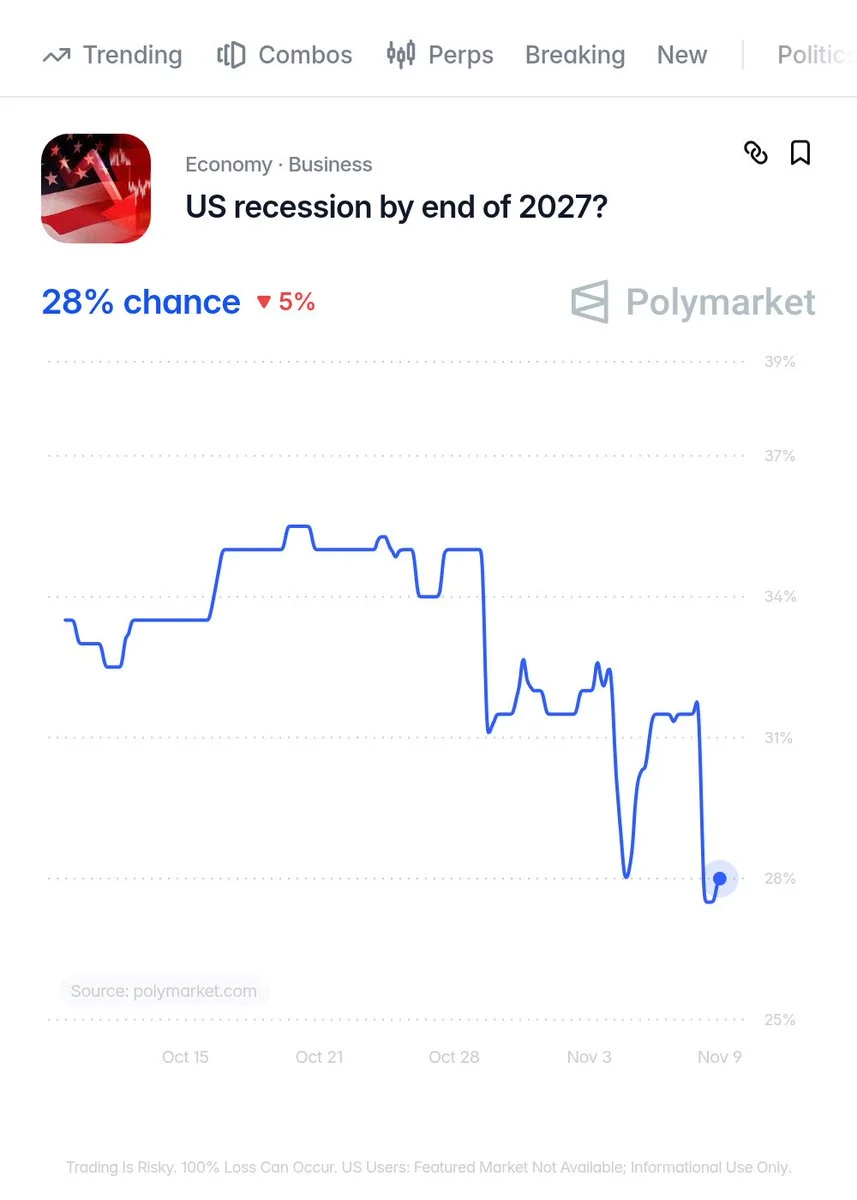
The perceived odds of a US recession next year fell after Democrats won control of the House and Senate. The move reflects a reassessment of the economic policy outlook following the election result.
Why it matters
US recession expectations are closely tied to the policy mix facing the economy. A Democratic majority in both chambers could reshape debates over fiscal policy, taxation, spending and regulatory priorities. The immediate signal is that investors viewed the result as reducing perceived recession risk rather than increasing it.
Market impact
The shift in recession odds is a broader risk signal for equities, credit, the dollar and other assets sensitive to US growth expectations. Markets now have a clearer view of the incoming political leadership, but the economic effects will depend on the policies that win support and how they interact with inflation, employment and financial conditions.
Frequently asked questions
-
Why did Democrats winning Congress lower US recession odds?
The election result was followed by lower perceived odds of a US recession next year, suggesting investors read the new political alignment as less recessionary.
-
Which assets are most sensitive to a change in recession expectations?
US equities, credit, the dollar and other assets linked to growth expectations are among the markets most sensitive to a shift in recession odds.
-
What economic issues will the new Democratic majority prioritize?
The result puts spending, taxation and regulation in focus, as those policy choices can influence inflation, employment and financial conditions.
-
Does a lower recession probability mean a stronger US economy is confirmed?
No. It is a shift in market expectations following the political result, not confirmation of stronger economic growth.
-
What could determine whether the improvement in recession odds lasts?
The durability of the move will depend on the policies adopted and how they interact with inflation, employment and broader financial conditions.
 Glassnode
 CryptoSlate
 Crypto News
 TheBlock
 Benjamin Cowen
 CoinTelegraph
 CoinDesk
 WuBlockchain