








 CryptoSlate
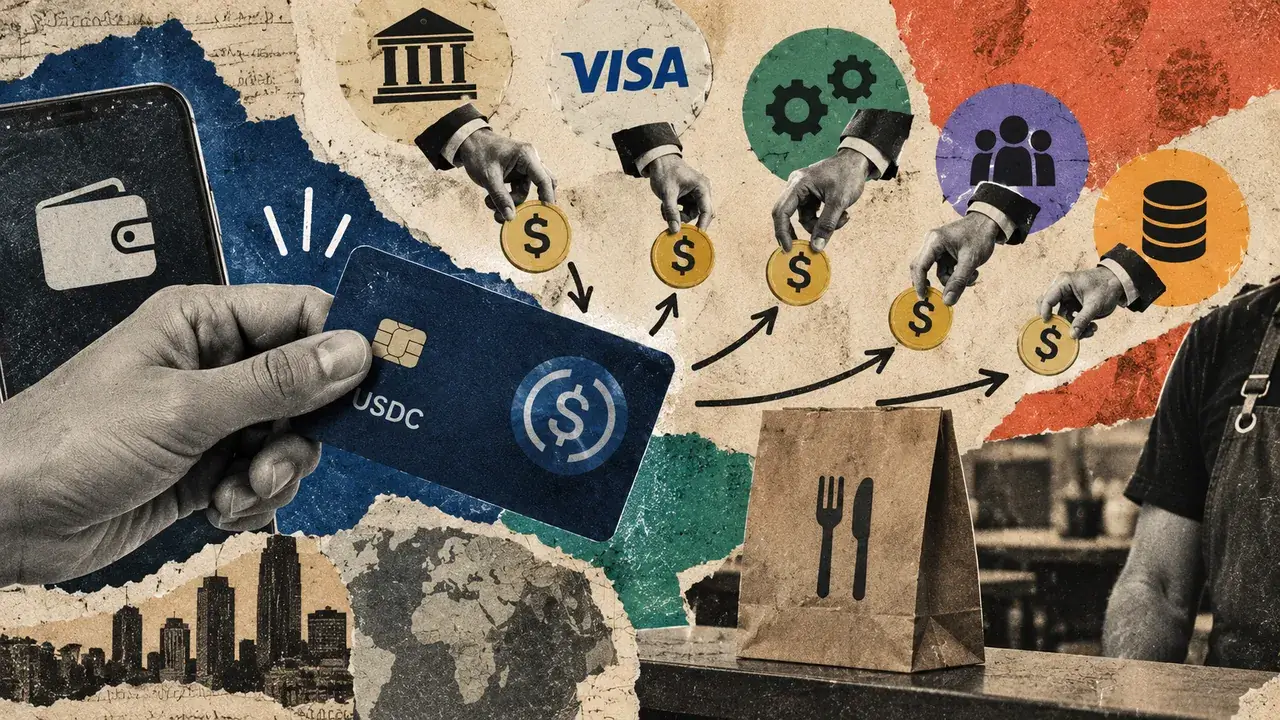


Visa reported more than 160 stablecoin-linked card programs on Oct. 1, with payment volume up nearly 200% from the previous year. The cards let customers spend USDC while merchants receive local currency, so restaurants and other businesses do not need to accept crypto directly. Visa's partnership with Bridge, which Stripe acquired in 2025, supports this model in Colombia by handling conversion into Colombian pesos.
Why it matters
The payment may look simple at the terminal, but several companies can share the economics. The consumer app manages the relationship, a regulated issuer provides the card, Visa connects the institutions, the merchant's payment provider handles acceptance, and a conversion or settlement provider may sit between them. Revenue can come from interchange, network and processing fees, transaction charges, subscriptions, currency conversion and settlement financing.
Stablecoin funding does not remove the traditional costs of card payments. Providers still face fraud prevention, compliance, customer support and chargebacks. Bridge advertises a card product that lets program operators retain 100% of interchange and charge additional transaction fees, but the amount left after operating and partner costs depends on each program's arrangements.
Market impact
Settlement timing creates another source of demand. Rain uses a revolving credit facility from Credit Coop to meet Visa settlement obligations, then directs incoming cardholder proceeds through smart contracts to repay the borrowing and interest. Visa says the arrangement has reduced borrowing costs by as much as 30% for some participants, although the terms and allocation of credit risk are undisclosed.
Rewards face the same margin test. UK interchange caps leave at most 20 pence on a qualifying £100 domestic debit purchase, while 2% cashback would cost £2 before operating expenses. Providers therefore need subscriptions, conversion charges, token lockups, outside subsidies or repeat customer spending to fund generous rewards.
The customer advantage is clearest for people who already earn or hold stablecoins and can avoid repeated transfers through an exchange and bank. For others, conversion spreads and foreign exchange costs can erase the benefit. Growing volume shows adoption, but it does not yet prove that customers keep using the cards after incentives end or that providers consistently earn more than they spend serving them.

Frequently asked questions
-
How do stablecoin cards let merchants receive local currency?
The customer's USDC balance funds the purchase, while a conversion provider such as Bridge converts the payment so the merchant receives local currency through its usual payment provider.
-
Which companies can earn fees from a stablecoin card payment?
Potential participants include the card issuer, wallet or card brand, Visa, the merchant's payment provider, conversion firms and settlement lenders. Their revenue can include interchange, processing fees, subscriptions, conversion charges and interest.
-
Why do stablecoin card programs need settlement financing?
Card obligations can come due before customer funds complete their journey through the system. Providers such as Rain can use revolving credit to fund Visa settlement and repay the borrowing from incoming cardholder proceeds.
-
Can stablecoin cashback be funded by interchange alone?
Not always. A qualifying £100 UK debit purchase can generate at most 20 pence in interchange under the cited cap, while 2% cashback would cost £2 before operating expenses.
-
When can a stablecoin card save customers money?
The advantage is clearest for people who already earn or hold stablecoins and can avoid some exchange and bank transfers. Conversion spreads, subscriptions, card fees and foreign exchange costs can reduce or eliminate the savings.
 CoinDesk
 CoinTelegraph
 TheBlock
 WuBlockchain
 WatcherGuru