








 WuBlockchain
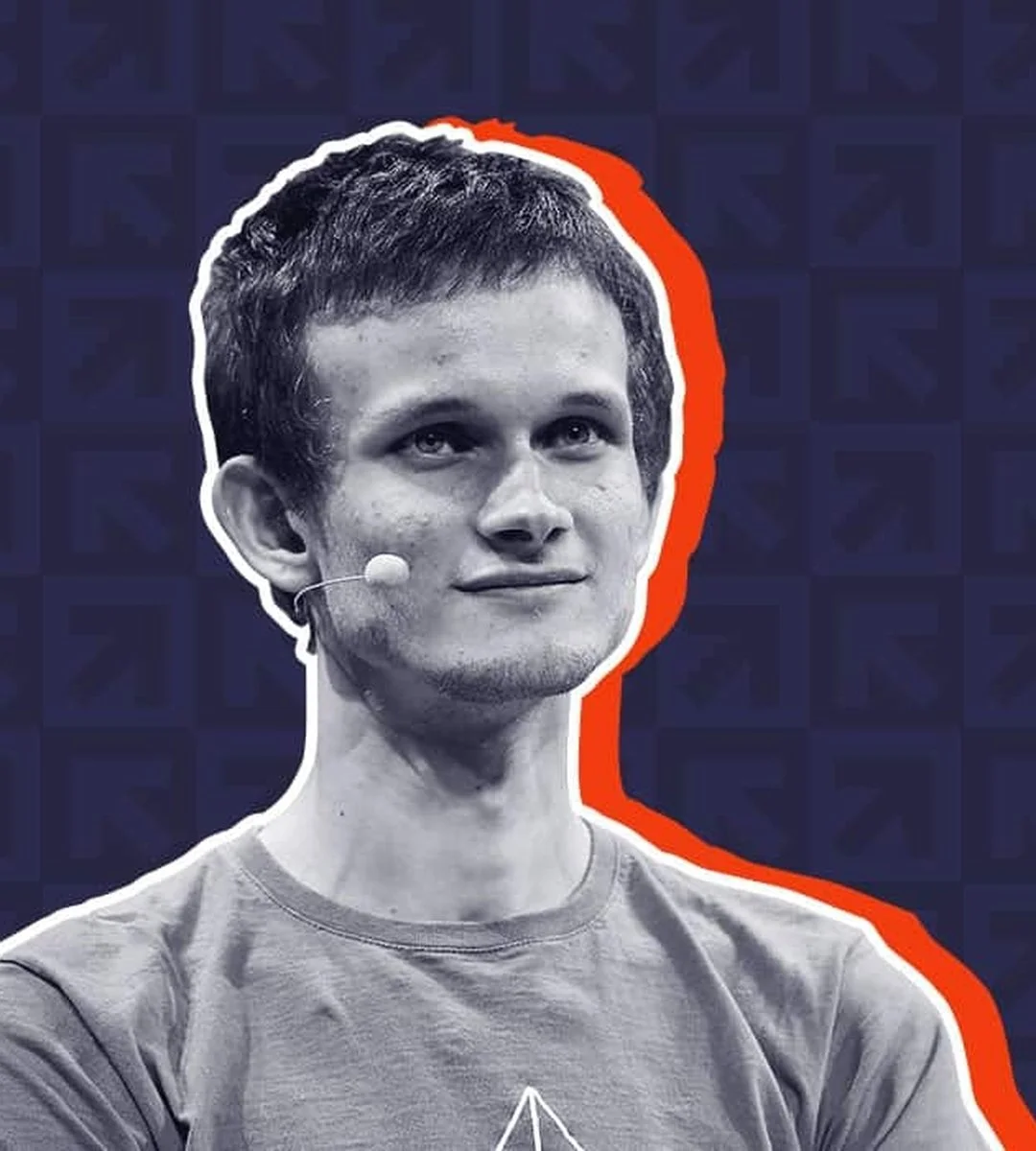
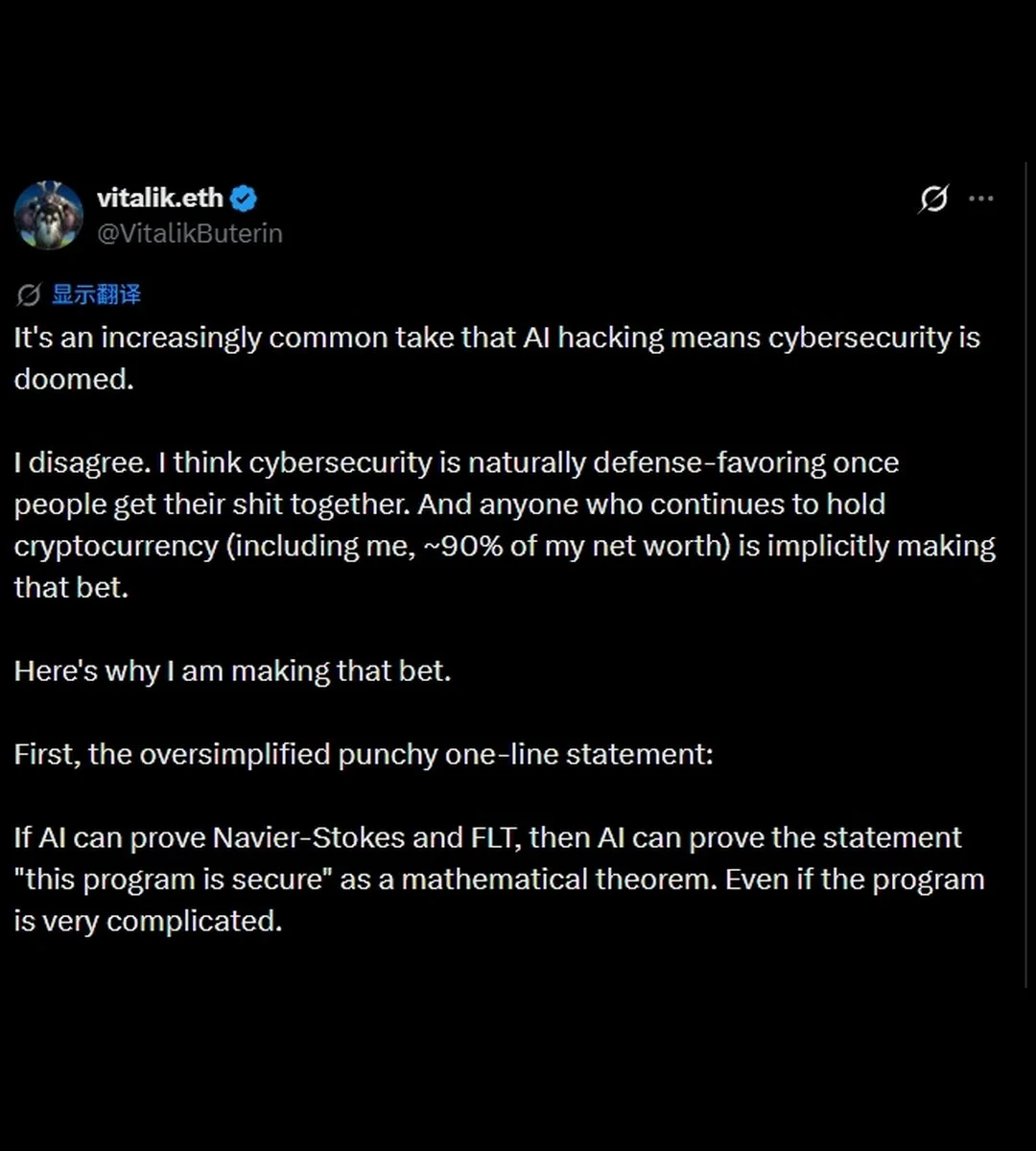
Ethereum co-founder Vitalik Buterin says he disagrees with the view that AI-powered hackers will make cybersecurity effectively unsolvable. His counterargument: mature AI tools could ultimately shift the advantage toward defenders, not attackers.
Buterin framed the stakes personally, noting that roughly 90% of his net worth remains in crypto. Continuing to hold, he argued, is itself a bet that defensive security scales faster than offensive AI capability.
Why it matters
The optimistic case rests on a symmetry: if AI systems can prove complex mathematical theorems, the same capability can help formally verify that software meets defined security properties. Rather than an endless race to find bugs before attackers do, future defenses would validate entire systems, including databases, networks, caches and supply chains.
That reframes the AI security debate from doom to engineering. Formal verification has historically been too expensive to apply broadly; AI that collapses that cost would change the calculus for every protocol handling user funds.
Market impact
For crypto specifically, the security question is existential. Exchanges, bridges and wallets remain prime targets, and a world where offensive AI overwhelms defenses would make holding assets on-chain untenable. Buterin's positioning is explicit: he is long on the outcome that AI hardens, rather than breaks, the ecosystem.
What to watch is whether formal verification tooling built on AI models starts shipping in production systems across Ethereum infrastructure, turning the thesis into deployable defense.

Frequently asked questions
-
Why does Vitalik Buterin disagree that AI will make cybersecurity unwinnable?
He argues that if AI can prove complex mathematical theorems, it can also formally verify that software meets defined security properties, shifting the long-term advantage toward defenders rather than attackers.
-
How much of Vitalik Buterin's net worth is in crypto?
Buterin said roughly 90% of his net worth remains in crypto, and described continuing to hold as a bet that AI ultimately strengthens cybersecurity defenses instead of overwhelming them.
-
What does formal verification of software mean in this context?
It means using AI to mathematically prove that a system meets defined security properties, rather than relying on finding bugs faster than attackers do.
-
Which systems would AI-driven defenses validate, according to Buterin?
He pointed to validating entire systems, including databases, networks, caches and supply chains, rather than only hunting individual bugs before attackers exploit them.
-
What is at stake for crypto in the AI cybersecurity debate?
Exchanges, bridges and wallets remain prime targets for hackers, so whether AI favors defenders or attackers directly affects how safely assets can be held on-chain.
 WatcherGuru
 Crypto News
 TheBlock
 CoinTelegraph
 CryptoSlate
 CoinDesk
 CZ Binance