


 CryptoSlate
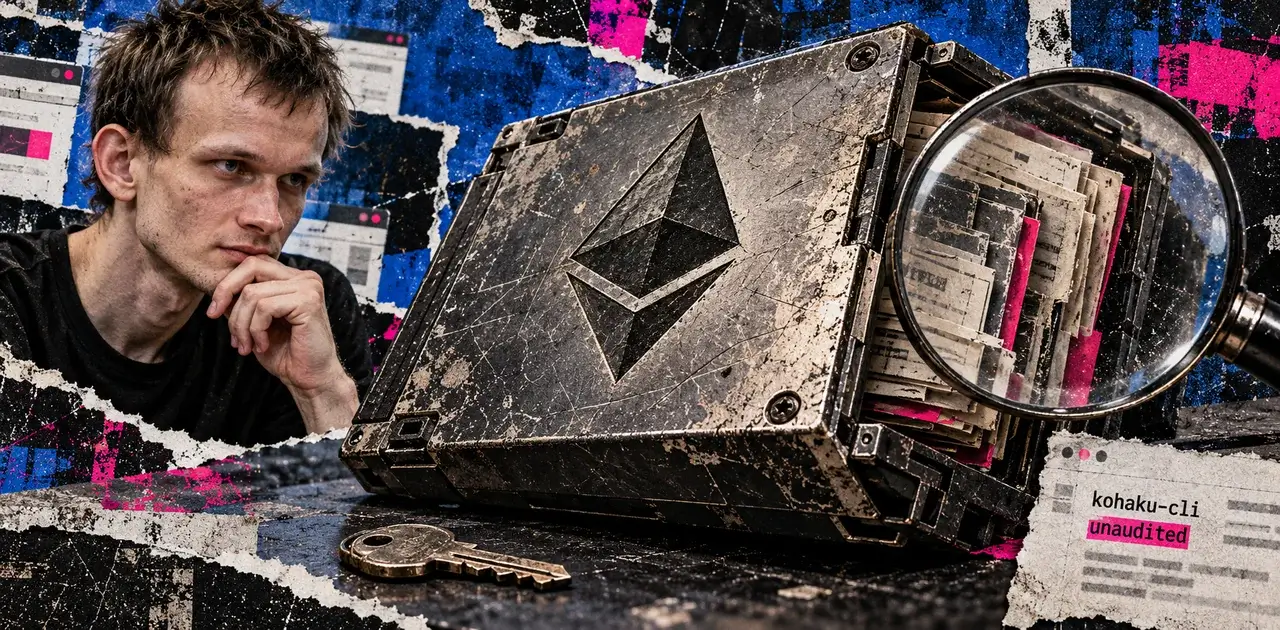

Vitalik Buterin says he uses kohaku-cli, a command-line wallet, for many payments through privacy protocols. In an October 31 essay, he also described using a separate AI-written tool to update content hashes on ENS, Ethereum’s naming system. The wallet’s documentation calls it unaudited and under active development, and warns users against mainnet use unless they understand the risks.
Why it matters
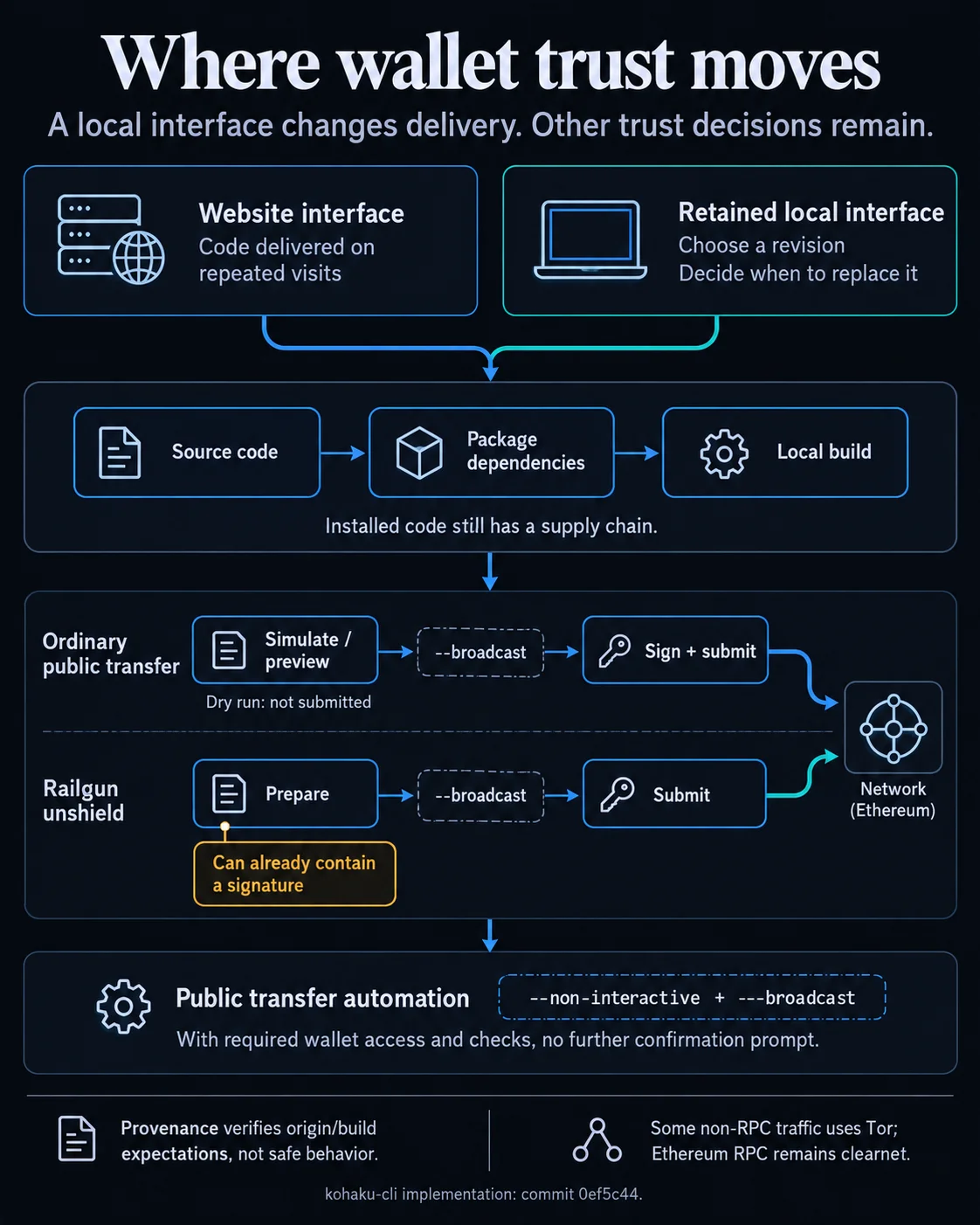
A website can deliver application code again each time a user visits. Running a local application lets users retain a chosen revision, but also makes them responsible for deciding which version and dependencies to install. Kohaku-cli’s instructions involve npm dependencies and a source build, so a local interface still has a software supply chain to assess.
The signing boundary matters too. A standard public-transfer dry run does not submit a transaction, while a prepared Railgun unshield operation can already contain a signature. Withholding broadcast therefore does not always mean withholding authorization. The software that constructs, signs and submits an operation can represent distinct sources of authority.
Market impact
The example highlights a trade-off for self-custody: control over application delivery can reduce repeated reliance on a website, but it does not establish what the installed code or its dependencies can do with signing access. Provenance checks can help verify an artifact’s origin and build history, though they rely on trusted builders and do not establish that the application’s behavior is acceptable.
Local execution also does not make every network interaction private. The CLI documentation says Tor is used by default for certain non-RPC traffic, while Ethereum RPC uses an ordinary network connection. Buterin’s account concerns his use of the tools; it does not establish that he uses unattended payments.

Frequently asked questions
-
What does Buterin use kohaku-cli for?
He says he uses the command-line wallet for many payments through privacy protocols. He described a separate AI-written tool for ENS content-hash updates.
-
What risk does keeping a local application revision address?
It lets users retain a chosen revision rather than receiving website application code again on each visit. Users still need to assess updates and dependencies.
-
Does withholding a Railgun unshield broadcast mean no signature exists?
Not necessarily. A prepared Railgun unshield operation can already contain a signature even when it has not been broadcast.
-
What warning does kohaku-cli give users?
Its documentation describes the CLI as unaudited, under active development and written with AI assistance. It warns users to avoid mainnet unless they understand the risks.
-
Does running kohaku-cli locally make all network activity private?
No. Its documentation describes Tor for certain non-RPC traffic, while Ethereum RPC uses an ordinary network connection.
 Lookonchain
 WuBlockchain
 Crypto Rank News
 Crypto News
 TheBlock
 CoinDesk
 CoinTelegraph