


 CryptoSlate
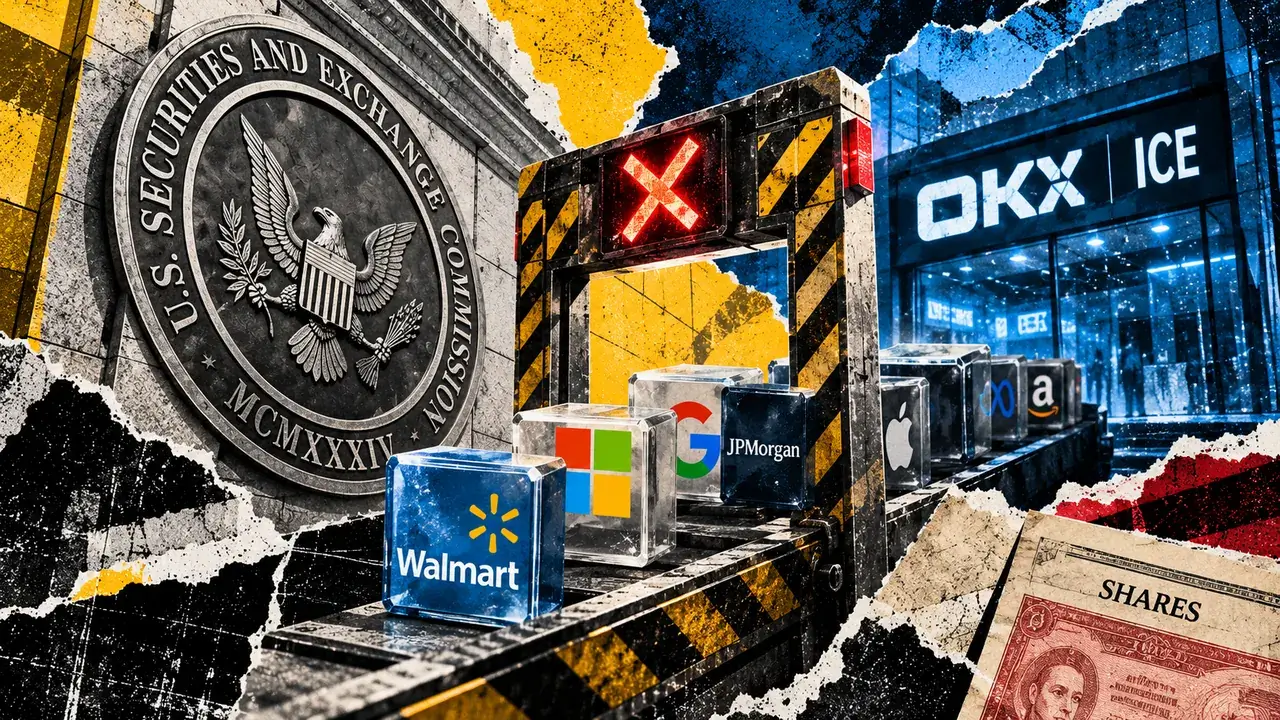


Walmart, Microsoft, Alphabet and JPMorgan Chase are among 38 companies objecting to third-party tokenized versions of their shares trading on OKXICE, according to the venue's Oct. 28 notice. The proposed round-the-clock venue is equally owned by an Intercontinental Exchange subsidiary and OKC USA. ICE operates the NYSE, but OKXICE is a separate venue proposing secondary trading through automated liquidity pools on the XLayer blockchain.
Why it matters
The objections highlight a mismatch between the venue's potential revenue and issuers' incentives. OKXICE's service fee goes to the venue, while separate pool fees go to investors supplying assets and network fees go to the blockchain. Secondary trading does not raise fresh share capital for the companies, and the fee schedule does not quantify a direct issuer payoff. Wider access to shares could still appeal to companies, but that benefit must be weighed against pricing and recordkeeping risks.
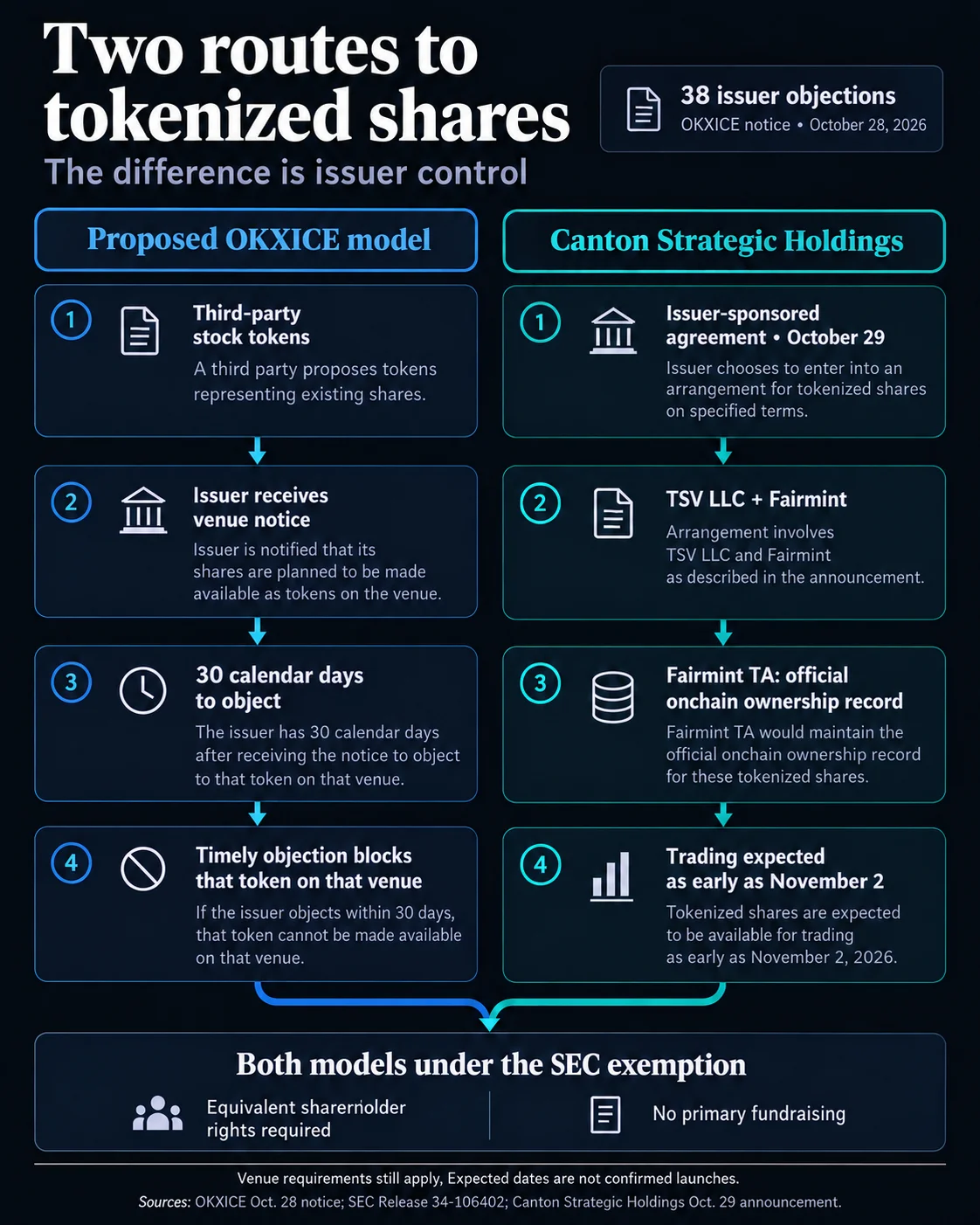
Under the SEC framework, covered tokens must carry shareholder rights equivalent to conventional shares, and the SEC's Sept. 17 exemption prohibits primary issuance and initial offerings on covered venues. An issuer has 30 calendar days after receiving notice to object to unaffiliated third-party token trading on a particular venue. A written objection within that window prevents the token from trading there. The order specifies no comparable routine issuer veto after the objection window, giving companies an incentive to assess the arrangement early.
Market impact
The roster has grown from 16 objectors cited in Oct. 24 reports to 38 in the Oct. 28 notice, sharpening the issuer-participation challenge. The SEC has identified shareholder-register maintenance and possible price dislocation, including effects on underlying stock prices, as risks issuers may weigh.
OKXICE's proposed pools price trades from their asset balances rather than a conventional order book. The venue warns token prices may diverge from underlying shares, especially when regular stock markets are closed or pool liquidity is thin.
Frequently asked questions
-
How many companies objected to third-party stock tokens on OKXICE?
OKXICE's Oct. 28 notice listed 38 issuer objections, including Walmart, Microsoft, Alphabet and JPMorgan Chase. Oct. 24 reports had listed 16.
-
What happens when an issuer objects to token trading on OKXICE?
An issuer can deliver a written objection within 30 calendar days after receiving notice. That prevents the token from trading on that particular venue.
-
Do secondary stock-token trades raise capital for the companies?
No. The seed says secondary trading raises no fresh share capital for issuers. OKXICE's service fees go to the venue, pool fees to liquidity providers and network fees to the blockchain.
-
Why might a stock token trade at a different price from its share?
OKXICE's proposed pools set prices from their asset balances rather than a conventional order book. The venue warns of possible divergence when stock markets are closed or pool liquidity is thin.
-
How does Canton's sponsored tokenization arrangement differ from third-party trading?
Canton Strategic Holdings chose TSV LLC and engaged Fairmint to tokenize its shares. Fairmint TA would issue the tokens and maintain the official on-chain ownership record.
 CoinTelegraph
 CoinDesk
 WatcherGuru
 WuBlockchain
 TheBlock