








 CryptoSlate



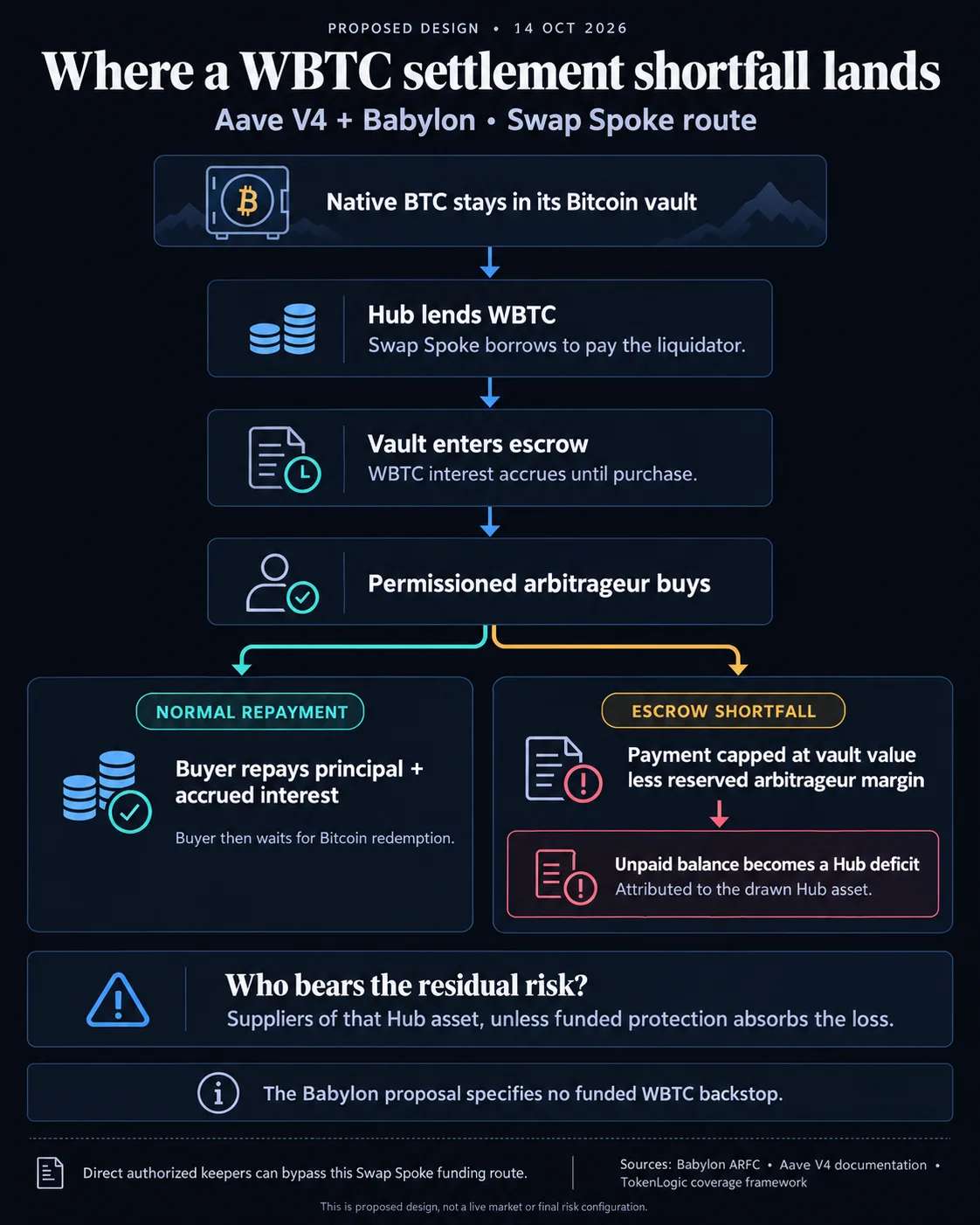
Babylon Labs’ Aave V4 proposal would let users post native Bitcoin as collateral while borrowing WBTC to settle liquidations immediately. The open route draws WBTC from an Aave Hub until a permissioned buyer acquires the seized Bitcoin vault, while a direct keeper route shifts the financing burden to an authorized operator. Any escrow shortfall would be recorded as a Hub deficit, but the proposal does not specify a funded WBTC backstop.
Why it matters
The design separates fast liquidation from slower Bitcoin redemption. A borrower’s BTC would remain in a Taproot vault, represented inside Aave by a restricted accounting token. When the position becomes liquidatable, a liquidator repays the debt and receives WBTC from the Swap Spoke at an oracle-based price less a sell discount. The vault stays in escrow while an arbitrageur repays the WBTC draw and waits through Bitcoin’s redemption process.
If the vault no longer covers the Hub debt, the purchase can still complete with the unpaid balance reported as a deficit. Aave’s deficit framework places that loss on supplied capital for the specific Hub asset unless a configured protection layer absorbs it. Initial deficit-protection recommendations cover WETH, USDC and USDT, not WBTC.
Market impact
The proposal therefore creates a direct risk-allocation question for WBTC suppliers. The final Hub, draw limits, pricing rules and any dedicated protection would determine how much loss-bearing capacity supports native Bitcoin collateral. Without sufficient WBTC liquidity or Swap Spoke allowance, permissionless liquidations can revert, narrowing the market to registered keepers and arbitrageurs.
Aave DAO would govern the Spokes and funding Hubs, while additional configuration, pause powers, redemption permissions and security reviews remain part of the path to deployment. For borrowers, those settings will define debt capacity and liquidation costs. For suppliers, they will determine whether native Bitcoin growth brings an unfunded deficit risk alongside the new collateral.


Frequently asked questions
-
How would Aave’s proposed native Bitcoin market settle liquidations?
Liquidators would repay a borrower’s debt and receive WBTC immediately. The seized Bitcoin vault would then remain in escrow until a permissioned buyer or authorized keeper completes redemption.
-
Who finances the waiting period in the open liquidation route?
Aave Hub liquidity finances the WBTC payout until an eligible arbitrageur purchases the vault. That buyer then commits capital while waiting for Bitcoin redemption.
-
What creates a WBTC Hub deficit?
A deficit occurs when the escrowed Bitcoin vault cannot repay the Swap Spoke’s WBTC draw and accrued obligations. The unpaid balance is recorded against the Hub during the purchase.
-
Would Aave’s existing deficit protection cover WBTC?
The cited initial protection recommendations cover WETH, USDC and USDT, not WBTC. The proposal does not specify a funded WBTC backstop, leaving that allocation unresolved.
-
What happens if the Aave Hub lacks enough WBTC liquidity?
Permissionless liquidations can revert when Hub WBTC liquidity or the Swap Spoke allowance is insufficient. Registered keepers may still use direct redemption, but fewer operators can complete the process.
 WuBlockchain
 WatcherGuru
 CoinTelegraph
 TheBlock