








 CryptoSlate
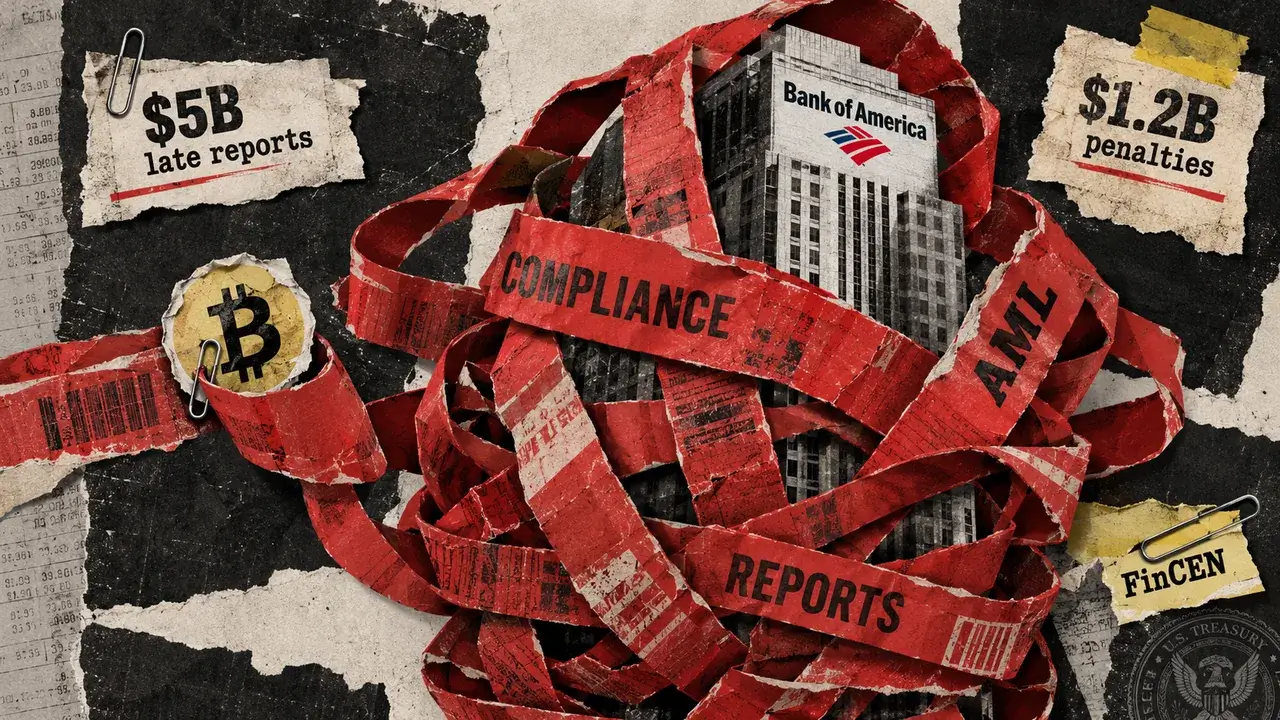



Bank of America faces more than $1.2 billion in penalties after admitting willful Bank Secrecy Act violations, including filing reports late on over $5 billion in suspicious transactions. FinCEN says more than $1 billion of those transactions involved priority illicit-finance and national-security risks, including Chinese money laundering networks and potential trade-based laundering near the southwestern border.
Why it matters
The penalties include a $750 million civil money penalty from the Office of the Comptroller of the Currency, the largest the agency has assessed against a bank. OFAC separately announced an $11.6 million settlement covering 475 apparent sanctions violations. FinCEN cited deficiencies in the bank's anti-money-laundering program, due diligence on foreign correspondent accounts and suspicious activity reporting.
The findings put Bank of America CEO Brian Moynihan's 2023 Senate testimony back in focus. Asked whether crypto companies handling financial transactions should follow the same AML rules as banks, he answered, “Absolutely.” The bank's case now gives crypto advocates a fresh argument for consistent enforcement, while the record also includes Binance's 2023 guilty plea to BSA conspiracy and other violations, and a $4.3 billion agreement.
Market impact
The $5 billion figure refers to suspicious transactions reported late, not an established total of laundered money. Regulators also faulted transaction monitoring across trillions of dollars in activity, inadequate expertise and training, audit failures, and weak remediation of a 2024 cease-and-desist order. Treasury said the bank relied heavily on outside referrals and law-enforcement inquiries to identify suspicious activity.
The policy stakes extend beyond banks. Banking groups have argued for broader BSA coverage across digital-asset markets, including exchanges, custodians, DeFi and stablecoin activity. If lawmakers respond to the case by pressing for stronger AML controls across both sectors, compliance obligations could grow for traditional institutions and crypto intermediaries alike.
Frequently asked questions
-
What does the $5 billion figure in the Bank of America case represent?
It represents suspicious transactions for which the bank filed reports late. It is not an established total of laundered money.
-
How are the penalties against Bank of America divided?
FinCEN assessed $1.2 billion, including a $750 million OCC civil penalty. OFAC separately announced an $11.6 million settlement covering 475 apparent sanctions violations.
-
What failures did regulators identify at Bank of America?
They cited deficiencies in the AML program, correspondent-account due diligence and suspicious activity reporting, as well as monitoring, training, audit and remediation failures.
-
Why is CEO Brian Moynihan's Senate testimony relevant to the case?
In 2023, Moynihan said crypto companies handling financial transactions should follow the same AML rules as banks. The enforcement case puts that call for equivalent standards in focus.
-
Which crypto businesses could be affected by broader AML rules?
The policy debate includes exchanges, custodians, DeFi firms and stablecoin intermediaries, particularly activity in secondary markets.
 WatcherGuru
 CoinTelegraph
 CoinDesk
 Crypto News