








 CoinDesk
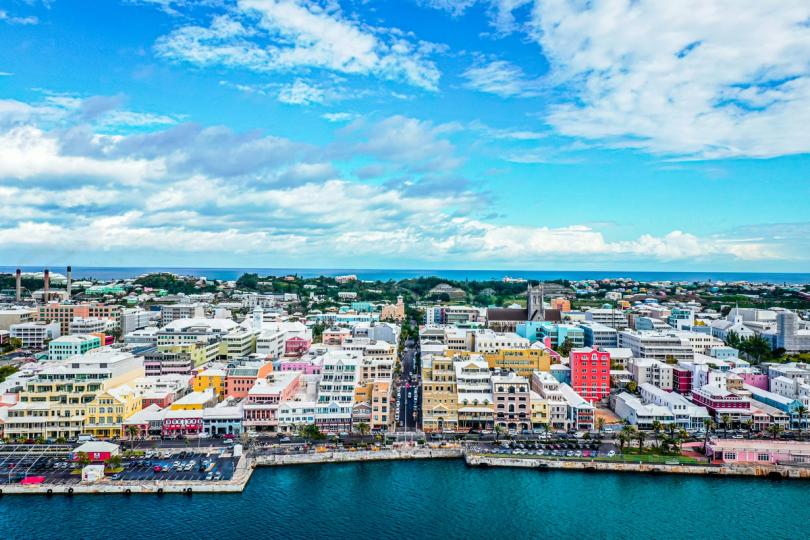


Bermuda's government, working with Circle, Coinbase, and Stellar, is building what officials call the world's first fully onchain national economy — anchored by a sovereign Bermuda digital dollar and a real-world pilot that has already airdropped Circle's USDC stablecoin to residents for use at a pop-up marketplace with MoneyGram-powered cash-out rails. The Bermuda Monetary Authority (BMA), led by CEO Craig Swan, is now scaling the experiment into live government infrastructure: digital assets will be accepted for public fees starting with the Department of Motor Vehicles, the island's highest-volume public-sector touchpoint.
The roadmap was first unveiled at Davos, where Bermuda announced partnerships with Circle — which deployed Circle Mint to power government digital treasury accounts — and Coinbase, which contributed its consumer and institutional onboarding rails. Stellar joined as the third major partner to issue the official Bermuda digital dollar, a sovereign-grade stablecoin that Swan said is designed to coexist with legacy banks rather than replace them, with traditional institutions continuing to custody the underlying fiat reserves.
Why it matters
Bermuda's small population is the geopolitical advantage. For G20 economies, rewriting contract, property, and securities law to recognise onchain transfers is a multi-year regulatory bottleneck; Bermuda, where Swan said the BMA can run a full pilot in weeks, is using speed-to-policy as the export. Premier E. David Burt framed the bet bluntly: the reliance on legacy payments infrastructure has left Bermudians paying high fees and hindered economic growth, and blockchain rails are the route to keeping capital circulating natively on-island.
The legal work is the part most national pilots skip. Swan noted that under existing law it is not always clear whether a smart contract satisfies a legal transfer of ownership, and that share-register legislation needs to be amended to explicitly allow a digital form.


Frequently asked questions
-
What is Bermuda building with Circle, Coinbase, and Stellar?
Bermuda is building what officials call the world's first fully onchain national economy, anchored by a sovereign Bermuda digital dollar. Circle provides the minting infrastructure, Coinbase provides consumer and institutional onboarding rails, and Stellar is the issuance chain for the sovereign-grade stablecoin.
-
What has the BMA actually tested so far?
The Bermuda Monetary Authority airdropped $100 in USDC per attendee at a citizen education event, ran a pop-up marketplace where stablecoins could be spent, and used MoneyGram for instant cash-out to fiat. Digital assets will be accepted for government fees starting with the Department of Motor Vehicles.
-
Why is Bermuda suited to run a national onchain pilot?
BMA CEO Craig Swan framed the island's small population as the primary geopolitical advantage: G20-scale economies face multi-year regulatory bottlenecks to rewrite contract, property, and securities law, while Bermuda can run a full pilot in weeks and export speed-to-policy as a competitive edge.
-
How is Bermuda handling the legal side of smart contracts?
Swan said existing law does not clearly recognise a smart contract as a legal transfer of ownership and that share-register legislation needs to be amended to permit a digital form. The BMA is also updating the Digital Asset Business Act (DABA) to cover tokenized real-world assets and DeFi.
-
What is the AI payments hub Bermuda is rolling out?
The BMA plans to launch an AI payments hub to research and supervise transactional flows initiated entirely by autonomous software, an early jurisdictional attempt to wrap supervisory tooling around the agentic-commerce wave rather than wait for enforcement-driven regulation.
 TheBlock
 Crypto News
 CoinTelegraph
 WuBlockchain