








 CoinDesk
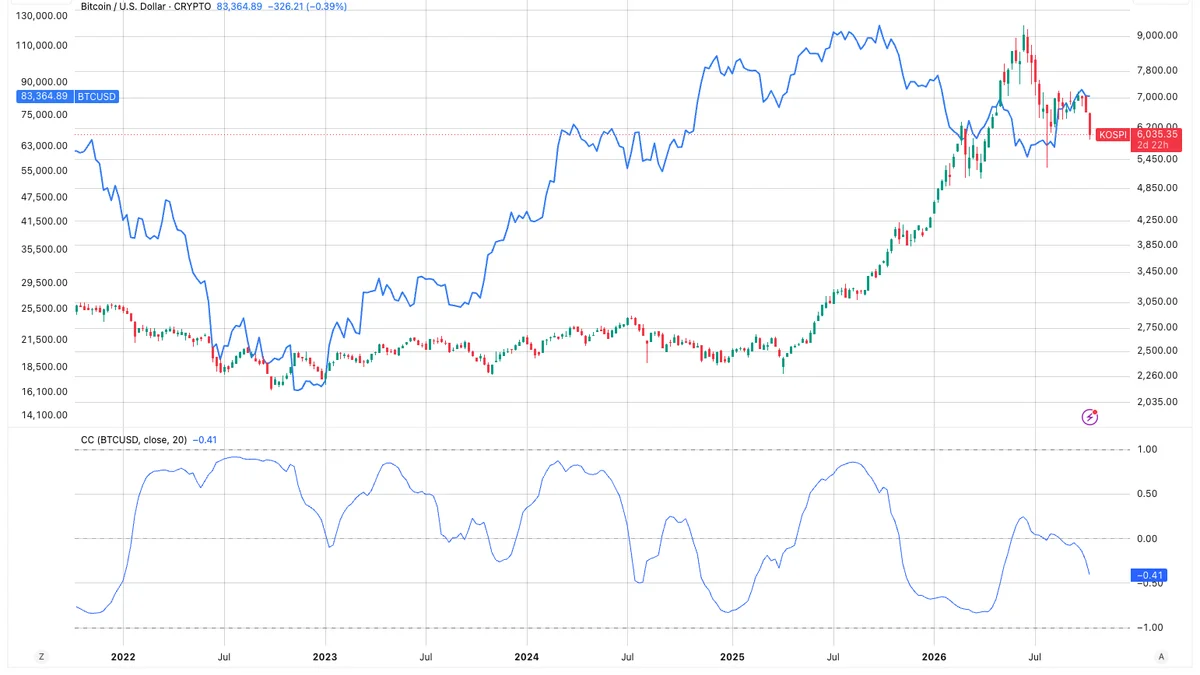



The KOSPI fell 5.5% in Asian trading and is now roughly 38% below its June peak, while Bitcoin has recovered from around $58,000 to as high as $87,000. The split has produced a moderately negative 20-week rolling correlation of -0.41 between the South Korean index and BTC.
Why it matters
South Korea’s chipmakers are at the center of the latest pressure on the AI trade. SK Hynix and Samsung Electronics dropped around 10% and 7%, respectively, as investors questioned whether massive AI infrastructure spending can generate adequate returns and as competition from China threatens chip margins.
Broadcom CEO Hock Tan intensified those concerns by comparing speculative AI investment with gambling in a casino. CXMT’s claimed memory-chip breakthrough added to fears about the durability of South Korean manufacturers’ competitive position. The weakness also spread into US premarket trading, where Micron Technology and SanDisk were both down around 3%.
Market impact
Bitcoin bottomed near $58,000 shortly after the KOSPI reached its June peak and later rebounded as high as $87,000. That performance creates a potential alternative narrative for investors reducing exposure to AI-linked equities, but correlation alone does not establish capital rotation.
The key signal is the divergence itself. If chip stocks remain under pressure while BTC holds its recovery, investors may read Bitcoin as less exposed to the earnings and margin risks weighing on the semiconductor trade. The relationship remains a market indicator, not proof that capital has moved directly from South Korean equities into Bitcoin.

Frequently asked questions
-
How far has the KOSPI fallen from its June peak?
The KOSPI fell 5.5% in Asian trading and is now roughly 38% below its June peak.
-
How has Bitcoin performed during the KOSPI selloff?
Bitcoin recovered from around $58,000 to as high as $87,000 while the KOSPI came under renewed pressure.
-
What is the reported correlation between Bitcoin and the KOSPI?
The 20-week rolling correlation between Bitcoin and the KOSPI is moderately negative at -0.41.
-
Why are South Korean chip stocks selling off?
Investors are questioning the returns from heavy AI infrastructure spending, while Chinese competition is raising concerns about chipmakers’ margins.
-
Does the Bitcoin-KOSPI divergence prove capital rotation?
No. The divergence may indicate that Bitcoin is benefiting as investors reduce AI exposure, but correlation alone does not establish direct capital rotation.
 WuBlockchain
 Crypto News
 WatcherGuru
 TheBlock
 CoinTelegraph