








 CoinDesk

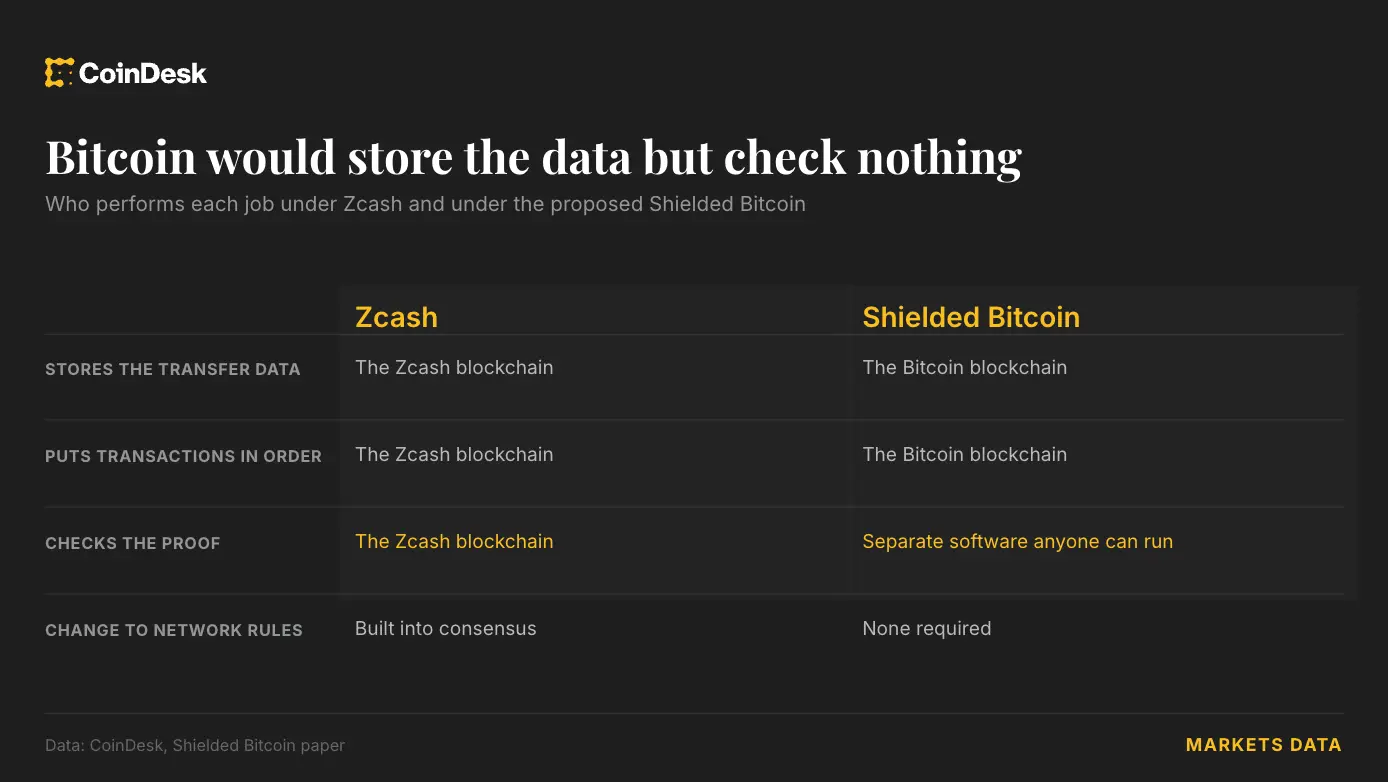

Researchers from cryptography firm [alloc] init have proposed Shielded Bitcoin, a system designed to conceal payment amounts, senders and recipients without changing Bitcoin’s network rules. It would publish encrypted transfer data and mathematical proofs on Bitcoin, while separate software checks whether private payments are valid. The 56-page specification does not yet explain how real BTC would enter or leave the system, and there is no launch date.
Why it matters
Bitcoin’s public transaction history can expose amounts and addresses, and linking an address to a person or business can make related payments easier to trace. Shielded Bitcoin borrows from Zcash’s encrypted-payment design: users would spend encrypted records called notes, with proofs intended to show they own the funds and have not created new ones. Viewing keys could let users share transaction details with an accountant or auditor without giving up spending control.
The verification model differs from Zcash. Bitcoin would record the data, but separate software would check the proofs. That means a Bitcoin transaction could be confirmed even if the private payment recorded within it fails Shielded Bitcoin’s checks. Researchers leave the mechanisms for depositing and withdrawing BTC to future work.
Market impact
The proposal is research, not a live Bitcoin feature, and its tradeoffs are material. The reference design depends on a trusted cryptographic setup in which at least one participant must act honestly. Transfer timing and fee payments would remain visible, and a private transfer is estimated at about 700 virtual bytes, compared with 100 to 200 for an ordinary Bitcoin transaction. At an equivalent fee rate, that could mean miner fees about four times higher.
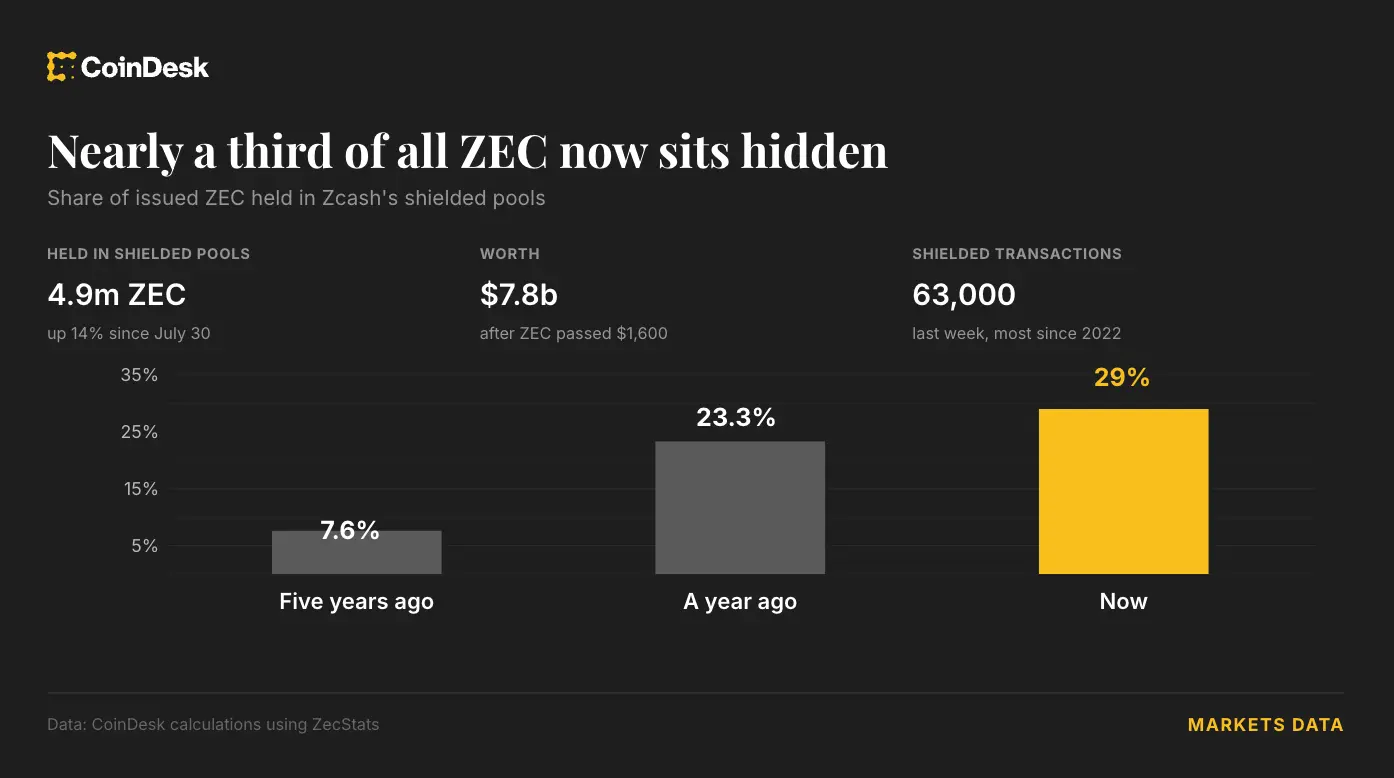
The research arrives amid heightened interest in crypto privacy, including rising shielded activity on Zcash. But Shielded Bitcoin’s unresolved entry and exit mechanisms mean its encrypted records are not yet a demonstrated way to move ordinary BTC privately. Adoption depends on further research and a workable path for real bitcoin to move in and out.



Frequently asked questions
-
What information would Shielded Bitcoin conceal?
The proposed system is designed to hide payment amounts, senders and recipients using encrypted records and mathematical proofs.
-
Would Shielded Bitcoin change Bitcoin’s network rules?
No. The proposal would publish encrypted transfer data on Bitcoin, while separate software checks the private payments.
-
How would users deposit or withdraw BTC?
The specification does not define a deposit or withdrawal mechanism. The researchers reserve those mechanisms for future work, and no launch date has been set.
-
What could happen if a private payment fails its checks?
A Bitcoin transaction could still be confirmed even if the private payment recorded within it fails Shielded Bitcoin’s separate checks.
-
How much more expensive could a private transfer be?
The estimated transfer size is about 700 virtual bytes, compared with 100 to 200 for an ordinary Bitcoin transaction. At an equivalent fee rate, miner fees could be about four times higher.
 CryptoSlate
 Crypto Rank News
 TheBlock
 Crypto News
 CoinTelegraph