


 CoinDesk
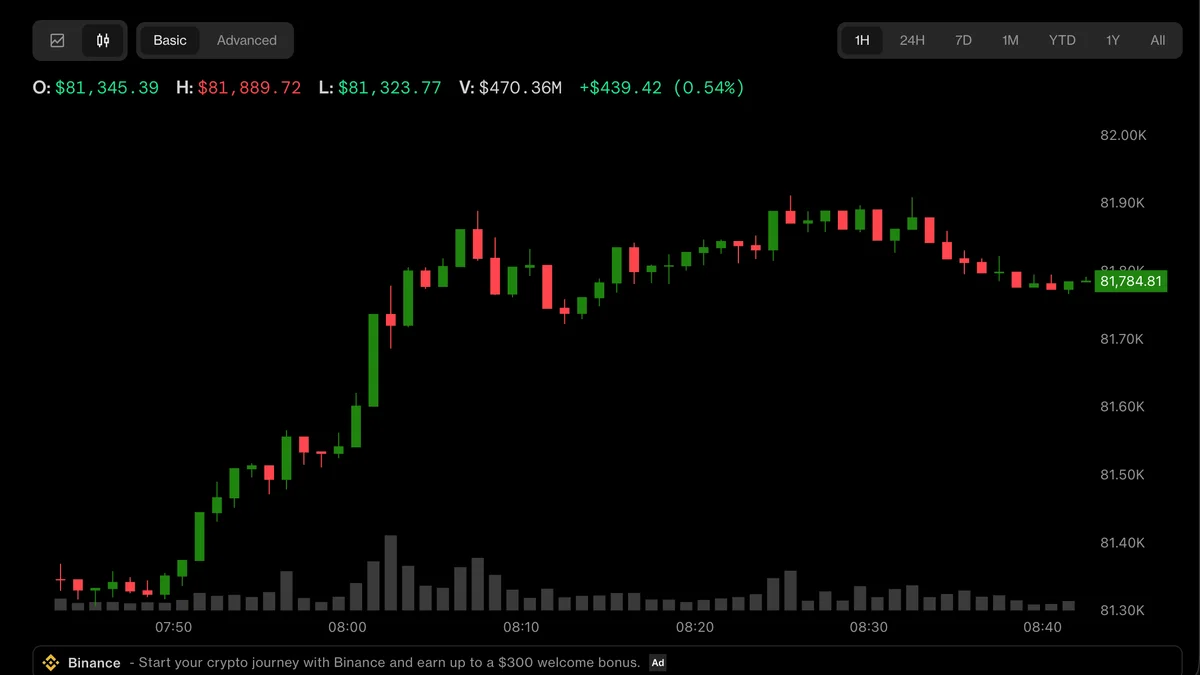



Bitcoin recovered to nearly $82,000 in Asian trading on Friday after falling below $81,000 overnight, while gold rebounded to $4,020 per ounce from $3,986. The yen reversed from 156.07 per U.S. dollar toward 157 as Asian stocks and Nasdaq futures recovered, but WTI futures remained near $100. About $435 million in crypto futures positions were liquidated over 24 hours, including $385 million in longs, as Bitcoin tested its 50-day simple moving average.
Why it matters
Hotter-than-expected Japanese inflation had pushed the yen to its strongest level since Sept. 18 and reinforced expectations for further Bank of Japan rate hikes. Because the yen is widely used to fund carry trades, its retreat toward 157 eased a pressure point for global risk assets, while the cross-asset rebound showed broader dip demand rather than Bitcoin-specific strength.
Oil near $100 keeps inflation risk active even after U.S. President Donald Trump invoked a Cold War-era law aimed at boosting fuel production. The policy move has not materially cooled crude, leaving risk assets exposed if elevated energy prices persist.
Market impact
Nasdaq futures rose 0.17% to 29,190 from 29,022, and major Asian equities rebounded from session lows, confirming a wider risk recovery. Bitcoin's test of its 50-day simple moving average came after $385 million in bullish futures positions were liquidated, showing how quickly leverage can amplify a selloff. Preliminary SoSoValue data put Thursday's outflows from U.S.-listed spot Bitcoin ETFs at $381 million, leaving a less supportive backdrop for a sustained rally. The near-term setup remains constrained: leverage has been reduced, but institutional outflows and oil near $100 are clearer barriers to a broader risk-on move.

Frequently asked questions
-
What cross-asset moves accompanied Bitcoin's rebound?
Gold rose to $4,020 per ounce, major Asian equities recovered from session lows, and Nasdaq futures gained 0.17% to 29,190. The yen also retreated from 156.07 toward 157 per U.S. dollar.
-
How much crypto leverage was liquidated in 24 hours?
About $435 million in crypto futures positions were liquidated, including $385 million in longs. The liquidations occurred as Bitcoin tested its 50-day simple moving average.
-
Why was Bitcoin's 50-day moving average important?
The 50-day simple moving average is widely followed as a gauge of near-term momentum. Bitcoin tested it after dropping below $81,000 and recovering toward $82,000.
-
What did spot Bitcoin ETF flows show on Thursday?
U.S.-listed spot Bitcoin ETFs recorded $381 million in outflows, based on preliminary SoSoValue data. The result left institutional demand less supportive of a sustained Bitcoin rally.
-
Why does oil near $100 matter for risk assets?
Sustained high oil prices can fuel global inflation and weigh on risk assets. That pressure remained even after a Cold War-era law was invoked to boost fuel production.
 TheBlock
 Crypto News
 WatcherGuru
 Benjamin Cowen
 CoinTelegraph