








 CoinDesk
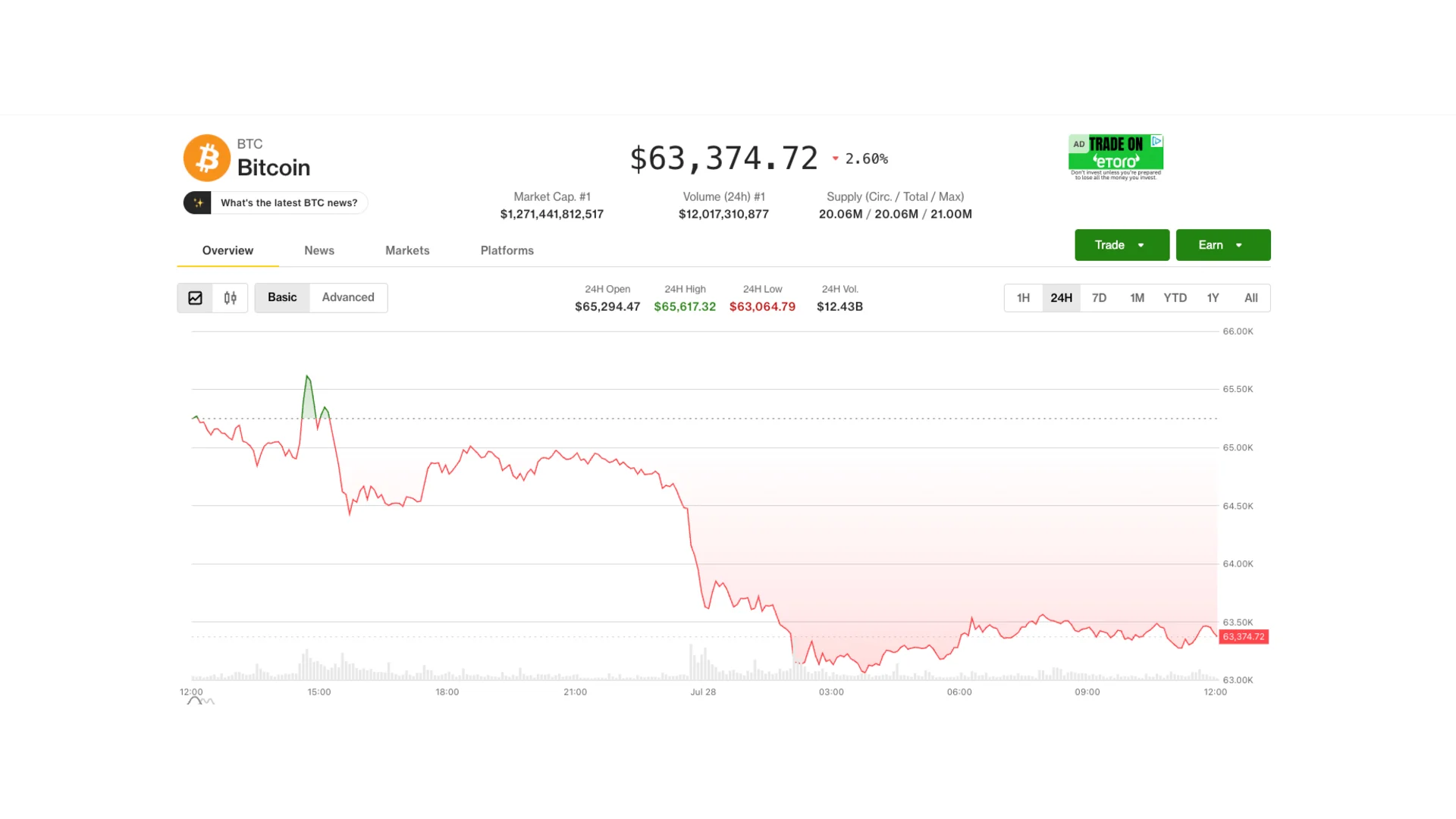



Bitcoin shed roughly 2% during the U.S. overnight session, slipping below $64,000 and putting BTC on track for a third losing session in four as two catalysts hit the tape at once. South Korea's Kospi index plunged 11%, one of its worst single-day declines in years, as chipmaking stocks cratered and dragged global risk assets lower. Layer-1 and AI tokens bore the brunt of the selloff: FET fell 9.5%, with NEAR, HYPE and WLD shedding 8-9% over 24 hours. Ether underperformed against the psychological $2,000 mark it failed to reclaim on Monday, sliding to $1,880.
Why it matters
The Kospi shock is a risk-off event masquerading as a Korea story. Chip-exposed names like Samsung and SK Hynix anchor the index, and their collapse spilled into U.S. tech futures, gold and silver, pulling BTC and the alts down with them. Layer-1 and AI tokens, the cycle's highest-beta segments, took the heaviest drawdown, a reminder that BTC still trades as a global risk asset when the macro crosscurrents turn.
Layered on top is a regulatory blow. The U.S. Senate shelved the Crypto Clarity Act to prioritize a Russia sanctions bill and federal nominations, leaving roughly two weeks of floor time before the Aug. 8 recess. With an unresolved dispute over restrictions on government officials' crypto holdings still on the table, the bill's path this year is genuinely in doubt.
Market impact
Derivatives positioning has flipped. Taker long/short volume in futures turned bearish at 51.5% shorts, the first sustained bearish bias in days. Funding rates for ETH, SOL, XRP and TRX went negative while BTC's hovered near zero. The 24-hour open interest-adjusted cumulative volume delta on the top 25 coins turned negative for the first time in at least three weeks, with bears driving the action through aggressive market-order shorts. XRP open interest bucked the trend, rising nearly 6% to 2.35 billion tokens even as BTC, ETH and SOL open interest held flat.
Options markets echo the spot weakness. BTC and ETH put-call skews climbed on Deribit, and put volume now tops both rankings.





Frequently asked questions
-
Why did Bitcoin drop overnight?
Bitcoin shed roughly 2% in the U.S. overnight session as South Korea's Kospi plunged 11% on a chip-stock rout and the U.S. Senate shelved the Crypto Clarity Act to prioritize other legislation, putting the bill's path this year in doubt.
-
How badly did the Kospi fall and why does it matter for crypto?
The Kospi dropped 11%, one of its worst single-day declines in years, driven by chipmaking stocks like Samsung and SK Hynix. The shock spilled into U.S. tech futures and global risk assets, pulling BTC and layer-1 tokens down with it.
-
What happened to the Crypto Clarity Act?
The Senate shelved the bill to prioritize a Russia sanctions package and federal nominations, leaving roughly two weeks of floor time before the Aug. 8 recess. A dispute over restrictions on government officials' crypto holdings remains unresolved.
-
Which tokens lost the most in the selloff?
Layer-1 and AI tokens led the decline. FET fell 9.5%, while NEAR, HYPE and WLD all shed 8-9% over 24 hours. Ether slipped below $1,880 after failing to reclaim $2,000 on Monday.
-
What does derivatives positioning say about sentiment?
Taker long/short volume flipped bearish at 51.5% shorts, funding rates on ETH, SOL, XRP and TRX went negative, and the open interest-adjusted CVD on the top 25 coins turned negative for the first time in three weeks, all pointing to bears driving the action.
 CryptoSlate
 CoinTelegraph
 Crypto News
 WatcherGuru
 Lookonchain
 Altcoin Daily
 Crypto Rank News