








 CoinDesk

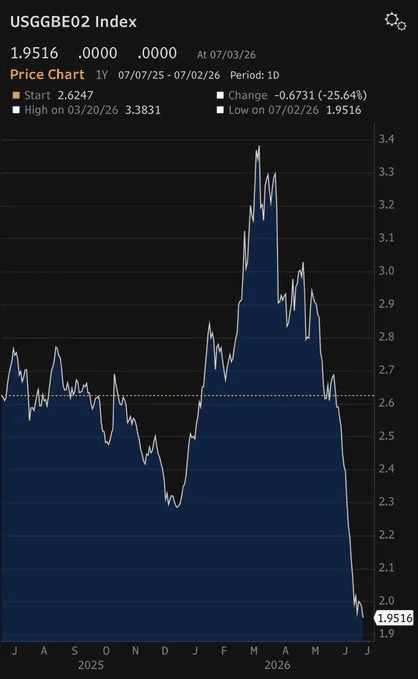


Bitcoin just closed its best week since March, and the macro engine under the move is a sharp reset in U.S. inflation expectations rather than anything crypto-native. The Treasury market is now pricing average inflation over the next two years at under 2%, below the Federal Reserve's own target, while longer-dated breakevens have dropped sharply in recent weeks. WTI crude has slipped to levels last seen before the Iran war began in late February, removing the energy tailwind that had been keeping headline prints sticky.
Why it matters
A sub-2% two-year breakeven is the bond market's way of saying the next Fed move is more likely a cut than a hike. Robin Brooks, senior fellow at the Brookings Institution and former chief economist at the Institute of International Finance, argued that the deflationary impulse from falling oil should remind markets the Fed is not hiking, and that the next move, if anything, is a cut. That read is bearish for the dollar and, by the well-known inverse correlation, supportive for bitcoin.
Not everyone is buying it. YCC Macro pushed back on X, warning that sticky service-sector inflation is exactly why the Fed is likely to keep rates higher for longer even if headline CPI keeps moderating, and that markets betting on aggressive easing may be underestimating how persistent the underlying pressure really is.
Market impact
The June CPI release on July 14 is now the obvious pivot. A softer print would validate the breakeven move and put the Dollar Index under pressure, clearing the path for BTC to extend its rally; a hotter print would unwind the easing trade fast and likely drag bitcoin with it. The bullish positioning is lopsided enough that even a small disappointment could trigger a sharp DXY snap higher, which is the asymmetry traders are watching this week.

Frequently asked questions
-
What is the U.S. two-year breakeven inflation rate?
It is the difference in yield between a standard two-year Treasury note and a two-year Treasury Inflation-Protected Security (TIPS). It reflects the bond market's average expectation for inflation over the next two years.
-
Why does a falling breakeven matter for bitcoin?
Lower inflation expectations weaken the case for further Fed rate hikes and tend to weigh on the U.S. dollar. Bitcoin has historically shown an inverse correlation with DXY, so a softer dollar typically clears the path for BTC to rally.
-
Who is Robin Brooks and what did he say about the Fed?
Robin Brooks is a senior fellow at the Brookings Institution and former chief economist at the Institute of International Finance. He argued that the deflationary impulse from falling oil prices should remind markets the Fed is not hiking and that the next move, if anything, is a cut.
-
What is the counter-argument to the bullish bitcoin setup?
YCC Macro warned on X that sticky service-sector inflation means the Fed is likely to keep rates higher for longer even as headline CPI moderates, and that markets betting on aggressive easing may be underestimating how persistent underlying inflation is.
-
When is the next major catalyst for this trade?
The U.S. June Consumer Price Index release on July 14 is the key pivot. A softer print would validate the breakeven move and pressure DXY; a hotter print could unwind the easing trade quickly and drag bitcoin lower.
 WatcherGuru
 Crypto Capital Venture
 CoinTelegraph
 TheBlock
 Benjamin Cowen
 Crypto News