








 Lookonchain
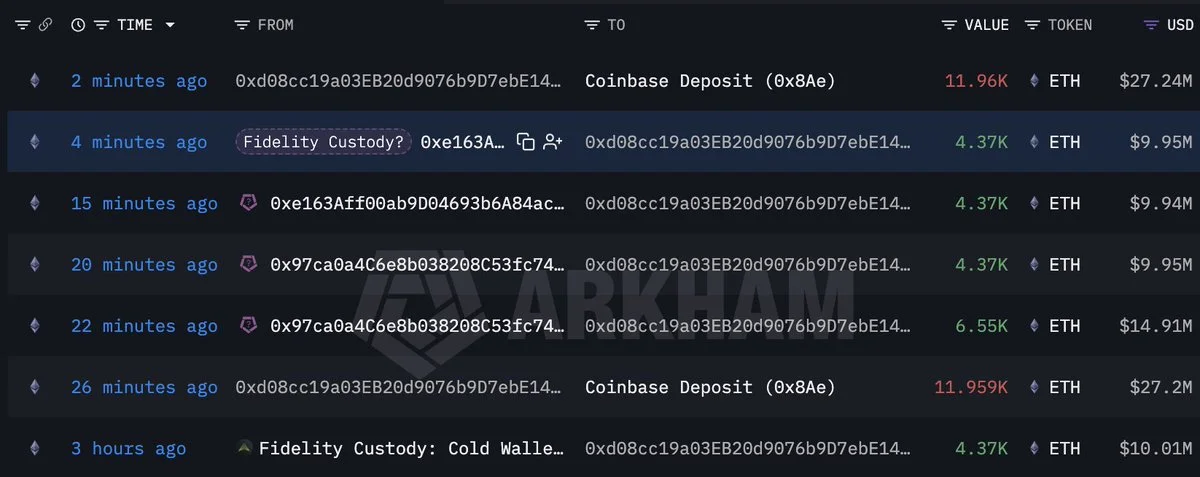

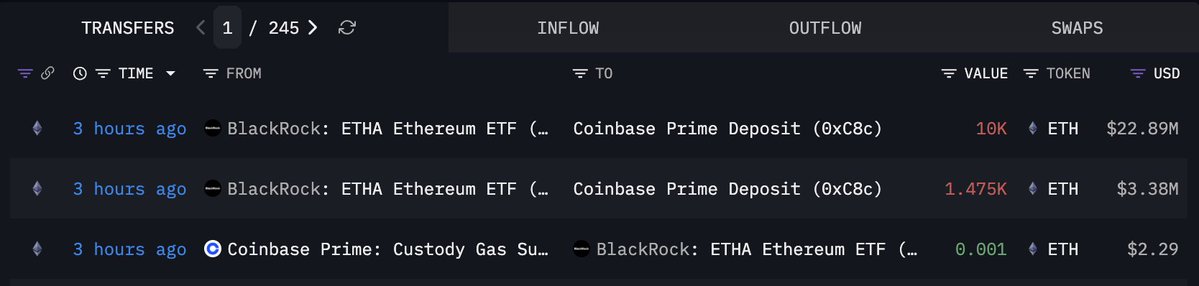
BlackRock deposited 11,475 ETH ($26.27M) into Coinbase Prime roughly three hours before publication, with Fidelity following an hour later with a 23,919 ETH ($54.44M) deposit. The combined $80.71M move from the two largest US spot ETH ETF issuers into the venue's prime brokerage is the kind of flow traders read as near-term sell pressure — the standard read is that deposits to a prime desk precede sale execution on the other side.
Why it matters
When the issuers themselves route into the prime desk rather than redeeming in-kind or hitting the open market, the implication is execution rather than fund-flow unwind. BlackRock and Fidelity together hold the majority of US spot ETH ETF AUM, so a same-day move from both inside a three-hour window is read by the desk as coordinated distribution rather than two unrelated rebalancing events. The scale — $80.7M combined — is meaningful but not large enough to clear deep liquidity, which is itself a tell: this is a flow the issuers want executed without price impact, and the venue they're using is the one with the deepest ETH order book.
Market impact
Traders will be watching the Coinbase Prime execution window over the next several hours. The base case is that the ETH sell-side absorbs the supply without a sharp move, validating the issuer read as routine rebalancing. A failure to absorb — price slipping through nearby support on rising exchange inflow — would reframe the print as the start of a larger distribution sequence and put a lid on the next attempt at a relief bounce. Either way, the tape into the US afternoon session is the read.

Frequently asked questions
-
Why are BlackRock and Fidelity depositing ETH into Coinbase Prime?
The standard desk read is that deposits to a prime brokerage precede sale execution on the other side. When the issuers themselves route into the venue rather than redeeming in-kind, the implication is execution rather than fund-flow unwind.
-
How much ETH did BlackRock and Fidelity deposit combined?
BlackRock deposited 11,475 ETH ($26.27M) roughly three hours before publication, with Fidelity adding 23,919 ETH ($54.44M) an hour later. The combined total is $80.71M.
-
Is this a sign of ETF outflows or just rebalancing?
The flow is being read as distribution rather than fund-flow unwind because the issuers themselves are routing to a prime desk in a tight three-hour window. ETF creation and redemption data is the cleanest confirmation either way, and prints from both issuers will be the read traders watch next.
-
Why Coinbase Prime specifically?
Coinbase Prime is the deepest ETH order book available to US institutions, and the scale of the deposits is large enough to matter but not large enough to clear that liquidity. Using the prime desk lets the issuers execute without significant price impact.
-
What should traders watch next?
The Coinbase Prime execution tape through the US afternoon session is the immediate read. Absorption without a sharp price move would validate the routine-rebalancing read; a slip through nearby support on rising exchange inflow would reframe the print as the start of a larger distribution sequence.
 WuBlockchain
 Whale Alert
 CryptoSlate
 CoinTelegraph
 CoinDesk