


 CryptoSlate


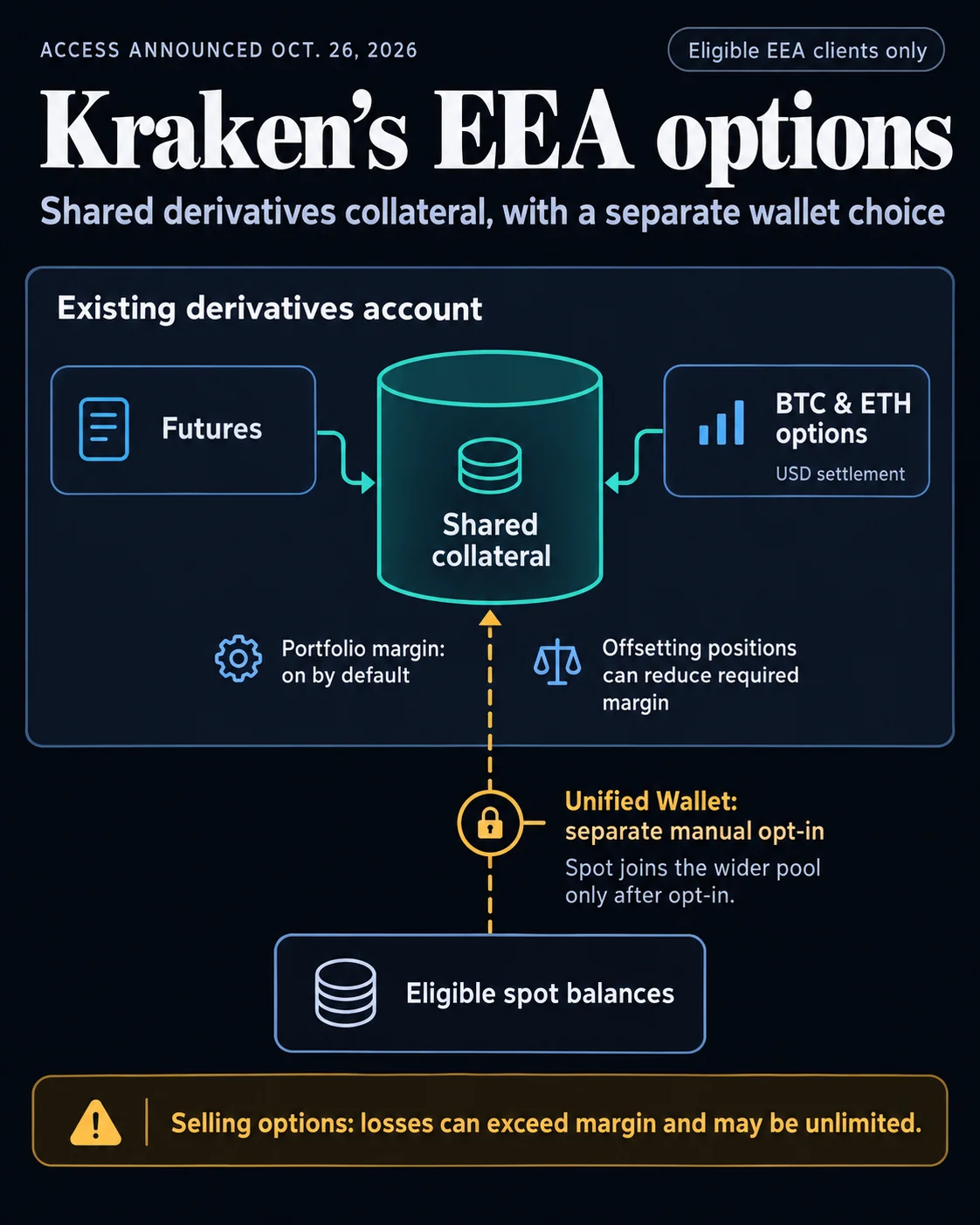
Eligible traders in the European Economic Area can now trade Bitcoin and Ethereum options through existing Kraken Pro derivatives accounts on web and mobile. Kraken announced the rollout on Oct. 26, extending access beyond the professional and institutional clients included in its July launch. An options appropriateness assessment is required before trading.
The contracts are cash-settled in U.S. dollars, including premiums, profit and loss, and final settlement, even when clients post collateral in another accepted currency. Expiries range from weekly and monthly contracts to quarterly and semiannual maturities, while Kraken accepts more than 30 currencies as collateral.
Why it matters
Kraken is using a shared collateral pool for futures and options, giving existing derivatives clients access to both instruments through the same account. Portfolio margin is enabled by default, allowing offsetting positions to reduce the collateral required for a portfolio. The setup gives European traders a more capital-efficient way to combine hedges, directional positions, and structured options trades.
The products use futures-style margining. Premium is not paid upfront, and gains and losses are marked against collateral. Options do not accrue funding payments, although perpetual contracts in the same account continue to do so.
Market impact
Trading runs through a request-for-quote system. Clients can build trades with up to five legs, review quotes that expire after a limited period, and accept or reject them. An accepted quote becomes binding. If a portfolio becomes distressed, Kraken says it uses a sealed-offer auction rather than liquidating positions through an order book.
The leverage and margin design also raises the risk threshold. Buyers can lose the full value of an options position, while sellers can lose more than posted margin and may face unlimited losses. Kraken may require additional collateral at short notice and can close positions when collateral is insufficient.
The rollout is separate from Kraken’s Unified Wallet.


Frequently asked questions
-
Who can trade Kraken’s new Bitcoin and Ethereum options?
Eligible traders in the European Economic Area can access the contracts through existing Kraken Pro derivatives accounts. Kraken requires an options appropriateness assessment before trading.
-
How does portfolio margin work for these Kraken options?
Portfolio margin is enabled by default and allows offsetting futures and options positions to reduce required collateral. Both products draw from the same collateral pool.
-
How are Kraken’s Bitcoin and Ethereum options settled?
The options are cash-settled in U.S. dollars. Premium, profit and loss, and final settlement are calculated in dollars even when collateral is posted in another accepted currency.
-
What are the main risks for Kraken options traders?
Buyers can lose the full value of an options position. Sellers can lose more than posted margin and may face unlimited losses, while Kraken can require additional collateral or close positions when collateral is insufficient.
-
Is Kraken’s Unified Wallet required to trade these options?
No. The Unified Wallet is a separate opt-in feature. Activating it can pool eligible spot and derivatives balances under default cross margin, exposing spot holdings to futures losses.
 TheBlock
 Glassnode
 CoinDesk
 WuBlockchain
 CoinTelegraph
 Crypto News