








 CoinDesk

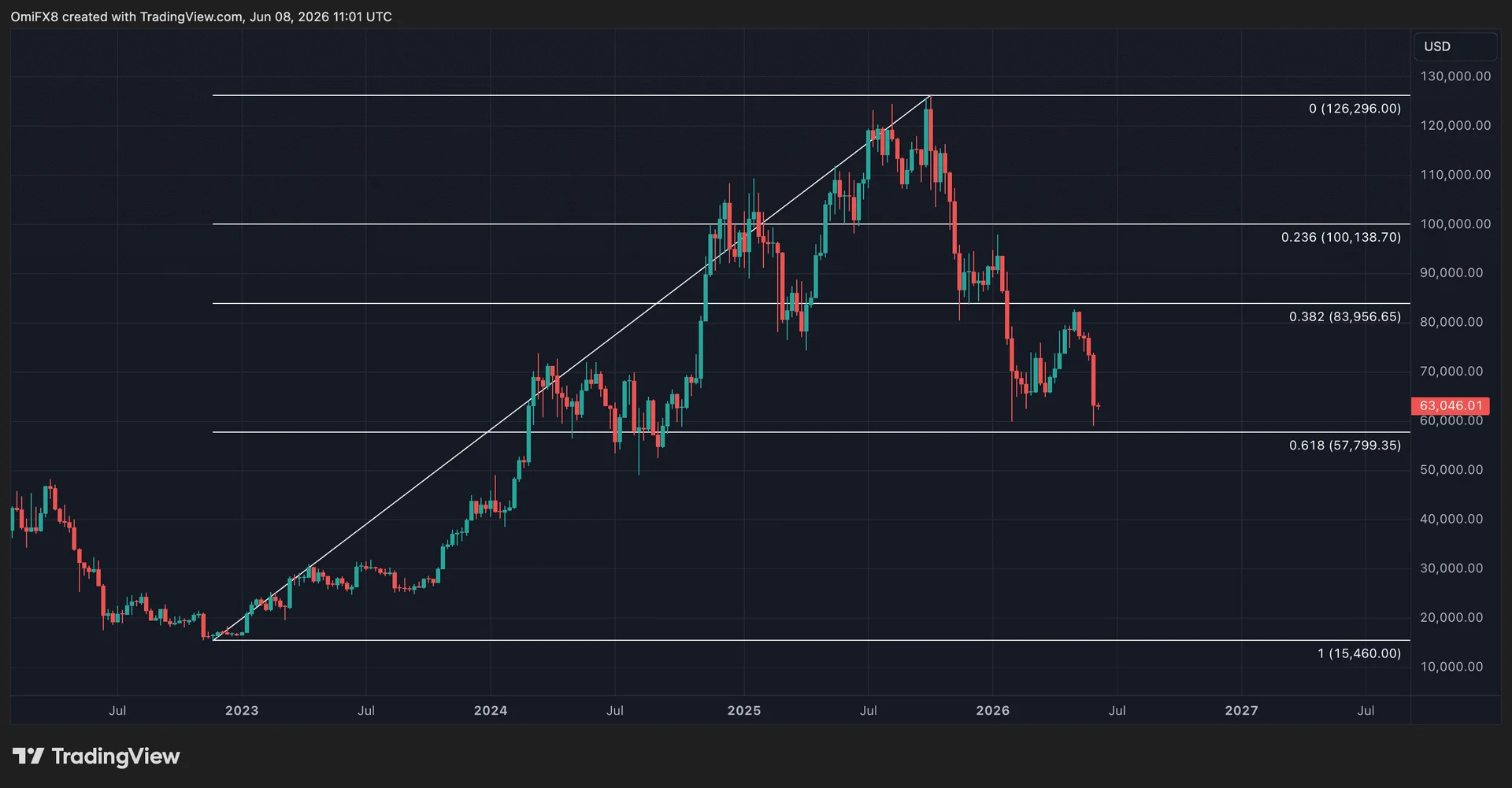


Bitcoin's slide toward $60,000 drained $1.72 billion from the 11 U.S. spot ETFs last week, marking a third straight week of accelerating net redemptions. The selling happened on total weekly volume of just $18.43 million — an unusually thin tape for a move of that size. By comparison, when BTC crashed to $60,000 in early February, weekly outflows were a far smaller $318 million but volume ran at $46.15 billion, a textbook panic-and-capitulation signature with bulls and bears actively contesting every level.
Why it matters
The current combination — accelerating outflows on subdued volume — points to a steady, low-participation exodus rather than a shock-driven flush that typically marks a local bottom. CoinDesk's Daybook framed the bounce as questionable absent a dramatic resurgence in ETF demand, and the probability of that looks thin: looming IPOs from SpaceX and Anthropic, two of the largest in history, are positioned to keep siphoning liquidity out of broader risk assets, crypto included. Layered on top, May U.S. CPI due this week is expected to print above 4%, a number likely to amplify volatility across bonds and risk markets simultaneously.
Market impact
The technical setup is precarious. The recent collapse has pushed BTC closer to the 61.8% Fibonacci retracement at $57,799, defined by the 2022 bear-market low to the 2025 bull-market high — the "golden ratio" level widely watched as a make-or-break inflection point. A clean break below that zone likely deepens the selloff rather than producing the capitulation that historically sets up a durable reversal. Watch three things this week: the CPI print, the ETF flow tape, and any firming of SpaceX / Anthropic IPO timing — each is a near-term liquidity event for BTC, and right now all three are pointing the same direction.

Frequently asked questions
-
How much did spot Bitcoin ETFs lose last week?
The 11 U.S. spot Bitcoin ETFs recorded $1.72 billion in net outflows last week, marking a third straight week of accelerating redemptions as BTC slid toward $60,000.
-
Why is this ETF outflow cycle different from February's crash?
In early February, BTC crashed to $60K on $46.15B in weekly volume with $318M in outflows — a panic-and-capitulation signature. Last week's $1.72B outflows came on just $18.43M in volume, a steady exodus rather than shock-driven capitulation.
-
How could SpaceX and Anthropic IPOs affect Bitcoin?
Two of the largest IPOs in history are expected to pull liquidity out of broader risk markets, including crypto, just as BTC is already bleeding from ETF outflows — compounding the demand drought at a fragile technical moment.
-
What is the key Bitcoin price level to watch?
The 61.8% Fibonacci retracement at $57,799, defined by the 2022 bear-market low to the 2025 bull-market high. A clean break below is widely seen as deepening the selloff rather than producing a durable reversal.
-
Why does the upcoming U.S. CPI print matter for crypto?
May CPI is expected to print above 4%, a hot figure likely to amplify volatility across bonds and risk markets simultaneously and add another headwind to BTC's fragile bounce.
 WuBlockchain
 WatcherGuru
 CoinTelegraph
 CryptoSlate
 TheBlock