


 WuBlockchain

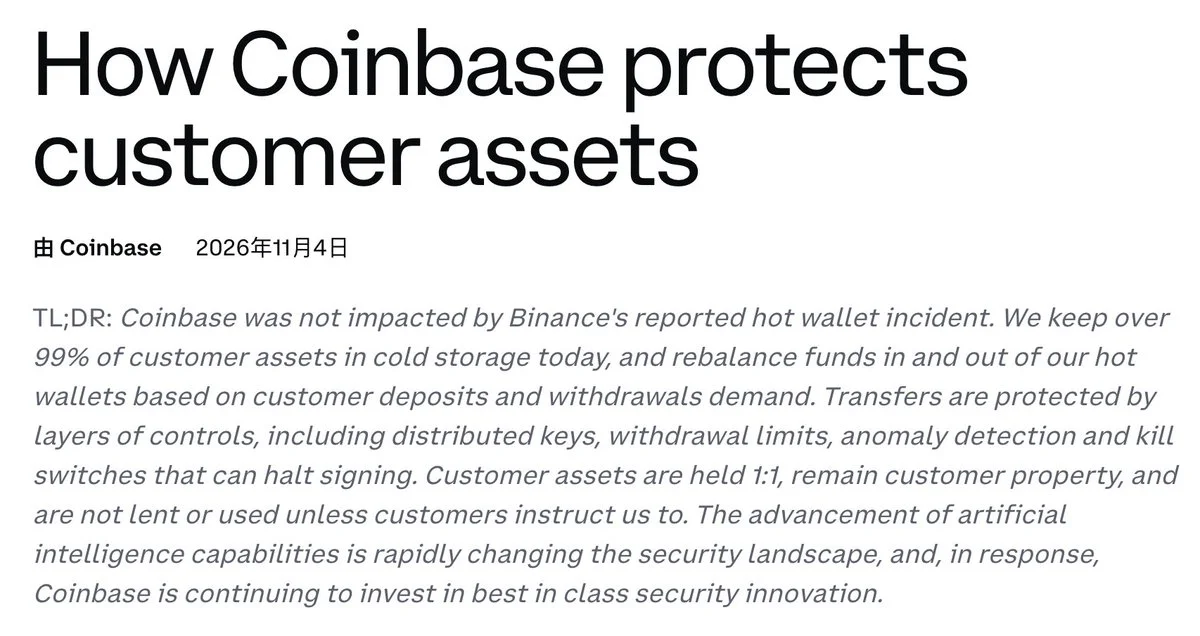
Coinbase said the Binance hot wallet incident did not affect its systems or customer funds. The exchange says it holds more than 99% of customer assets in cold wallets, while hot wallet balances are adjusted to meet deposit and withdrawal demand.
Why it matters
The statement highlights how custody design can limit exposure to hot wallet incidents. Coinbase says transfers also use distributed keys, withdrawal limits, anomaly detection and emergency switches that can pause signing.
Market impact
Coinbase says customer assets are held 1:1, remain customer property and will not be lent or used unless customers instruct it. The disclosure underscores the role of custody safeguards and clear asset-segregation commitments in exchange security.
Source: [How Coinbase protects customer assets](https://www.coinbase.com/zh-sg/blog/how-coinbase-protects-customer-assets)
Frequently asked questions
-
How much of Coinbase customer assets does the exchange say is held in cold wallets?
Coinbase says it holds more than 99% of customer assets in cold wallets. Hot wallet balances are adjusted to meet deposit and withdrawal demand.
-
What safeguards does Coinbase say protect asset transfers?
Coinbase lists distributed keys, withdrawal limits, anomaly detection and emergency switches that can pause signing.
-
Did the Binance hot wallet incident affect Coinbase, according to the exchange?
No. Coinbase said the incident did not affect its systems or customer funds.
-
How does Coinbase describe its treatment of customer assets?
Coinbase says customer assets are held 1:1, remain customer property and are not lent or used unless customers instruct it.
-
Why does Coinbase rebalance funds into and out of hot wallets?
Coinbase says it adjusts hot wallet balances according to customer deposit and withdrawal demand.
 TheBlock
 CryptoSlate
 Crypto News
 CoinTelegraph
 CoinDesk