








 Lookonchain
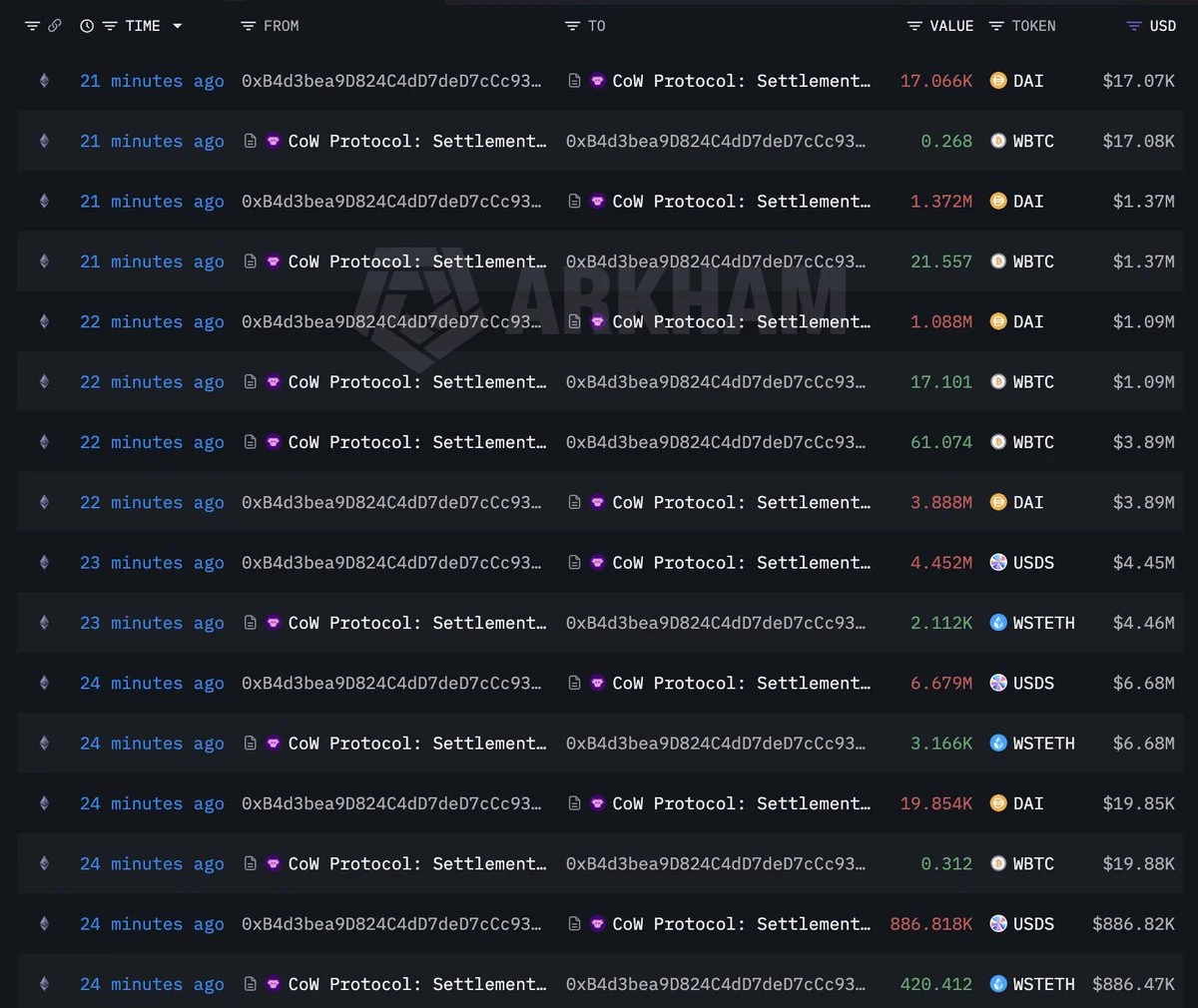
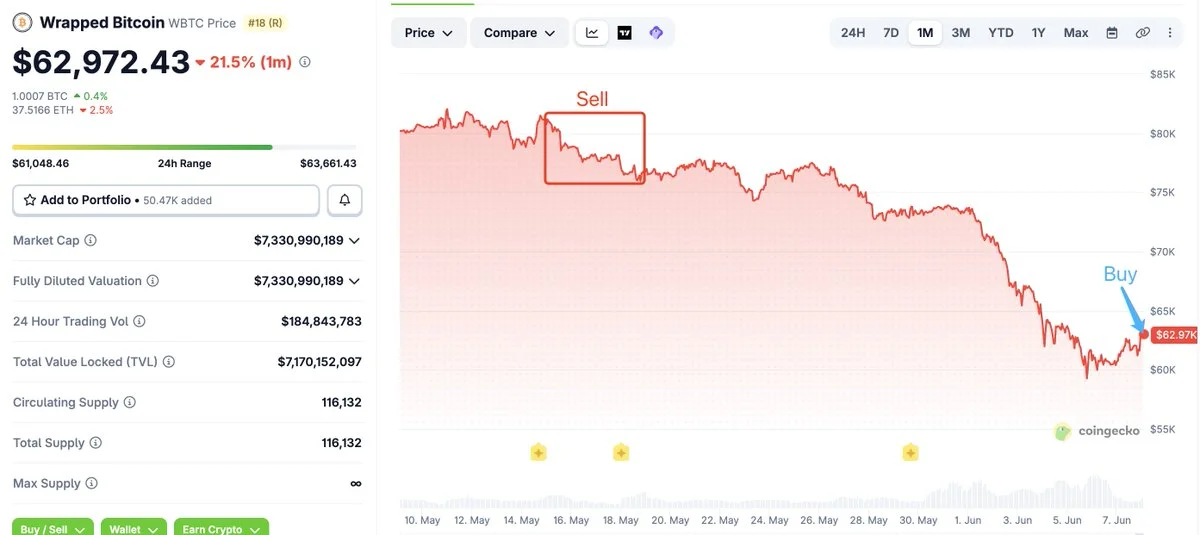
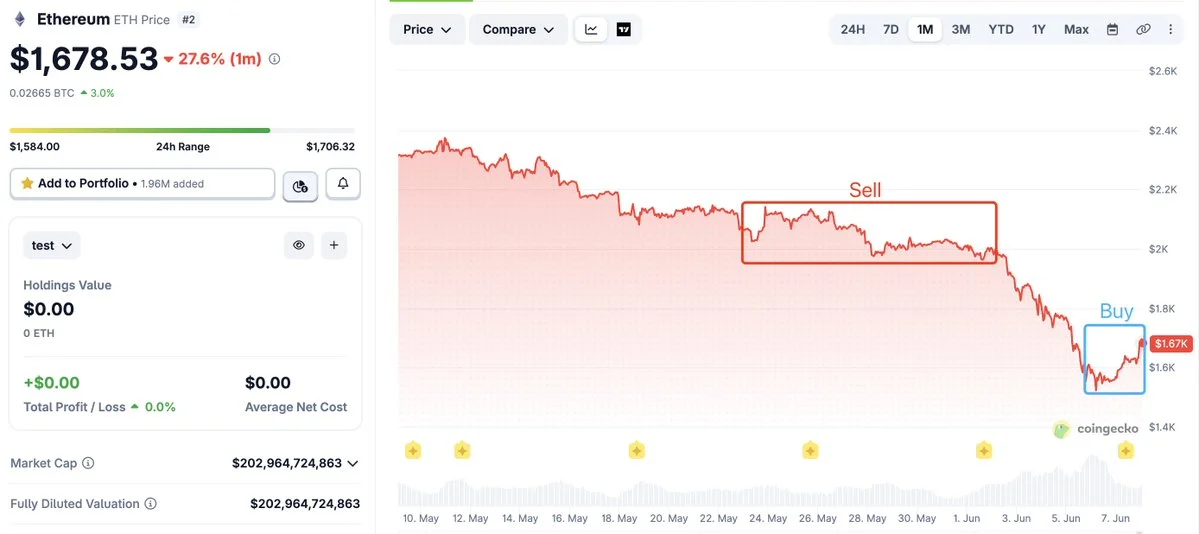
A wallet tagged as an Ethereum OG executed what on-chain analysts are calling one of the cleanest market-timing trades of the cycle: selling $188M of ETH, wstETH, and WBTC into strength before the crash, then redeploying roughly $155M back into the same assets at the bottom.
The pre-crash leg, executed at an average price near $2,040 for ETH and $78,538 for WBTC, cleared 60,000 ETH ($117.25M), 9,442 wstETH ($24M), and 600 WBTC ($47.12M). The post-crash buyback added 611 WBTC at $63,280, plus 60,088 ETH and 10,000 wstETH at an average $1,606 — netting back essentially the full ETH stack and 11 extra WBTC for a fraction of the original cost basis.
Why it matters
Round-trip trades of this size are rare, and the wallet left a full on-chain trail across three addresses (0xb4d3, 0x593c, 0xc1b6), making the entries and exits publicly auditable. For an Ethereum OG class wallet to fully exit leverage-prone assets into the move and redeploy at the lows is the exact pattern institutional desks describe as "selling volatility, not direction" — it works because the position is rebuilt before the thesis changes, not after.
Market impact
The trade is being read less as a directional ETH call and more as a credibility event: a public address just demonstrated that the same wallet that prints cycle tops can also print cycle bottoms, which raises the bar for any follow-the-smart-money copy-trading signal sourcing ETH and WBTC flows going forward.


Frequently asked questions
-
Which wallets executed the trade?
Three Ethereum addresses flagged as belonging to the same OG trader: 0xb4d3bea9d824c4dd7ded7ccc93e6212e3f0b186a, 0x593c427d8c7bf5c555ed41cd7cb7cce8c9f15bb5, and 0xc1b6085ab3fd59106bE476AC91Fd04A3E4ac740e. All entries and exits are auditable on-chain.
-
What did the trader sell before the crash?
He sold 60,000 ETH (~$117.25M) and 9,442 wstETH (~$24M) at an average $2,040, plus 600 WBTC (~$47.12M) at an average $78,538 — roughly $188M in total into strength.
-
What did the trader buy back after the crash?
He bought 611 WBTC (~$38.68M) at an average $63,280, plus 60,088 ETH (~$95.3M) and 10,000 wstETH (~$21.08M) at an average $1,606 — about $155M redeployed at the lows.
-
What was the net result of the round-trip?
He recovered essentially the full ETH stack and added 11 extra WBTC at a fraction of the original cost basis, having sold and re-entered the same assets at sharply different prices.
-
Why does this trade matter beyond the wallet itself?
On-chain analysts view it as a credibility event: a public address just demonstrated it can time both the top and bottom of a major move, which raises the bar for copy-trading signals that source ETH and WBTC wallet flows.
 Whale Alert
 Crypto Rank News
 Crypto Capital Venture
 TheBlock
 CoinDesk
 CryptoSlate