








 CoinDesk
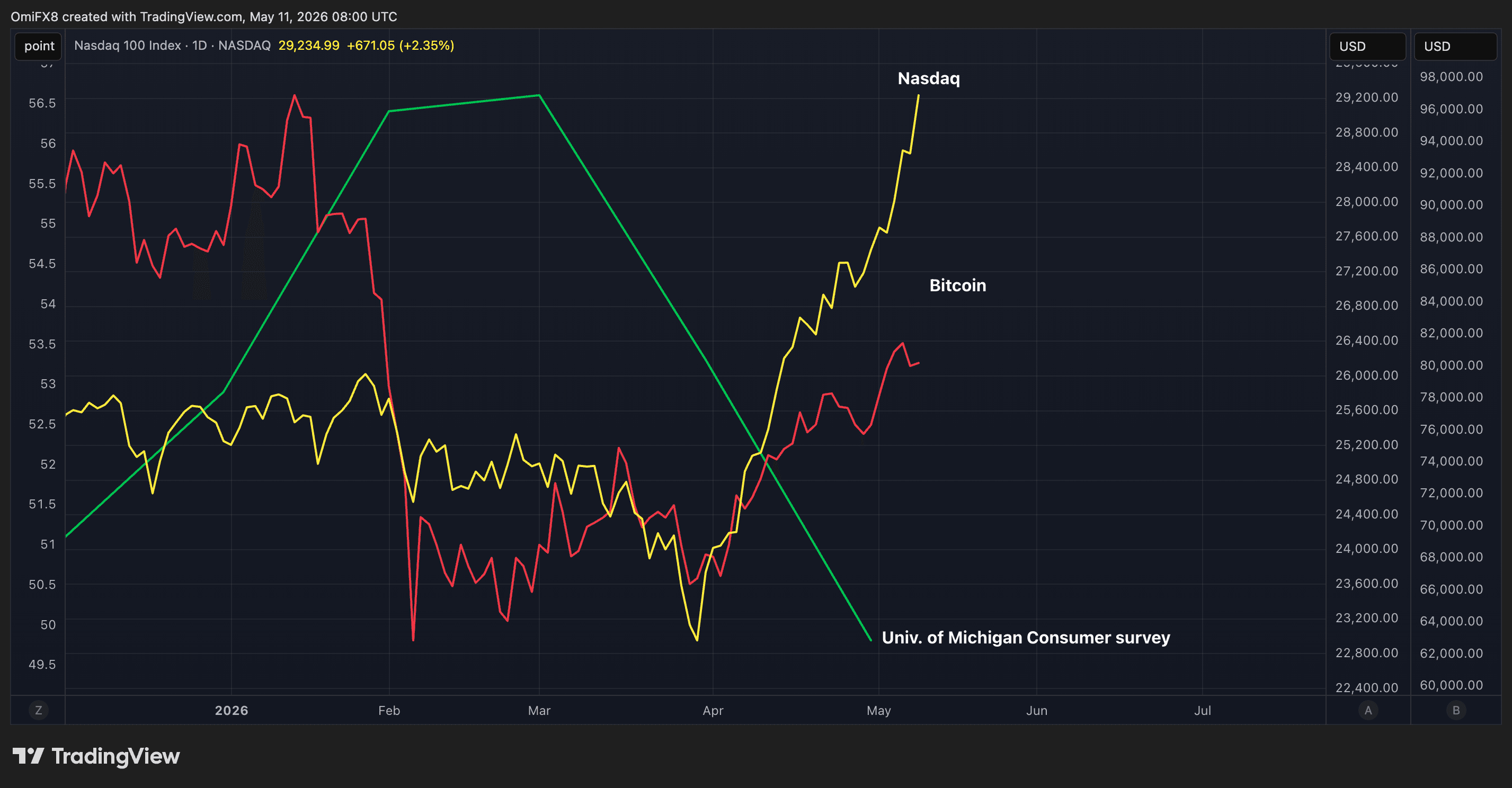
MARA Holdings reports Q1 earnings after the close on May 11, with Wall Street modeling a $184.21 million revenue shortfall and a $2.34 loss per share — the mark-to-market damage from bitcoin's roughly 25% slide between January and March, which took BTC from about $87,000 to $67,000.
But the headline number is the wrong thing to look at, and the buy side knows it. During the quarter, MARA sold 15,133 BTC (~$1.1B) and used the proceeds to repurchase $1.0B of convertible notes, shore up liquidity, and keep funding its AI pivot. The bigger story is a $1.5 billion deal to acquire Long Ridge Energy from FTAI Infrastructure — long-dated power-generation capacity that converts MARA's energy and data-center footprint into steady, contract-based AI and HPC revenue. Add the Starwood partnership, which targets roughly one gigawatt of near-term AI compute capacity, and the company is mid-transition from a pure-play bitcoin miner into a hybrid compute operator.
Why it matters
The Q1 loss is a balance-sheet echo of an asset that fell 25% — not an operational failure. MARA's $1B convertible-note buyback is the more important capital-allocation signal: it deleverages into the AI build-out and preserves the balance-sheet room to fund power purchase agreements, which are the binding constraint on every AI-adjacent miner right now. The Long Ridge acquisition matters because power — not hashrate — is the input that gates AI colocation deals, and Long Ridge gives MARA owned, long-duration generation capacity that competitors are still trying to lease.
Market impact
MARA isn't moving in isolation. IREN just signed a $3.4 billion AI cloud agreement with NVIDIA while taking a $140.4 million non-cash impairment on legacy ASICs — a clear signal that even the second tier of public miners is willing to crystallize mining-asset losses to fund AI capacity. HIVE Digital is spending $3.1M on fiber to support a planned 50MW AI factory. The pattern is consistent: bitcoin miners are reclassifying themselves as compute utilities, and the market will re-rate them on contracted AI revenue, not hashrate.

Frequently asked questions
-
Why is MARA expected to post a Q1 loss?
Wall Street models a $184.21M revenue shortfall and a $2.34 loss per share, driven by mark-to-market damage after bitcoin fell roughly 25% during the quarter, from about $87,000 to $67,000.
-
What is the Long Ridge Energy deal and why does it matter?
MARA agreed to acquire Long Ridge Energy from FTAI Infrastructure for $1.5B, gaining owned long-duration power-generation capacity — the binding input for AI colocation contracts and a structural lever away from cyclical bitcoin mining revenue.
-
What did MARA do with the BTC it sold in Q1?
MARA sold 15,133 BTC (~$1.1B) and used the proceeds to repurchase $1.0B of convertible notes, strengthen liquidity, and continue funding its AI and high-performance computing expansion.
-
How are other bitcoin miners pivoting to AI?
IREN signed a $3.4B AI cloud agreement with NVIDIA while recording a $140.4M non-cash impairment on legacy ASIC hardware. HIVE Digital is investing $3.1M in high-speed fiber to support a planned 50MW AI factory.
-
How did MARA shares move ahead of the Q1 print?
MARA shares rose 1% to $13 in pre-market trading on May 11, ahead of the after-close earnings release — a quiet bid consistent with positioning for the AI narrative to do the heavy lifting on the call.
 Lookonchain
 CryptoSlate
 Crypto Rank News
 TheBlock
 WuBlockchain