








 CryptoSlate
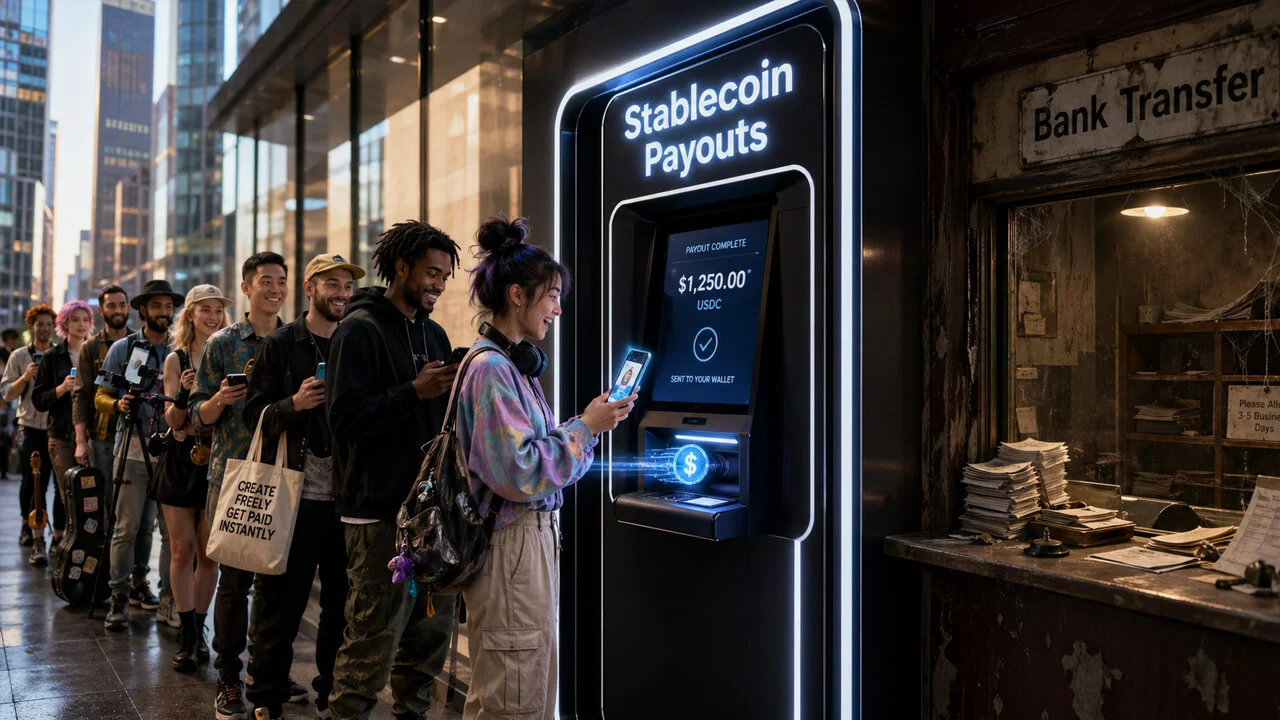
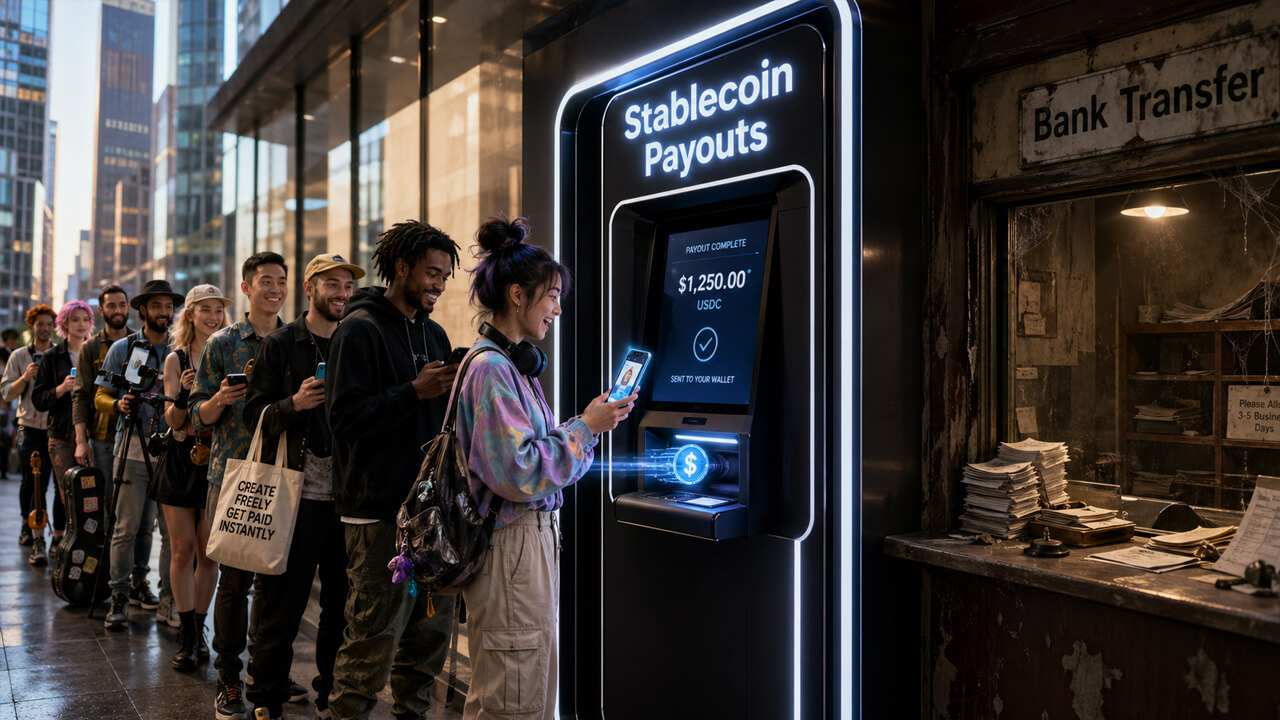

Meta opened a USDC payout pilot for eligible creators on Apr. 29, routing dollars through compatible crypto wallets on Solana and Polygon, starting in Colombia and the Philippines. The launch lands roughly four years after the company sold its Libra/Diem blockchain assets to Silvergate in 2022, and reuses the same dollar-rail logic that Stripe, Circle, and others have spent the interim scaling into a production-grade payout stack.
The macro framing comes from Goldman Sachs, which sized the creator economy at roughly $250 billion in 2023 and projected $480 billion by 2027, with brand deals accounting for about 70% of creator income. At a 10% share of that flow, the seed math points to $25 billion annually today, rising to $48 billion by 2027, a slice that would equal between 6.4% and 12.3% of all real-economy stablecoin payments, against a BIS-tracked 2025 baseline of $390 billion in payment-related stablecoin flows.
Why it matters
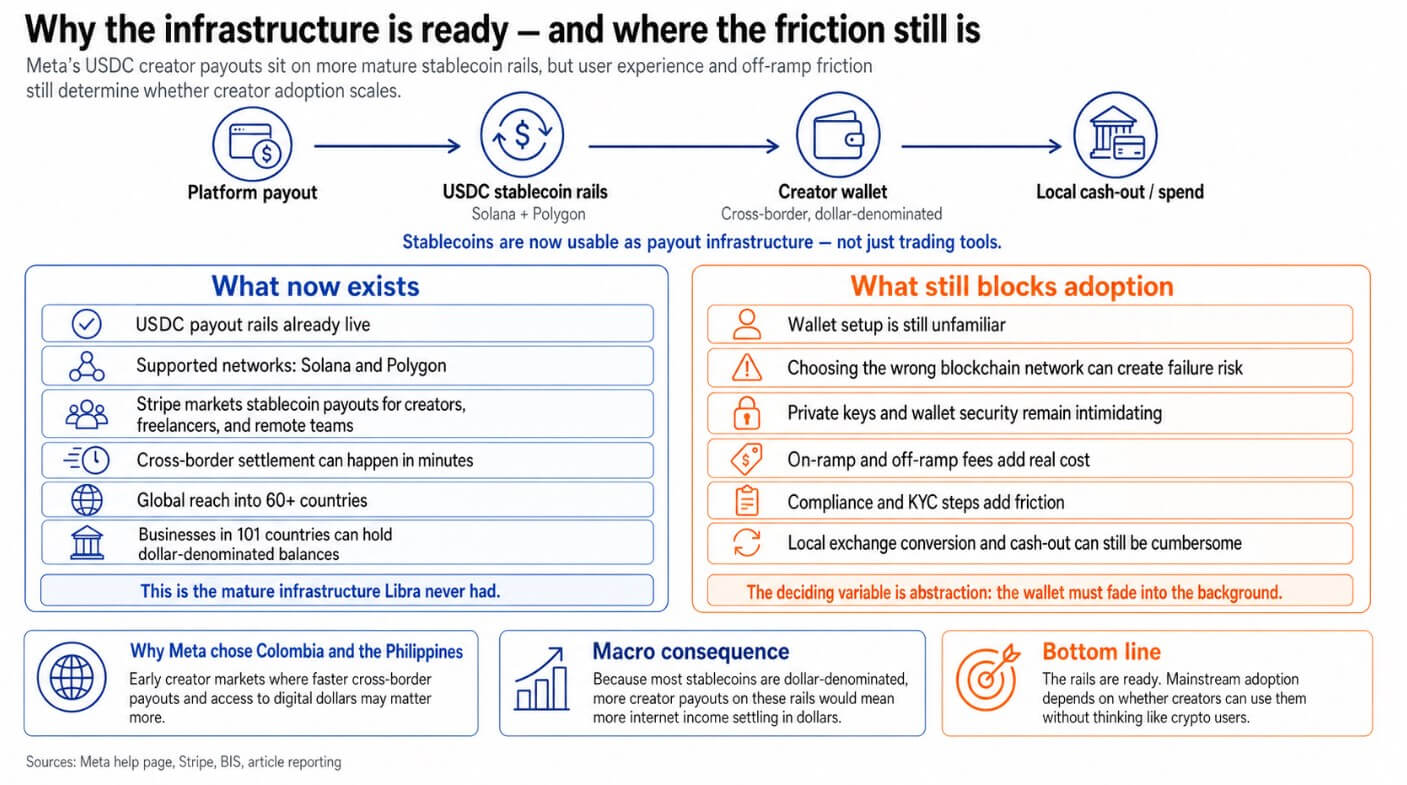
Libra collapsed because the stablecoin plumbing underneath it did not yet exist. Stripe now markets USDC payouts as routine for creators, freelancers, and remote teams, with explicit coverage on Solana and Polygon, the same chains Meta chose, and KYC/AML onboarding into more than 60 countries. Cross-border settlement runs in minutes rather than days, and 101 previously unsupported markets can now hold dollar-denominated balances on stablecoin rails. The choice of Colombia and the Philippines is not incidental: both combine meaningful creator economies with real friction on legacy cross-border payouts and demonstrated appetite for dollar-denominated savings. Because roughly 98% of stablecoins are dollar-denominated, any meaningful expansion of creator payouts over these rails is effectively digital dollarization of the internet labor market, settling cross-border creator income in dollars with fewer intermediaries between payer and creator.
Market impact
The pilot is small in headcount but large in signal: a major platform normalizing USDC payouts gives gig platforms, affiliate networks, brand-deal intermediaries, and subscription tools a template to copy.


Frequently asked questions
-
What did Meta launch for creators on Apr. 29?
Meta opened a USDC payout pilot for eligible creators in Colombia and the Philippines, routing dollars through compatible crypto wallets on Solana and Polygon.
-
How is this different from Meta's Libra/Diem project?
Libra launched in 2019, rebranded to Diem, and its blockchain assets were sold to Silvergate in 2022 after regulator and bank pushback. The new pilot uses existing USDC rails from Stripe, Circle, and others rather than building a Meta-controlled chain.
-
How large is the addressable creator-economy TAM for stablecoin payouts?
Goldman Sachs sized the creator economy at roughly $250B in 2023 and projected $480B by 2027. A 10% share of that flow would equal $25B annually today and $48B annually by 2027, equal to 6.4%-12.3% of all real-economy stablecoin payments.
-
What is the BIS baseline for real-economy stablecoin payments?
A BIS report put payment-related stablecoin flows at roughly $390 billion in 2025, distinct from the $35 trillion in total on-chain stablecoin volume that is dominated by trading and settlement.
-
What is the main constraint on adoption of the Meta pilot?
Wallet abstraction. If wallets become invisible to creators, gig platforms and brand-deal intermediaries can copy the template. If creators still have to manage private keys and pick networks, adoption stays inside the existing crypto base.
 WatcherGuru
 Whale Alert
 CoinTelegraph
 Lookonchain
 Crypto News
 CoinDesk
 Crypto Rank News
 WuBlockchain